




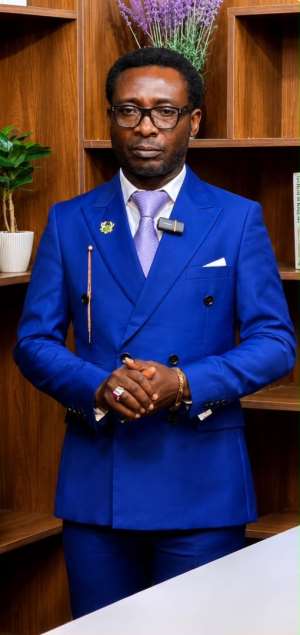
September 29, 2026: The Global Institute of Politicians (GIOP) has continued its focus on political education with a lecture examining the conceptual differences between politics and political parties, as part of its Presidential Lecture Series on Political Education.
The lecture, delivered under the theme “Differences Between Politics and Party,” is attributed to Dr. Nana Kwabena Kwaning Snr., President of GIOP and a Political Educationist/Politologist.
According to the lecture, politics and political parties should not automatically be treated as synonymous, despite their close relationship within democratic systems.
Politics as public service
In his lecture, Dr. Kwaning presents politics as a broad societal concept that has developed through traditional communities, civil society organisations, religious institutions, stakeholders and systems of authority and governance.
He defines politics from his own political-education perspective as a process concerned with the organisation of society and the wellbeing and interests of the people.
The lecture further connects politics with democratic governance, constitutional arrangements, conventions, treaties and other systems through which societies organise public affairs.
GIOP describes itself as a professional and higher-education institution for politicians, political leaders, practitioners, researchers and professionals, with a stated focus on good governance, responsible and transparent leadership and UN Sustainable Development Goal 16.
How the lecture defines a political party
The lecture separately examines the concept of a party, describing it as a group of people who share common interests, objectives or political concepts.
Prof. Dr. Kwaning argues in the lecture that political parties can pursue particular organisational or group interests and establish their own constitutions and structures while operating within the laws of the sovereign state.
The lecture therefore draws a philosophical distinction between the broader concept of politics and the more specific organisational structure represented by a political party.
“Politics is for the people”
A central proposition of the lecture is expressed through the phrase:
“POLITICS EST PRO POPULO, PARTY EST PRO PAUCIS.”
The lecture translates this as:
“Politics is for the people, Party is for the few.”
The statement forms part of Prof. Dr. Kwaning’s broader argument that political education should encourage political practitioners and citizens to distinguish between public-interest governance and the narrower interests that political organisations may pursue.
GIOP’s political education initiative
The lecture forms part of GIOP’s stated interest in political education and professional development for political practitioners and leaders. The organisation’s public profile describes it as a think tank, academic and professional institution concerned with political professionalism, good governance, responsible leadership and political practice.
Recent GIOP communications have also highlighted Good Politics, Good Political Practices, ethical leadership, responsible governance and public service as areas of institutional interest.
The Presidential Lecture Series is expected to continue with the next topic:
“Who Is a Politician?”
The lecture series is intended to provide a platform for political education, conceptual discussion and examination of political practice from the perspective of governance, ethics, responsibility and public service.


 Institutions investigating South Africa evacuation allegations will vindicate me...
 NPP demands evidence over viral video of alleged cash stash in former appointee’...
 Mahama announces acquisition of two more Airbus H175 helicopters for Ghana Air F...
 Asantehene mourns Agogomanhene
 Queen’s University Belfast Clears Jason Arday Research Paper Following Review
 Mahama reconstitutes GNPC board, names Hamis Ussif acting CEO
 GNPC CEO reassigned as Mahama names new Board with Solomon Quaynor as Chairman
 Mahama hands over three new aircrafts to Ghana Air Force
 The economy has improved, my birthday budget has dropped from Gh¢32,000 to Gh¢18...
 'Why are economic gains not reaching households?' — Owusu Danso quizzes govt


