




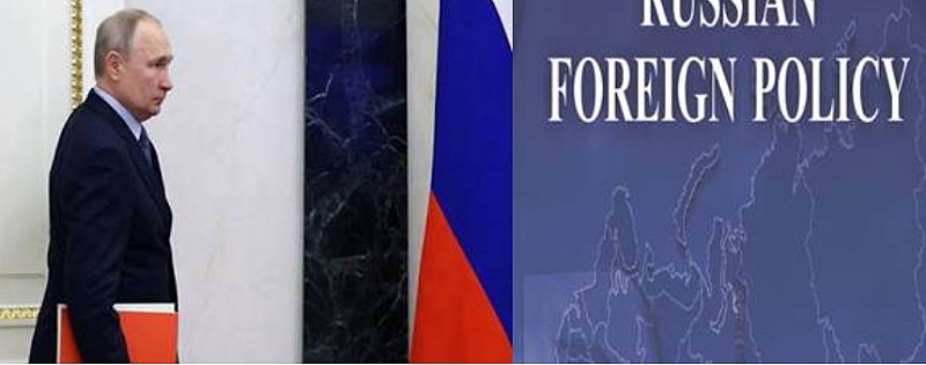
Russian Foreign Minister Sergey Lavrov’s diplomatic activity during the 81st United Nations General Assembly in New York in September 2026 extended far beyond his headline meetings with the United States and Germany. According to Lavrov, the Russian delegation completed “practically fifty” meetings and engagements during the week, involving countries and institutions across Asia, Africa, the Middle East, Latin America, Europe and the Pacific. Taken together, the schedule provides a picture of Russian foreign policy increasingly organized around diversified political relationships, economic connectivity and institutional cooperation rather than dependence on any single Western relationship, according to a report by Russia’s Pivot To Asia.
The week began with meetings involving UN General Assembly President Khalilur Rahman, US Secretary of State Marco Rubio, Cuba, Syria, Egypt, Lebanon, Trinidad and Tobago, Algeria, Brazil, the UAE, Switzerland, the OSCE and the CSTO. The meeting with Rubio demonstrated that Moscow continues to maintain a direct channel with Washington despite continuing disagreements over Ukraine and US economic restrictions on Russia. Discussions reportedly covered bilateral relations, the Middle East, the South Caucasus, Latin America, multilateral institutions, economic cooperation, humanitarian contacts and diplomatic issues. The relationship therefore combines continued political communication with unresolved economic and geopolitical tensions.
Other first-day meetings demonstrated the geographical breadth of Russia’s diplomacy. Contacts with Cuba, Brazil, Algeria, Egypt and the UAE connected Moscow to Latin America, Africa, the Arab world and major commercial hubs. Brazil was particularly relevant to BRICS coordination and economic issues such as agriculture, energy, fertilisers and finance. The UAE represented another important commercial and logistics centre linking Russian business with the Middle East, Asia and Africa. Meetings with the Arab League and OSCE similarly demonstrated Russia’s continuing use of multilateral institutions even while challenging aspects of their current political structures.
The second day expanded the network further, with 13 reported meetings involving Senegal, Serbia, Jordan, Nicaragua, the Dominican Republic, Panama, Mali, Brunei, Iran, the Alliance of Sahel States, Pacific Small Island Developing States, the IAEA and UN Secretary-General António Guterres. These contacts combined political dialogue with discussions involving security, trade, infrastructure, energy, agriculture, transport and multilateral cooperation. Senegal was invited to participate in the forthcoming Russia-Africa Summit, while the meeting with the Alliance of Sahel States highlighted Moscow’s growing engagement with regional African structures.
Iran represented one of the most significant economic and connectivity relationships. Russian-Iranian cooperation encompasses energy, the Caspian region and the International North-South Transport Corridor, which is designed to connect Russia with Iran, India and other markets. Kazakhstan plays a similarly important role in Eurasian connectivity, linking Russia with Central Asia, China and the Caspian transport system. Together, these relationships illustrate how transport corridors have become an increasingly important component of Russian foreign-economic policy.
Russia’s engagement with the Middle East was similarly broad. Meetings with Egypt, Jordan, Iraq, Kuwait, Iran, Yemen, Syria and the UAE reflected Moscow’s effort to maintain relationships across different political orientations rather than rely on a single regional alliance. The Red Sea, Persian Gulf, Suez Canal and wider maritime-security environment were recurring themes. These issues have direct economic implications because disruptions to major shipping routes affect energy markets, commodity trade and international logistics.
The third day reinforced the importance of India, Kazakhstan and emerging economic partners. The meeting with Indian Foreign Minister Subrahmanyam Jaishankar covered bilateral relations, BRICS cooperation and international developments. Russia-India ties increasingly involve energy, defence, fertilisers, pharmaceuticals, payments, logistics and trade. India therefore occupies an important position in Moscow’s broader effort to develop non-Western economic relationships.
Russia also engaged Singapore, Brunei, Uganda, Kuwait, Sudan, Guatemala, Guyana, Morocco, Uruguay, Barbados, Iraq, the Maldives and Yemen. Although these countries differ substantially in size and political orientation, their inclusion demonstrates the breadth of Moscow’s diplomatic approach. Some are important because of energy or commodities, others because of their geographic position, maritime routes, regional organizations, tourism or multilateral influence. The Uruguay meeting was particularly notable for its discussion of stronger links between the Eurasian Economic Union and MERCOSUR, illustrating Russia’s interest in connecting regional economic institutions across continents.
Russia’s Pivot To Asia said that the meeting with German Foreign Minister Johann Wadephul represented a different dimension of the strategy. It was the first bilateral meeting between the Russian and German foreign ministers since January 2022 and reopened a ministerial channel after more than four years. The discussion did not reportedly produce a trade or investment agreement, and the proposed Russia-US-Germany business forum for 2027 was a separate initiative announced by Russian Direct Investment Fund chief Kirill Dmitriev. Nevertheless, the meeting demonstrated that Russia continues to preserve diplomatic channels with Western governments while simultaneously expanding relations elsewhere.
One of the most significant institutional developments was the launch by Russia and Belarus of negotiations over a proposed Eurasian Charter of Diversity and Multipolarity. The initiative is intended to address security, economic cooperation, connectivity, humanitarian relations and decision-making among Eurasian states. If negotiations proceed as planned, the proposal could become another layer of institutional cooperation alongside the EAEU, CSTO, CIS and SCO. It reflects Moscow’s effort to translate the concept of multipolarity into formal mechanisms rather than leave it solely as political rhetoric.
Lavrov’s UN General Assembly speech and subsequent press conference provided the broader framework for these activities. Russia presented multipolarity, UN reform and sovereign economic development as interconnected themes. Moscow argued for greater representation of Asia, Africa and Latin America within international institutions and emphasized the importance of alternative economic mechanisms, national currencies, transport corridors and regional development structures.
The economic pattern emerging from the New York meetings is therefore broader than simple trade diversification. Russia is simultaneously pursuing alternative payment mechanisms, new transport routes, energy partnerships, tourism, investment links and connections between regional economic blocs. India and Iran are important for Eurasian connectivity; Kazakhstan provides a continental transport bridge; the UAE and Egypt connect Russia to Middle Eastern and maritime networks; African states offer opportunities involving resources, agriculture, infrastructure and energy; Southeast Asian partners provide access to Asian trade and logistics; while Latin American relationships connect Russia to BRICS, CELAC and MERCOSUR-related networks.
The nearly 50 engagements consequently illustrate a foreign-policy structure based on multiple overlapping relationships. Russia continues dialogue with Washington and has reopened a channel with Berlin, but these Western contacts now exist alongside a much wider network spanning Asia, Africa, the Middle East, Latin America and the Pacific. The central development is therefore not a single diplomatic breakthrough, but the continued construction of a diversified system of political, economic and transport connections. In late September 2026, Moscow’s diplomatic activity at the UN demonstrated an approach that combines selective Western dialogue with deeper engagement across the wider Global South and Eurasia.
 New road rules: Police explain tyre age, tint, parking rules ahead of October 1 ...
 Circle phone dealer murder: Suspect allegedly sold victim’s iPhone 12 for GH¢100...
 Police arrest three suspects over kidnapping, murder of Circle phone dealer
 Adipa residents tell gov’t to halt Agbogbloshie waste transfer
 Mahama says listing 10 state-owned enterprises will curb political interference
 Ghana Jollof saga: Baffour Awuah sues Blakk Rasta, Akwatia MP over alleged false...
 6,079 promoted teachers processed and paid — Controller clarifies
 “We need payment, not meetings” – Striking teacher unions tells Education Minist...
 NPP challenges GH¢2,650 cocoa producer price for 2026/27 season
 Mahama explains why 'humiliating' US, Ghana health deal was thrown out with spee...


