




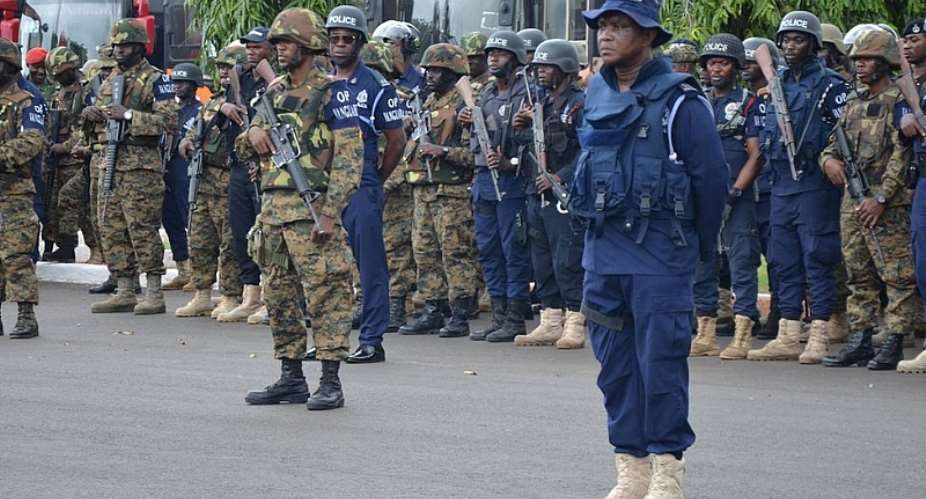
Ghana has avoided a terrorist attack on its soil despite the spread of extremist violence across West Africa. The killing of Ghanaian traders in Burkina Faso, however, shows that the country’s security cannot be measured by its borders alone.
Seven Ghanaian tomato traders were killed in February 2026 when suspected Islamist militants attacked Titao, a town in northern Burkina Faso. They were among 18 traders who had travelled there to buy tomatoes. Ghana’s Interior Minister, Mohammed Mubarak Muntaka, said the attackers separated men from women before opening fire. Some members of the group survived with injuries, while others escaped unharmed.
The attack happened outside Ghana, but its victims were Ghanaian citizens carrying out an ordinary commercial journey. Their deaths exposed the practical limits of thinking about terrorism only in terms of an attack within national territory. Families, traders and transport operators remain connected to places where armed groups are active, and violence across a border can have immediate consequences at home.
Ghana has so far avoided the pattern of terrorist attacks seen in several countries around it. That record deserves recognition. It also demands continued work. Militant activity in the Sahel, incursions into coastal West Africa and vulnerabilities within Ghana’s own border communities make complacency a dangerous response to past success.
A regional threat with Ghanaian consequences
In July 2026, Major General Timothy Baa-Taa-Banah, Director of Ghana’s National Counter-Terrorism Fusion Centre, told a forum in Accra that more than 2,000 terrorist attacks had resulted in over 8,000 deaths across the Sahel and wider West African region, the Ghana News Agency reported. He said fatalities had risen by 14 per cent in the first half of the year. Ghana, he warned, was not immune simply because it had not become a primary theatre of attacks.
The Counter Terrorism Project also disclosed that the groups contributing to regional insecurity do not all operate in the same places or under a single command. Al-Qaeda-linked Jama’at Nusrat alIslam wa al-Muslimin, known as JNIM, is deeply entrenched in parts of the Sahel and has intensified its activity in northern Benin. Islamic State West Africa Province, or ISWAP, has principally operated around the Lake Chad basin, affecting Nigeria and neighbouring countries. Their distinct areas of operation matter when assessing the risk to Ghana, but together they illustrate the breadth of extremist violence across West Africa.
The February attack in Burkina Faso is particularly significant for Ghana because movement across the northern frontier is part of everyday economic life. Traders do not stop travelling because an international boundary appears on a security map. Families, markets and transport routes connect communities across the region. Those connections bring economic benefits, but they also mean insecurity elsewhere can threaten Ghanaian lives and livelihoods.
Ghana’s challenge is therefore twofold: protect people and communities within its territory, and remain alert to developments beyond it. Neither objective can be met by treating the absence of a domestic attack as proof that the threat has disappeared.
What Ghana has done
Ghana’s approach has drawn attention because it combines conventional security work with efforts to involve communities. In a 2025 analysis of the country’s counter-terrorism strategy, researchers Paa Kwesi Wolseley Prah and Timothy Chanimbe identified community engagement, border technology, intelligence operations, cross-agency training, and media cooperation as key elements of its response. Their work drew on interviews with security personnel and community leaders, as well as an examination of Ghana’s prevention framework.
At the border, the Ghana Immigration Service has used systems such as “Immigration 360”, designed to improve passenger processing and data management. Training has also brought together personnel from different institutions, including immigration, police, customs and intelligence agencies. The purpose is clear: information held by one agency is more useful when the relevant people in another can act on it promptly.
Public participation is another part of the strategy. The “See Something, Say Something” campaign encourages residents to report activity that may present a security risk. A person who lives or works in a community may notice a concerning development before it reaches a formal checkpoint. The value of that observation depends on whether there is a trusted way to report it and an effective process for assessing it.
Major General Baa-Taa-Banah described Ghana’s response in July as an “all-of-society approach” involving intelligence gathering, security operations and public participation. His assessment offers a useful explanation of why preparedness cannot rest with the armed forces or police alone. Local leaders, residents and other public institutions also have roles in identifying and reducing risks.
International cooperation has reinforced those efforts. On 22 July 2026, the United States donated 84 pallets of equipment, valued at about US$4 million, to the Ghana Armed Forces. According to the military, the consignment included medical supplies, GPS devices, night-vision equipment, unmanned aerial systems and radios. Ghanaian military officials said it would strengthen operational readiness in areas including border security, intelligence and counter-terrorism.
These measures show substantial investment in prevention. They do not establish that any one programme, device or campaign is solely responsible for Ghana’s record. Terrorist threats are difficult to measure by events that have not occurred. What the record does show is the importance of maintaining several lines of defence and improving them as conditions change.
The gaps that demand attention
Borders cannot be monitored by technology alone. Ghana’s northern frontier includes communities whose social and economic ties extend into neighbouring countries. An earlier assessment cited by Africa
Defence Forum referred to numerous unmonitored crossing paths along the Burkina Faso border. The figure in that 2022 report should not be treated as a current count, but the underlying concern remains relevant:
official entry points are only one part of the border-security challenge.
Illicit trade and terrorist financing also require attention beyond physical crossings. In a statement to the United Nations Security Council, Ghana warned that trafficking in natural resources can provide armed groups with funds and that weak border management can make such trade easier. That makes cooperation among security, financial and border authorities essential to disrupting support networks, as well as identifying people who may pose a threat.
The risks within border communities are equally important. Security officials have warned that unresolved communal conflicts can create vulnerabilities for extremist groups to exploit. In July, Major General Stephen Woseadzikpo Kweku Parbey, Ghana’s Chief of Defence Intelligence, said conflict creates confusion that can give room to those seeking to harm.
The United Nations Development Programme has identified other pressures in northern Ghana, including resource scarcity, tensions between farmers and herders, and the arrival of refugees and asylum seekers from neighbouring countries. These conditions do not mean that affected communities support extremism. They mean that authorities must understand local concerns, protect social cohesion and avoid leaving disputes to deepen.
A 2023 UNDP assessment of Ghana’s five northern regions identified youth unemployment as a common driver of vulnerability to radicalisation. The finding points to a broader prevention task.
Security agencies can investigate threats, but opportunities for young people, accessible services and credible ways to resolve grievances also shape whether communities can withstand extremist influence.
In February 2026, UNDP Ghana officials cautioned that the country’s reputation for stability should not obscure pressures felt locally. They observed that national discussion often centres on cross-border infiltration, while communities themselves may place greater weight on exclusion, economic difficulties and unresolved conflicts. Both perspectives need attention if national policy is to reflect conditions on the ground.
Why community trust matters
The strength of a public reporting campaign depends on public confidence. Residents must believe they can approach the authorities, that information will be handled responsibly and that reports will receive a proportionate response. If people fear arbitrary treatment or assume that nothing will follow a report, early warning becomes less effective.
Security agencies must also guard against treating religious identity, ethnicity or migration status as evidence of extremist intent. Such assumptions can harm innocent people and weaken the relationships on which community intelligence relies. The researchers who examined Ghana’s strategy recognised the value of community engagement but also cautioned against religious stereotyping and wrongful profiling.
Practical examples of community prevention already exist. UNDP says it and its partners have trained more than 400 community members in conflict resolution and supported 24 Community Peace Committees across northern Ghana. In one North-East Region community, a teacher who received training helped revive a youth group that brought residents and local leaders together to discuss political tensions and nonviolent ways to manage them.
Another UNDP-supported project in Upper East and Upper West communities has combined livelihood training with dialogue and early warning. It has trained women and young people in income-generating activities and prepared local “peace champions”, including traditional leaders, young people and refugees, to support conflict prevention. Such programmes cannot replace security operations. They address pressures that surveillance equipment cannot resolve.
A warning from elsewhere in West Africa
Ghana has reason to examine how other countries have responded to insurgency. Military force is necessary when armed groups attack civilians or security personnel. But operations that harm civilians can deepen grievances, displace communities and undermine the trust needed to obtain information about threats.
Human Rights Watch has documented grave abuses by both JNIM and Burkinabè military forces and allied militias. Its 2026 findings examined 57 incidents that together killed more than 1,800 civilians between January 2023 and August 2025. The organisation reported that civilians had been targeted by extremist fighters and that military and allied forces had also committed serious abuses during counterinsurgency operations.
In Mali, Human Rights Watch has implicated Malian forces and associated foreign fighters in unlawful killings of civilians during operations against armed groups. Amnesty International has also documented civilian deaths linked to Nigerian military air strikes. These cases arose in different conflicts and cannot be reduced to one explanation. They show, however, why protecting civilians and holding forces accountable must remain central to an effective security response.
For Ghana, the lesson is to preserve both capability and restraint. Firm action against credible threats must go hand in hand with lawful conduct and respect for communities. Residents are more likely to share concerns with institutions they regard as fair and dependable.
Preparedness is an ongoing task
Ghana’s authorities have acknowledged that their framework needs to keep pace with the threat. At a March 2026 forum supported by UNDP, representatives of government, security institutions, Parliament, civil society and traditional authorities reviewed the national framework for preventing violent extremism. Their recommendations included stronger coordination, better early warning and response, greater community resilience and wider public education.
The Director of the Counter-Terrorism Fusion Centre said at that forum that implementation was the central challenge. It is one thing to have a national strategy; it is another to make its reporting systems, local partnerships and preventive measures work consistently across communities.
Vigilance, therefore, need not mean alarm. It means checking whether information reaches the right agency in time; whether border personnel have the tools and training they need; whether local disputes receive attention before they escalate; and whether residents can report concerns without fear of being ignored or unfairly targeted. It also means continuing to learn from events in neighbouring countries.
The killing of the Ghanaian tomato traders brought those questions into sharp focus. Ghana has avoided an attack at home, but its citizens have already suffered from the violence across its northern border.
Preserving the country’s record will require the sustained work of security institutions and the confidence and participation of the communities they serve.
As Major General Baa-Taa-Banah told the July forum, “preparation is not an event. It is an enduring process.” Ghana’s success will depend on treating it that way.
BY Laud Nartey, a Ghanaian journalist.

 New road rules: Police explain tyre age, tint, parking rules ahead of October 1 ...
 Circle phone dealer murder: Suspect allegedly sold victim’s iPhone 12 for GH¢100...
 Police arrest three suspects over kidnapping, murder of Circle phone dealer
 Adipa residents tell gov’t to halt Agbogbloshie waste transfer
 Mahama says listing 10 state-owned enterprises will curb political interference
 Ghana Jollof saga: Baffour Awuah sues Blakk Rasta, Akwatia MP over alleged false...
 6,079 promoted teachers processed and paid — Controller clarifies
 “We need payment, not meetings” – Striking teacher unions tells Education Minist...
 NPP challenges GH¢2,650 cocoa producer price for 2026/27 season
 Mahama explains why 'humiliating' US, Ghana health deal was thrown out with spee...


