




The beauty industry is changing rapidly, and nail care is becoming one of the areas where technology is beginning to make a noticeable difference. For many years, nail technicians relied mainly on creativity, manual skill, experience, and customer preference.
These qualities remain very important, but the modern beauty business is becoming increasingly digital. Artificial intelligence, smart beauty devices, digital booking systems, virtual design tools, social media platforms, and automated customer management systems are gradually changing the way nail technicians work and relate to their clients.
This change should not be seen as a threat to professional nail technicians. Rather, it should be seen as an opportunity. Technology cannot completely replace the creativity, personal touch, communication skills, and practical experience of a trained nail technician. What it can do is make the work faster, more efficient, more personalised, and more profitable. Nail technicians who learn how to use these tools may therefore have a stronger advantage in an increasingly competitive beauty industry.
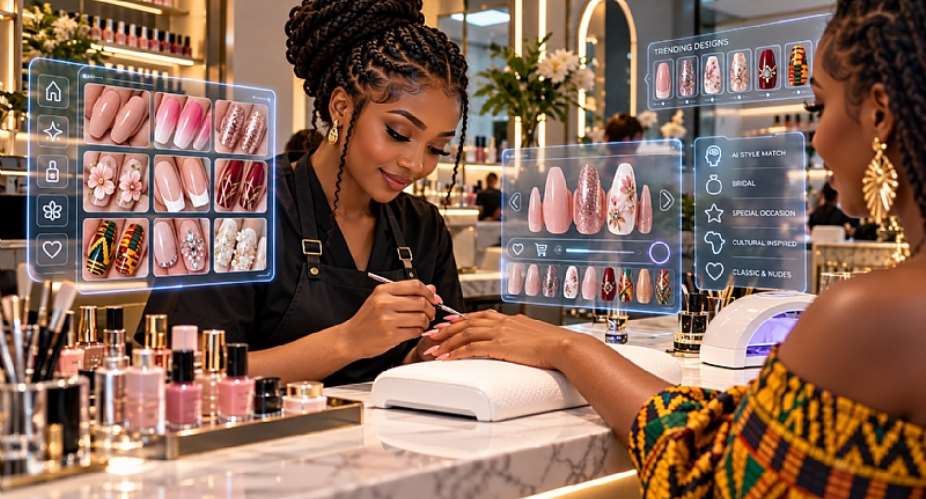
One major area where artificial intelligence is becoming useful is nail design. Clients often visit salons without knowing exactly what design they want.
They may have an idea about colour, shape, or style, but they may struggle to explain it clearly. Digital design platforms and AI powered tools can help generate different nail art concepts based on a client's preferences. A technician can enter details such as preferred colours, event type, clothing style, nail length, or design theme and receive several visual ideas within seconds.
This does not remove the creativity of the technician. Instead, it gives the technician more options to work with. The final design still requires professional judgement, proper nail preparation, colour matching, artistic skill, and careful application. Technology simply provides additional inspiration and makes consultations easier.
Virtual preview tools are also becoming important. In the future, clients may increasingly expect to see how a particular colour or nail design will look on their hands before the actual service begins. Similar technology is already being used in other parts of the beauty and fashion industries. A client can take a photograph of her hand and digitally test different nail colours, shapes, lengths, and patterns before making a decision.
This can reduce dissatisfaction because clients are able to make more informed choices. It can also save time during consultations. Instead of repeatedly changing colours or designs physically, the technician and client can compare several options digitally and agree on the most suitable one.
Smart technology can also improve the business side of nail care. Many nail technicians are excellent at their craft but struggle with appointment management, customer records, marketing, stock control, and financial organisation. Digital systems can help solve some of these problems.
Online booking platforms, for example, allow clients to select services, choose available times, receive reminders, and make payments electronically. This reduces missed appointments and unnecessary phone calls. Customer management systems can also help technicians keep records of previous services, preferred colours, allergies, nail conditions, birthdays, and appointment history.
Such information can help create a more personalised experience. A returning customer may appreciate a technician who remembers her preferred nail shape, favourite colours, or previous designs. Technology makes it easier to keep such information organised.
Artificial intelligence can also support marketing. Social media has already become one of the most important tools for beauty professionals. Many clients now discover salons and technicians through Instagram, TikTok, Facebook, WhatsApp, and other online platforms. A nail technician who produces good work but has little digital visibility may struggle to attract new clients.
AI supported tools can help technicians prepare social media captions, organise content ideas, improve photographs, create promotional materials, and identify the types of content that receive the most attention. These tools can save time and allow small beauty businesses to market themselves more professionally.
Another important area is customer service. Digital assistants and automated messaging tools can respond to common questions about prices, services, opening hours, location, appointment availability, and aftercare instructions. This can be especially useful when a technician is busy serving clients and cannot respond immediately to every message.
However, technology must be used responsibly. Clients still want genuine human interaction. Automated responses should not replace personal communication completely. Beauty services are highly personal, and many clients value conversation, trust, comfort, and the relationship they build with their technician. Technology should therefore support human interaction rather than remove it.
There are also opportunities for smart technology to support nail health. Digital imaging tools may eventually help technicians identify visible changes in the nails that may require professional medical attention. This does not mean nail technicians should become doctors or use artificial intelligence to diagnose diseases. Rather, technology may help them become more observant and encourage clients to seek medical advice when something appears unusual.
Education is another area where digital technology can make a major contribution. Nail technicians no longer have to depend only on physical workshops to improve their skills. Online courses, virtual demonstrations, digital communities, video tutorials, and interactive learning platforms provide opportunities for continuous professional development.
A technician in Ghana, for example, can learn new techniques being used in Europe, Asia, or North America without travelling outside the country. New trends in gel application, nail art, acrylic techniques, hygiene practices, salon management, and customer service can be studied online. Artificial intelligence can also assist learners by explaining techniques, generating practice ideas, and helping them organise learning materials.
Despite these opportunities, some beauty professionals may resist the use of new technology. This is understandable. New systems can be confusing, expensive, or difficult to learn at first. There may also be fears that automation will reduce employment opportunities.
Yet history has repeatedly shown that industries change when new technology becomes available. Professionals who adapt usually find new ways to remain valuable. The most important issue is not whether technology will enter the beauty industry. It already has. The real question is whether nail technicians will learn how to use it to improve their work.
Training institutions also have an important role to play. Beauty schools should begin to include basic digital skills in their programmes. Students should learn not only manicure, pedicure, nail art, hygiene, and customer care, but also online marketing, digital booking, electronic payments, basic content creation, customer data management, and responsible use of artificial intelligence.
This will help prepare future professionals for a beauty industry that is increasingly connected to technology.
There is also a strong business argument for digital adoption. A technician who manages appointments efficiently, markets services online, maintains customer records, accepts digital payments, and uses technology to improve design consultations may be able to serve clients better and build a stronger brand.
Small salons can also compete more effectively with larger beauty businesses when they use affordable digital tools. Technology gives individual professionals opportunities that were previously available only to large companies with marketing teams and expensive systems.
The future of nail care will still depend on skilled hands. No computer can fully reproduce the confidence a client feels when she sits before a trusted technician who understands her taste and delivers beautiful work. Technology cannot replace patience, creativity, professionalism, hygiene, communication, and human judgement.
What technology can do is strengthen these qualities.
The nail technician of the future will therefore be more than someone who applies polish or creates attractive designs. She will be an artist, entrepreneur, digital communicator, customer service professional, and technology user.
Artificial intelligence and smart beauty technology are not enemies of the profession. They are tools. Those who learn how to use them wisely may find themselves better prepared for the changing expectations of modern clients.
The beauty industry has always been driven by creativity and transformation. Today, that transformation is becoming digital. Nail technicians who embrace the change while protecting the human side of their profession will be in a stronger position to grow, compete, and remain relevant.
The future of nail care is not simply about better colours, longer nails, or more complicated designs. It is about combining human creativity with intelligent technology to create better experiences for both professionals and clients.
Philipa Serwaa
University of Energy and Natural Resources P.O. Box 214 Sunyani, Bono Region
E-mail: [email protected]


 Death toll in South Africa bar shooting rises to 18
 Appiah Adomako Writes: Why DVLA Must Stop Treating Every Expired Licence Holder ...
 Ghana renews solidarity with Cuba, calls for unconditional lifting of sanctions
 Ethiopia accuses Eritrea, Sudan of backing Tigray rebels amid clashes
 Israel revokes credentials of Dutch diplomats in West Bank over settlement goods...
 Russian attacks kill eight in Ukraine after Moscow vows to continue war
 Trump expects Iran talks next week after rejecting seven-day truce proposal
 Gov’t to develop policy for Ghanaian sign language in education
 Two Ada SHS students plead guilty to assault, slapped with 12-month bond
 Enlistment: GAF begins documentation, body selection from September 28


