




The HIV prevalence rate in the Ashanti Region remained at 1.59 per cent in 2025, despite a decline in the number of new infections recorded during the year.
The 2025 National and Sub-National HIV and AIDS Estimates and Projections showed that new HIV infections in the region declined from nearly 3,000 to about 2,800.
Madam Olivia Graham, Regional Technical Coordinator of the Ghana AIDS Commission (GAC), said the development was encouraging but called for sustained efforts to prevent new infections and ensure that people living with HIV received treatment.
She said the focus should also be on encouraging people to test regularly to know their HIV status and seek treatment when necessary.
Madam Graham said knowing one's status and commencing treatment early would not only help the individual to remain healthy but also reduce the risk of transmitting the virus sexually.
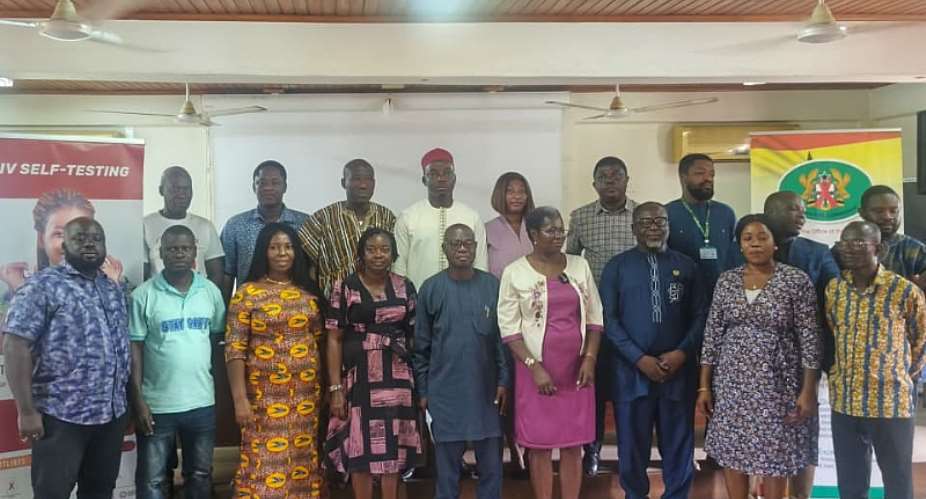
She was speaking at a stakeholder forum in Kumasi to disseminate the 2025 HIV and AIDS estimates for the Ashanti Region.
At the district level, the estimates showed variations in HIV prevalence, with Asokwa recording the highest rate of 3.25 per cent, followed by Juaben with 2.95 per cent, Offinso with 2.68 per cent and Asante Akim North with 2.62 per cent.
Other districts with relatively high prevalence rates included Old Tafo at 2.47 per cent, Amansie South at 2.17 per cent, Bekwai at 2.14 per cent, Obuasi at 2.22 per cent and Obuasi East at 2.01 per cent.
The estimates also showed that Kumasi recorded 7,534 people living with HIV, the highest number among the districts listed, with a prevalence rate of 1.94 per cent.
Madam Graham said stigma remained one of the major challenges in the fight against HIV and AIDS and urged the public to stop stigmatising people living with the virus.
She encouraged individuals to take advantage of HIV testing services to know their status, saying those who tested positive should be supported to accept their status and commence treatment.
She said sustained adherence to treatment was important in protecting the health of people living with HIV while reducing the possibility of sexual transmission.
Madam Graham also highlighted the need for continued attention to children living with HIV, with the estimates covering children aged zero to 14 years.
She urged stakeholders to intensify education, testing, treatment and anti-stigma interventions to consolidate the gains made in reducing new HIV infections in the region.
The 2025 estimates provide district-level figures on people living with HIV, new HIV infections, people on antiretroviral therapy and HIV prevalence across the Ashanti Region.
GNA

 GSA secures High Court backing, recovers GHS400,000 outstanding rent
 Boankra logistics terminal 85% complete as GSA advances infrastructure agenda
 Copyright laws must be amended to address AI, digital content challenges – Copyr...
 Mahama urges regulators to simplify business permit processes
 President Mahama urges ECOWAS to stop the rhetorics, remove trade barriers
 Ghana's democracy is for sale as money floods party elections — Ho West MP
 Meet Diamond Lucas, 12-year-old UCC undergraduate student pursuing BSc degree in...
 GRA uncovers widespread tax non-compliance at West Hills Mall, 16 businesses inv...
 Education Minister directs GTEC, Rent Control to address rising tertiary hostel ...
 Over 1,200 bags of suspected smuggled rice, sugar intercepted in Tatale


