




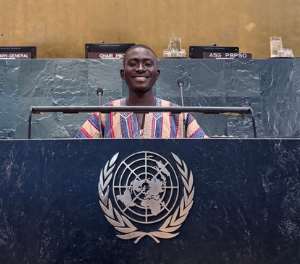
As the 81st UN General Assembly unfolds, I find myself reflecting on the privilege and honour of joining the inaugural United Nations Peacebuilding Week in New York earlier this year.
That experience feels even more significant today.
We are living through what many describe as a period of polycrisis: raging and protracted conflicts, the climate crisis, growing inequalities, democratic backsliding, increasing pushback against international norms and multilateral cooperation, and the profound opportunities and risks emerging from artificial intelligence.
Against this backdrop, I keep returning to questions that many young people, myself included, are grappling with:
- What is our role in all of this?
- What can we do differently?
- And perhaps most importantly, what gives us hope?
As I listen to leaders from around the world address the General Assembly from that podium, I find myself looking for more than statements. I am looking for a renewed commitment to dialogue over violence, and multilateral cooperation over confrontation.
I am looking for leadership that recognises that regardless of our nationality, geography, religion, race or political background, we are connected by our shared humanity and our common hope for peace, prosperity, fulfilment and freedom.
There is no doubt that we are off track in achieving the Sustainable Development Goals, yet we can still change course. For me, that starts with Member States recommitting to the principles at the heart of the UN Charter: the peaceful resolution of disputes, respect for sovereignty and territorial integrity, restraint in the use of force, respect for human rights, international cooperation, and the equal dignity of peoples.
But Peace cannot be sustained by governments alone. It requires communities, civil society, young people, women, religious and traditional leaders, and institutions willing to build trust and address grievances before they escalate into crises.
The inaugural UN Peacebuilding Week reinforced for me that peacebuilding becomes sustainable when we invest in the relationships, institutions and opportunities that make peaceful societies possible.
As young people, we are not only beneficiaries of peace, we are also peacebuilders, mediators, and leaders.
There is still work to do.
There is still hope.
And peace is still worth choosing.
Author;
Issah Toha Shamsoo
Executive Director
African Students For Interfaith Tolerance

 Police arrest 64 suspects, recover firearms in special operation at Achimota Mil...
 Madina MP receives medical attention after GIMPA collapse
 Bolgatanga: Man found dead by roadside in Sumbrungu as police investigate
 Ghana concludes cocoa freight negotiations for 2026/27 season
 Blakk Rasta accuses Gushegu NPP MP Alhassan Tampuli of funding Ghana Jollof atta...
 €225m Cocaine Shipment: Court to rule on bail application of six accused in 3.9-...
 BoG pilots cedi-based payment system for Ghana-China trade
 2026 BECE: Ten schools score zero percent in Adaklu as girls outperformed boys
 ECG unions to stage nationwide protest over proposed private sector participatio...
 'Sceptics, naysayers, alarmists should be aware US ready to work with Ghana on r...



Comments
We are all involved in ensuring peace. Yes we can!!