




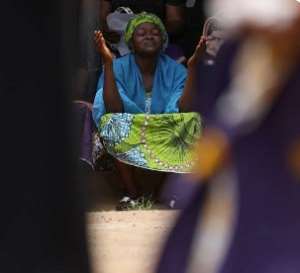
Every mass abduction in Nigeria's northwest generates the same headline cycle: gunmen storm a school or village, a ransom is negotiated, hostages are freed, cameras capture the reunion.
What rarely makes the front page is what comes after specifically, the reproductive health crisis that sexual violence in captivity leaves behind, and the quiet work of humanitarian organisations trying to prevent one trauma from compounding into a lifelong one.
Why pregnancy prevention has become a frontline issue
Banditry in Nigeria's northwest spanning Zamfara, Katsina, Sokoto, Kaduna and Niger states has evolved into a kidnap-for-ransom industry so entrenched that it recorded at least 4,722 abductions in 997 separate incidents between July 2024 and June 2025 alone.
Women and girls bear a specific and additional burden within that violence. Research published by the Institute for Justice and Reconciliation's ACCORD programme documents that bandits are responsible for rape and other sexual violence as a routine feature of captivity, not an incidental one, with victims held in forest camps for days or weeks at a time.
A study in the journal African Security recorded cases as extreme as a 13-year-old girl raped by bandits who later tested HIV positive. Field reporting by The New Humanitarian from Sokoto describes women abducted while pregnant, and psychiatric professionals treating trauma that presents differently, and often more severely, in women than in male survivors of the same attacks.
The specific danger of unwanted pregnancy in this context is twofold. Medically, it is a direct, foreseeable consequence of repeated rape in captivity. Socially, in the conservative communities of Nigeria's northwest, a pregnancy resulting from captivity can trigger exactly the stigma, ostracisation and even marital breakdown that advocacy groups have long documented among released Boko Haram captives in the northeast with some husbands reportedly seeking divorce over suspicion that
their kidnapped wives were violated.
Getting ahead of pregnancy, through emergency contraception and rapid post-rape medical care, is therefore not only a health intervention but a way of protecting survivors from a second wave of social harm layered on top of the original violence.
What the response actually looks like on the ground
The core of NGO and UN intervention in this space follows the World Health Organization's "clinical management of rape survivors" protocol, adapted for the region's referral infrastructure.
Nigeria maintains a network of Sexual Assault Referral Centres (SARCs) across its states, including in the northwest facilities in Sokoto, Gusau (Zamfara) and Katsina exist specifically to provide the acute post-rape care window in which emergency contraception and HIV post-exposure prophylaxis are effective, alongside psychosocial support and, where needed, legal referral.
UNFPA, the UN's reproductive health agency, is the largest single actor operationalising this response nationally. Though its most heavily resourced operations remain concentrated in the Boko Haram-affected northeast, UNFPA's established model safe spaces offering mental health and psychosocial support, GBV case management, and reproductive health services including modern contraception is the template being extended into northwest crisis zones as banditry has displaced hundreds of thousands of people, more than half of them women.
In its most recent nationwide reporting, UNFPA said it had reached over 18,000 people with sexual and reproductive health services in a single month, including modern contraception provision, alongside close to 8,500 people with GBV-specific services such as survivor care and safe shelter.
The International Rescue Committee has separately flagged the northwest specifically, noting that more than half of those displaced by bandit attacks in Zamfara and Sokoto are women left at heightened risk of exploitation and abuse, and has called for urgent protection services alongside basic humanitarian assistance.
The honest limitation: money, not will
The most consistent finding across every recent situation report is not a lack of technical knowledge about what to do the medical protocols are well established but a severe funding shortfall. UNFPA's own reporting shows an appeal for close to $12 million to sustain sexual and reproductive health and GBV services in Nigeria's crisis zones, of which only about 7 percent had been secured at the time of its most recent public accounting.
That gap translates directly into fewer safe spaces, fewer trained personnel able to provide the 72-hour emergency contraception window reliably, and fewer survivors reached before the crucial window for post-exposure care closes.
The cultural obstacle NGOs must navigate carefully
Beyond funding, providers face a second, more delicate obstacle: deep cultural sensitivity around anything touching pregnancy termination or population control.
When UNFPA extended similar services to released Boko Haram captives in the northeast a decade ago, a Nigerian pro-life advocacy group publicly accused the agency of pushing depopulation-oriented abortion and sterilisation on rescued women, a controversy UNFPA had to publicly rebut.
Any NGO operating in the deeply conservative, Hausa-speaking communities of the northwest today must thread the same needle: providing legitimate, medically necessary post-rape care, including pregnancy prevention, in a way that survivors and their families can accept without it being framed accurately or not as an external agenda imposed on local values.
Why this matters beyond the immediate crisis
Getting this right has consequences far beyond individual survivors. Communities that stigmatise or reject girls returning from captivity, particularly if they are pregnant, risk pushing survivors further from the healthcare and reintegration support that could restore them, while also discouraging other families from reporting abductions or seeking help at all for fear of the same shame.
Effective pregnancy-prevention programming, delivered with cultural sensitivity and adequate funding, is therefore as much a security and social-cohesion intervention as it is a health one a small, underfunded piece of infrastructure standing between a horrific crime and a second, longer-lasting one.
Mustapha Bature Sallama
Medical/ Science Communicator,
Private Investigator, Criminal Investigation and Intelligence Analysis,
International Conflict Management and Peacebuilding. (USIP)
[email protected]
+233555275880
Sources
ACCORD, "Sexual violence as a weapon: The gendered impact of banditry in Nigeria's Northwest," Nov 2024. https://www.accord.org.za/conflict-trends/sexual-violence-as-a-weapon-the-gendered-impact-of-banditry-in-nigerias-northwest/
Civilians in Conflict, "Nigeria Needs to Do More to Prevent & Respond to Conflict-Related Sexual Violence," Jun 2023. https://civiliansinconflict.org/blog/nigeria-needs-to-do-more-to-prevent-respond-to-conflict-related-sexual-violence/
The New Humanitarian, "Women pay the price of surging banditry in northwest Nigeria," May 2026. https://www.thenewhumanitarian.org/news-feature/2026/05/27/women-pay-price-surging-banditry-northwest-nigeria
Tandfonline / African Security journal, "Silent Casualties of Armed Conflict: Violence Against Women and Girls by Bandits in Northwest Nigeria." https://www.tandfonline.com/doi/full/10.1080/19392206.2024.2439639
ModernGhana, "Bodies for Ransom: How Banditry Became Northern Nigeria's Most Profitable and Most Brutal Industry," Jun 2026 (kidnapping statistics). https://www.modernghana.com/news/1500010/bodies-for-ransom-how-banditry-became-northern.html
Gazette NGR / IRC, "Bandits killed 92, displaced 10,000 Zamfara, Sokoto residents in March, April: IRC," Jul 2026. https://gazettengr.com/bandits-killed-92-displaced-10000-zamfara-sokoto-residents-in-march-april-irc/
UNFPA, "Situation report on Nigeria – April 2026." https://www.unfpa.org/resources/situation-report-nigeria-april-2026
UNFPA, "Situation Report on the Crisis in Nigeria – January 2026." https://www.unfpa.org/resources/situation-report-crisis-nigeria-january-2026
Sexual Violence Project Nigeria, "Directory of Sexual Assault Referral Centres (SARCs) in Nigeria." https://svpnigeria.org/local-resources/
The Cable, "Ex-B'Haram victims responding well to counselling, says UNFPA" (background on the abortion/sterilisation controversy). https://www.thecable.ng/?p=59292


 Gold shipments resume as Ghana rebuilds foreign exchange reserves — BoG governor
 ECG unions to stage nationwide protest over proposed private sector participatio...
 ‘That penalty is a joke’ — Queiroz rejects referee decision in Ghana’s loss to C...
 GBA criticises EOCO over attempted arrest of lawyer Baffour Awuah at court premi...
 'Sceptics, naysayers, alarmists should be aware US ready to work with Ghana on r...
 Ibrahim Mahama took me abroad for surgery after Lordina’s intervention – Dzokoto
 President Mahama to Walk the Runway on November 7
 Heavy fighting, internet disruption as Ethiopia conflict rages
 Saudi reports fresh Houthi attacks as France pledges to defend key oil port
 Israel must win 'because we’ve got no other choice’, PM Netanyahu tells UN


