




Ghanafuor, as far as ordinary people in our beautiful and bountiful country are concerned, the argument between government and opposition is not an abstraction. It is a question of whether the promises made in their name become improvements in their lives. Simple.
That is why a government’s strongest answer to the propaganda of sly, power-hungry opposition party communicators is not a louder rebuttal. It is a record of manifesto promises delivered as facts on the ground, which the masses can see, test and feel. Full stop. Case closed.
If they want to retain power through election cycles, wise governments of the day should never treat manifestos as campaign literature, useful only until power is won and then quietly shelved beneath the next urgent political controversy.
They should instead be treated as public commitments. When a governing party promises better schools, reliable health care, decent roads, jobs or a more honest administration, citizens are entitled to ask what has been done, what remains unfinished and why.
A government that answers those questions with evidence makes it harder for opponents to replace reality with a convenient fiction. A government that answers with slogans, insults or evasions gives that fiction room to grow.
It’s a most unwise path to traverse, oooo, Ghanafuor.
With the greatest respect, this is not an argument for silencing opposition. Far from it. Democracies need criticism, including criticism that is sharp, uncomfortable and sometimes mistaken. Nor should every failure be blamed on governments of the day without solid evidence. The point is that the public deserves a contest in which claims can be tested against facts, and in which those holding power accept the heavier burden of explaining what their institutions do.
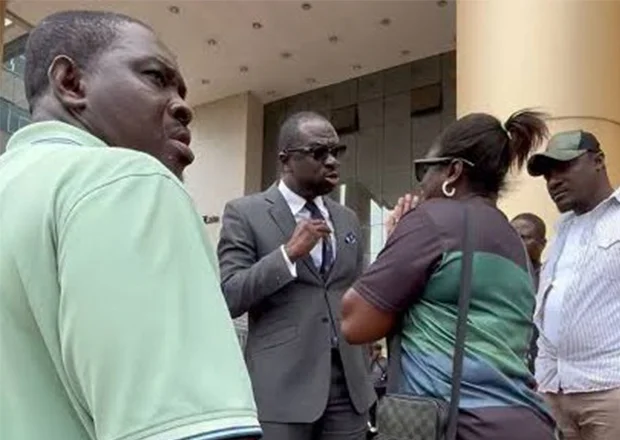
Recent controversies show how quickly different questions can collapse into one political verdict. In the @GhanaJollof investigation, police have made serious allegations about financial links and the recruitment and redistribution of unlawful online material. Those claims require evidence and due process. In the cocaine case involving a shipment intercepted in France after allegedly leaving Ghana, the public is entitled to ask how it passed through the relevant systems. Accused persons are before the courts, and allegations must be proved there. The attempted arrest of Manhyia South MP Nana Agyei Baffour Awuah by EOCO raises its own questions about procedure and the lawful exercise of state power. None of these controversies should be settled by party loyalty or political appetite.
Facts don’t fly party flags.
The temptation is obvious. Government supporters may dismiss scrutiny as sabotage. Opposition supporters may present every allegation as proof of guilt. Both shortcuts are dangerous, though the government bears a particular responsibility: it commands public institutions and must show that they are acting lawfully, competently and transparently.
Yet political argument does not take place in a vacuum. When people see tangible improvements in their communities, they can compare those experiences with the claims made about them. When they see promises repeatedly postponed, unexplained failures and institutions that appear answerable only to party interests, suspicion becomes easier to sell. The opposition may exploit that suspicion, but it did not necessarily create the conditions that made it persuasive.
This is where manifesto delivery matters. It is not merely a communications strategy for defeating an opponent. It is the work of governing. A manifesto promise fulfilled can improve a life; a promise left unfulfilled deserves an honest explanation. Ministers should be able to say what was promised, what has been achieved, what has not, and what citizens should expect next. Independent institutions, journalists and citizens should be free to test those claims.
There is also a lesson for opposition parties. Scrutiny is most powerful when it is disciplined. If every investigation is called persecution, every security failure a conspiracy and every allegation a conviction, the opposition weakens its own credibility. The public is not served by replacing government propaganda with opposition propaganda. It is served by evidence, consistency and a willingness to apply the same standards to one’s own side.
Ghana’s political parties will continue to compete, and election cycles will bring the familiar din. But voters are not obliged to choose between official self-congratulation and opposition outrage. They can ask the harder questions: What was promised? What has changed? What does the evidence establish? Who is accountable, and under what law?
For governing parties, the answer to perfidious propaganda is not to become more skilful at denouncing it. It is to govern so that the public can distinguish accusation from experience. Deliver what was promised. Explain what was not. Protect the independence of institutions, even when they scrutinise your own side.
Facts on the ground cannot end political disagreement. They can, however, give citizens something firmer than insinuation on which to judge it. That is the democratic advantage of good government, and the obligation of every government that asks the people for their trust. That’s how wise and aspirational Africans can protect and secure thriving, stable democratic Ubuntu societies.
Hmmm, Anansesemkrom Ghana paaa diyɛɛ. Tweaaaaaaaaa

 Gold shipments resume as Ghana rebuilds foreign exchange reserves — BoG governor
 ECG unions to stage nationwide protest over proposed private sector participatio...
 ‘That penalty is a joke’ — Queiroz rejects referee decision in Ghana’s loss to C...
 GBA criticises EOCO over attempted arrest of lawyer Baffour Awuah at court premi...
 'Sceptics, naysayers, alarmists should be aware US ready to work with Ghana on r...
 Ibrahim Mahama took me abroad for surgery after Lordina’s intervention – Dzokoto
 President Mahama to Walk the Runway on November 7
 Heavy fighting, internet disruption as Ethiopia conflict rages
 Saudi reports fresh Houthi attacks as France pledges to defend key oil port
 Israel must win 'because we’ve got no other choice’, PM Netanyahu tells UN


