




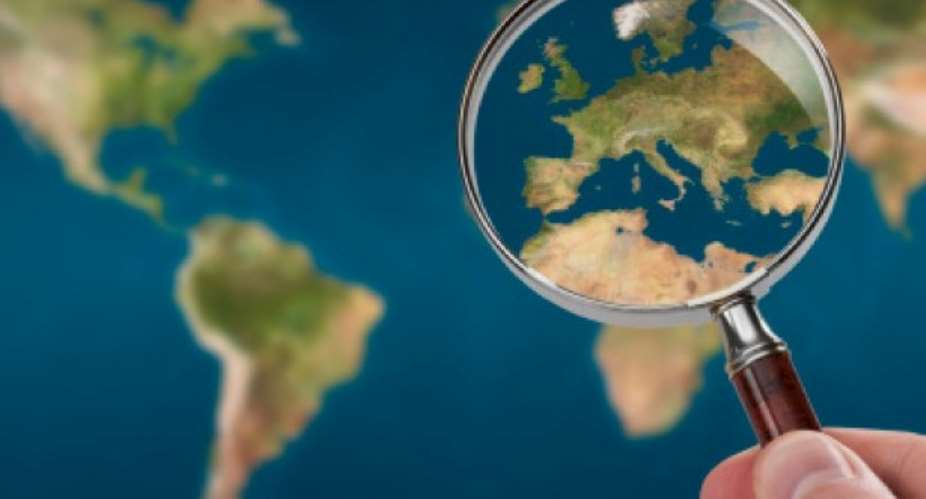
Africa in 2026 is not choosing between two great powers so much as being courted by a crowded field of them, and the contest over what African sovereignty actually means, control over resources, security or narrative, sits at the centre of it.
Russia's pitch: sovereignty as security
Russia has built its African strategy around a specific promise: non-interference, respect for sovereignty and freedom from Western conditions.
In practice, this has meant military partnerships, particularly through the Africa Corps (successor to Wagner), which now operates across the Sahel, providing arms, training and regime protection to juntas in Mali, Burkina Faso and Niger.
Russia consolidates its position through narratives against the West that stress sovereignty, non-intervention and anti-neocolonialism, alongside efforts to build ties in mining, hydrocarbons and energy.
But the results are mixed at best. In Mali, roughly 1,000 Russian Africa Corps combatants have helped secure convoys against a JNIM blockade of Bamako that has persisted since September 2025, yet insurgent violence has continued largely unabated, and jihadist groups have shown they can pressure urban areas directly.
The April 2026 loss of Kidal, a city Wagner had helped the junta capture in 2023, to Tuareg rebels using drones against Russian and Malian forces, exposed how fragile Russia's regime-protection model really is. In many rural areas, abuses attributed to Russian-linked forces have further alienated local communities from Russia's presence.
Sovereignty rhetoric, in other words, has not reliably translated into sovereignty in fact, security remains contested, and civilian trust in the very forces meant to secure it has eroded.
Europe's pitch: partnership, still finding its feet
Europe's 2026 approach is a flurry of summitry. Italy is hosting its Africa summit on the continent for the first time; France is holding its Africa-France summit in Nairobi, its first outside the francophone sphere; smaller EU states like Estonia, Latvia and Slovenia have joined the diplomatic push.
The stated goal is to move beyond symbolism toward steady, effective partnership in an increasingly multipolar Africa.
The gap between ambition and substance is the persistent criticism. European commitments are often ambitious but weakly institutionalised, which reinforces scepticism among African partners, and initiatives are frequently framed reactively, as efforts to counter Chinese, Russian or Turkish influence rather than as offers judged on their own merits.
African governments, for their part, tend to be pragmatic, weighing offers by tangible outcomes rather than geopolitical alignment.
That pragmatism cuts both ways: it also means African states, including some under AU suspension for coups, have shown up at Russian and Saudi summits regardless of continental norms, a sign that bilateral self-interest can override collective African positions when convenient.
Sovereignty as the battlefield, not just the buzzword
What both powers share, despite their different methods, is a recognition that "sovereignty" itself has become the currency of the contest. Russia sells sovereignty as freedom from Western political conditions. Europe, still shadowed by its colonial history, must sell partnership without looking like it is simply trying to hold ground.
Both, alongside China, Turkey, the US and Gulf states, are competing over the same underlying prize: access to Africa's critical minerals, its growing population and its position astride key maritime routes between the Atlantic, the Mediterranean, the Red Sea and the Indo-Pacific.
For African states, this is analysis rather than settled fact, but the real test of sovereignty in this moment may not be which flag flies at a security base or which country funds a summit.
It may be whether African governments and institutions, the African Union, ECOWAS and national parliaments, are strong enough to judge every offer, Russian, European or otherwise, on its actual terms, rather than accepting whichever partner arrives with the most immediate promise of protection or investment.
Mustapha Bature Sallama
Medical/ Science Communicator,
Private Investigator, Criminal Investigation and Intelligence Analysis,
International Conflict Management and Peacebuilding. (USIP)
[email protected]
+233555275880
Sources
Carnegie Endowment for International Peace, "Russia in Africa: Examining Moscow's Influence and Its Limits," 2026 (https://carnegieendowment.org/research/2026/02/russia-role-west-southern-africa-junta-wagner-africa-corps)
European Council on Foreign Relations, "From summits to substance: Europe's chance to meet Africa on its terms," March 12, 2026 (https://ecfr.eu/article/from-summits-to-substance-europes-chance-to-meet-africa-on-its-terms/)
Real Instituto Elcano, "Russia's new security order in the Sahel and its Euro-Atlantic implications," July 1, 2026 (https://www.realinstitutoelcano.org/en/analyses/russias-new-security-order-in-the-sahel-and-its-euro-atlantic-implications/)
Modern Diplomacy, "Africa in the New Great Power Competition: China, Russia, and the West," May 23, 2026 (https://moderndiplomacy.eu/2026/05/23/africa-in-the-new-great-power-competition-china-russia-and-the-west/)
Geopolitika.it, "Europe, Russia and Africa: Geopolitics, Critical Minerals, and the New Global Power Competition," July 7, 2026 (https://www.geopolitika.it/en/europe-russia-and-africa-the-new-geopolitical-competition-for-influence-and-strategic-resources/)
Seun Bamidele, "Russia's Strategic Engagement in Africa: Great Power Competition, Sovereignty, and the Politics of Multipolarity," 2025 (https://doi.org/10.1177/09735984251374293)

 Mahama asks MFWA, GJA to lead national dialogue on hate speech
 Teenage pregnancy: Parents ‘too busy’ to notice warning signs – Protect Our Futu...
 NPP intelligence points to cocaine manufacturing in Ghana – Baffour Awuah
 NPP's Obiri Boahen sues two Tiktokers over alleged defamation
 Ghanaian Pastor Rev Emmanuel Boakye-Danquah on the run over alleged counterfeit ...
 Sammy Crabbe reveals why most NPP members moved to NDC and became star performer...
 Ghana, Trinidad and Tobago sign air services agreement
 Finance Ministry to write off about US$120m of TOR’s legacy debt
 High profile busts must go with high profile prosecution – Rev Ntim Fordjour
 Ghana Maritime Authority dismisses claims of ineffective vessel monitoring in Gh...


