




A Call for Restraint
Beyond the sensational headlines lies a harder question: how did private material involving one of Ghana’s most protected public figures become public at all — and what does it reveal about the security culture surrounding our highest-profile personalities?
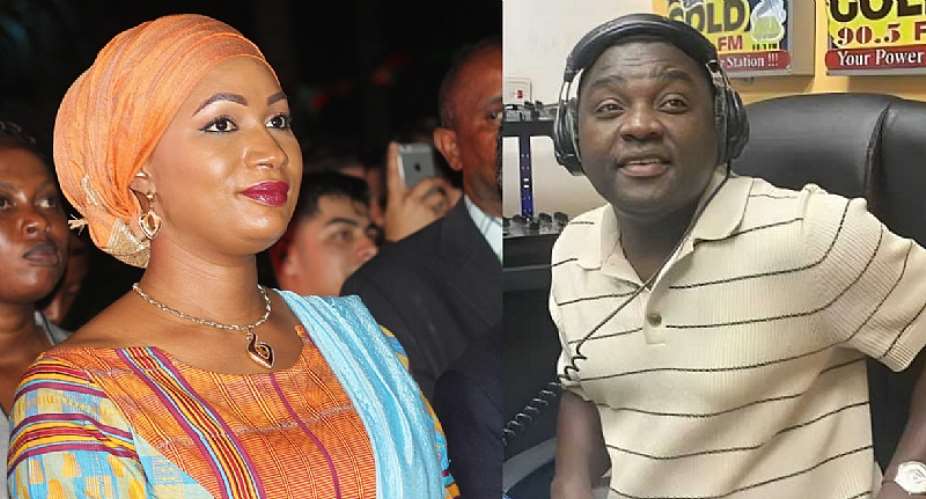
The recent exposé by Kevin Taylor concerning H.E. Hajia Samira Bawumia, former Second Lady of the Republic, has generated intense public interest. While the sensational aspects of the broadcast have dominated social media commentary, as an astute student of security studies, I view this incident through a different lens: a catastrophic failure of personal security protocol and digital tradecraft.
This is not to validate or amplify the explicit and unjust allegations made. That is not the purpose of this article. The purpose is to draw urgent lessons for all public figures and their protective details.
Set aside, for a moment, the accusations and the counter-accusations. The uncomfortable question this episode leaves behind is institutional: how does a person who should rank among the best-protected women in Ghana come to conduct sensitive private interactions on channels that a first-year intelligence officer could compromise?
For readers joining late: Mr Taylor, a US-based Ghanaian political journalist and social commentator, publicly alleged an extramarital affair between the former Second Lady and “Dr. Sledge,” a prominent associate linked to the Vice President’s inner circle, claimed to hold supporting evidence, and named media personality Nana Ama McBrown as a witness. After days of political friction and public outrage, he walked the assertions back in an “apology” that appeared to be sarcastic and cynical, even as he continued to attack the NPP political camp.
In close protection doctrine, there is a cardinal principle: the protectee does not dictate security — security dictates the protection. In Ghana, however, we have cultivated a dangerous culture of familiarity, in which security details and protocol officers are treated as personal aides rather than professional advisors.
If the allegations of sensitive private communications now in the public domain are true, the fundamental error is not merely personal indiscretion. It is a security breach. A person of the status of a former Second Lady is a high-value personality. She remains a symbol of the state — a figure of interest to domestic and foreign intelligence, to political adversaries, and to opportunists.
For such a personality to allegedly conduct sensitive personal interactions on open, unencrypted and easily compromisable platforms is reckless.
It violates every principle of protective intelligence. A senior public figure cannot communicate like a commoner. The office demands compartmentalization.
To an adversary — political, criminal or foreign — an insecure phone is not a communication device; it is a complete dossier: contacts, movements, schedules and confidences in one handheld file. No hostile service, no blackmail artist and no political opponent could dream up an opening more generous than the one carelessness provides.
The blame, diplomatically speaking, must lie first with the principal’s refusal to heed professional advice. No security officer can protect a principal who insists on having her way. When a protectee overrules advice on what platform to use, who to meet, where to meet and what to put in writing, she neutralizes her own security. Having known the Second Lady personally and her larger family (both in the military and in political life), it is an understatement to state that one consenus we have all arrived at is that she is a stubborn person.
This, howver, is not an indictment of one woman; it is a description of a system. We apply rigid discipline to principals inside the seat of government, then abandon it the moment they pass through the gate. Status may retire; threat does not. Until Ghana treats the protection of former officeholders as a continuing security responsibility rather than a courtesy, we will keep receiving this lesson in public.
This incident must be a watershed moment for Ghana’s political class and for the security services attached to them.
To our politicians: Your status does not end when you leave office. You are permanently in the public record. Your digital footprint is a national security footprint. You must insist on encrypted, ephemeral communication for any sensitive matter. Platforms offering end-to-end encryption, disappearing messages and device-level security are not for criminals; they are standard tradecraft for diplomats, executives and protected persons globally.
Assume that every channel can one day be compromised — by hackers, by insiders, by politics — and write accordingly. The only truly secure message is the one you never send.
To our security details: Familiarity is your greatest enemy. Professional distance must be maintained. Your duty is not to be liked by your boss; it is to keep your boss safe — even from herself. You must have the professional courage to say, “No, Your Excellency, we cannot do it this way,” and to enforce strict communication and movement protocols.
An officer who cannot correct a principal does not belong on the detail; and a service that punishes officers for enforcing protocol will keep producing exactly this kind of headline.
To Kevin Taylor, I write as an observer who understands the role of the investigative press. You have achieved your stated objective. You have forced into the public domain what you believe to be evidence of a double life, and you have triggered a national conversation about hypocrisy and public morality. The message has landed.
To continue to release more explicit material, hour after hour, moves the exercise from public-interest journalism to personal humiliation. This is where restraint becomes a professional virtue.
Hajia Samira Bawumia is not just any citizen. She is a former Second Lady of the Republic of Ghana, a mother, and a prominent Muslim woman who represents a faith community that holds modesty and dignity in high esteem. To overdo this exposé, or to possibly strip her naked is to inflict collateral damage on the image of Ghanaian womanhood, on the institution of the Second Ladyship, and on the sensibilities of millions of Ghanaian Muslims who look up to her.
Journalistic power must be exercised with proportionality. Expose the security lapse, make the point about character and leadership — and then hold your fire. Allow the lesson to be learned.
I am one of your devout listeners and we always watch you for accountable leadership. Given endless humiliation, your audience will begin to feel complicit in cruelty, and the exposé will lose the very moral authority that made it matter. Restraint, Mr Taylor, is not retreat; it is the difference between journalism and a siege.
Three lessons stand out.
1. A failure of information security. Sensational claims — whether true, exaggerated or fabricated — travel because of leaks, informal access points and unmonitored communication inside a principal’s immediate orbit. Political opponents weaponise what insiders expose.
2. Reputational and political vulnerability. The primary threat is not the allegation itself but the public degradation of the family’s brand. Attacks on personal morality are engineered to erode conservative, faith-based and northern electoral support — which is precisely why they are so tempting.
3. Close-protection discipline disregarded. Close-protection protocols, communications hygiene and movement discipline are routinely bypassed or ignored by high-profile principals. That operational laxity opens the door to unauthorised access, media exploitation and blackmail.
The way forward is equally direct.
1. Empower the detail. Executive handlers and protection officers must be formally empowered — with cover from the very top — to enforce standard operating procedures, regardless of a principal’s preference.
2. Mandate communications security. End-to-end encrypted, dedicated channels must govern every sensitive interaction involving high-profile principals, denying leverage to leakers and interceptors alike.
3. Refuse the social-media war. Do not trade blows with speculative commentators; let legal and communications teams manage the narrative quietly, while the state’s energy goes into governance.
Let this unfortunate episode serve as a curriculum at the Ghana Police Academy, at the National Intelligence Bureau, at the ‘Blue Gate’, and in every political party office.
Ghana is bigger than any single scandal. May we prove it — not by shouting over the next one, but by quietly fixing whatever made this one possible.


 'Ghana Jollof' case is a foolish case – Martin Kpebu tells Police CID
 'I don’t know Kevin Taylor, I will speak to his father to stop him from insultin...
 CPP appeals to Mahama for return of confiscated party property after overthrow o...
 Drug bust: 'Ghana’s reputation is not one party’s reputation’ – Dr. Adomako Kiss...
 ‘What is happening in the media space is horrifying’ – Kwesi Pratt condemns ‘irr...
 Mahama asks MFWA, GJA to lead national dialogue on hate speech
 Teenage pregnancy: Parents ‘too busy’ to notice warning signs – Protect Our Futu...
 NPP intelligence points to cocaine manufacturing in Ghana – Baffour Awuah
 NPP's Obiri Boahen sues two Tiktokers over alleged defamation
 Ghanaian Pastor Rev Emmanuel Boakye-Danquah on the run over alleged counterfeit ...


