




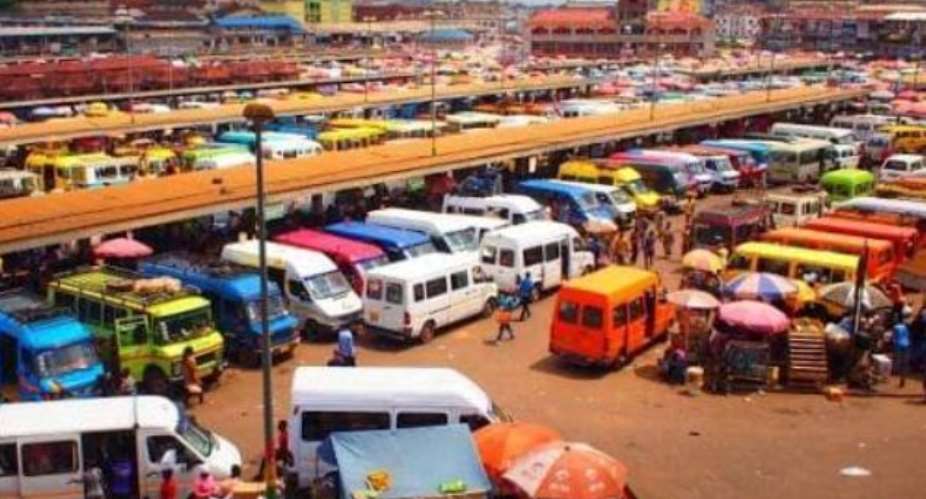
From Saturday, September 26, Ghanaians will pay 8% more to ride trotros, shared taxis and other commercial public transport, after weeks of negotiations between the Ministry of Transport, the Ghana Private Road Transport Union (GPRTU) and the Ghana Road Transport Coordinating Council (GRTCC).
For the millions who depend on these vehicles every day, the number on a press release becomes something felt at the roadside, in the market and in the household budget.
How this fare hike came about
The GPRTU and GRTCC had pushed for an upward review, pointing to rising operational costs, fuel prices, vehicle maintenance, spare parts, lubricants and insurance among them. Their opening demand was steep: a 30% increase.
At their first formal engagement with the Ministry on September 8, the government countered with a support measure instead, a GH¢2-per-litre intervention on diesel, meant to ease pressure on both operators and commuters.
A joint technical team from the Ministry, GPRTU and GRTCC then spent weeks reviewing the actual cost inputs before settling on the final, more modest figure: 8%.
A year of repeated increases
This is not commuters' first fare shock in 2026. A 20% increase took effect on June 2, driven by the same complaints, fuel and spare-parts costs, that resurfaced in September.
Using the pattern from that earlier hike, a GH¢10 trip that once cost GH¢10 became about GH¢12; the new 8% adjustment stacks a further rise on top of that.
For someone commuting twice a day, five or six days a week, these repeated adjustments compound quickly into a real cut in disposable income, even when each single increase looks modest in isolation.
The strain before the increase even lands
Life at the bus stop was already difficult before this latest hike. On the Nungua-Accra route, a shortage of vehicles has reportedly left commuters paying more than three times the normal fare just to get a ride.
Heavy rain has repeatedly stranded commuters, with downpours triggering transport chaos on routes like Madina-Adenta and leaving people stuck at Circle overnight.
Layered onto a system already under pressure, an 8% fare rise does not land on a stable baseline; it lands on commuters who are already paying more, in cash or in waiting time, than the official fare structure suggests.
The real problem behind the pain: earnings, not just fares
This is analysis, but it is worth stating plainly: an 8% fare increase would matter far less if ordinary Ghanaians' incomes were rising to match it. A fare hike is a burden in proportion to what is left in someone's pocket, not in isolation.
For a worker whose salary grows with inflation, or a trader whose sales are strong, an extra few cedis on a trotro ride is an inconvenience. For someone whose income has stayed flat, or whose business is struggling, it is a direct cut into money that was already not enough.
That is the deeper story behind the anger over this fare hike. Businesses across many sectors report that sales have slowed, and people are simply not buying as much as they used to.
When trade moves slowly, the money that would ordinarily be earned from customers does not materialise, and many people are left spending only what they physically have in hand at a given moment, not what they have actually earned or are owed. A trader waiting on a customer to pay, or a worker waiting on a delayed salary, still has to find transport money today.
In that environment, people are not managing a budget planned around expected income; they are managing survival, spending what is in the pocket right now and hoping the next inflow arrives before it runs out. A fare increase lands hardest exactly on that group, people already living hand to mouth rather than income to expense.
Who absorbs the cost
The burden falls unevenly. Workers on fixed salaries, students travelling to school and back, and traders moving goods to market all face the same arithmetic: transport is not optional, so a fare increase is not a purchase you can defer.
For traders, especially those in the informal sector who carry goods on public transport, a rise in fares adds directly to the cost of doing business, a cost that often gets passed on to the price of tomatoes, bread or fabric at the market.
For students and workers, it is simply less money left over once the commute is paid for. Not every increase has been legitimate
Part of the anger commuters feel is not only about the officially agreed increase but about arbitrary ones.
In August, some GPRTU branches reported operators abandoning stations for more profitable routes and imposing unauthorised charges, including the practice of splitting long journeys into shorter segments to extract more money from passengers, despite a June 2026 joint statement from GPRTU and GRTCC directing operators to maintain approved fares.
That history means commuters heading into this latest 8% adjustment have reason to watch closely whether operators charge only what was agreed, or use the moment to add more.
The balancing act nobody fully wins
Transport operators are not simply profiteering; many say they are running at a loss under current fuel and maintenance costs, and a separate proposed 30% increase was paused earlier this month specifically to protect commuters from a sharper spike while negotiations continued.
The Bank of Ghana has itself warned that rising transport and haulage costs could feed into broader inflation, meaning today's fare increase is not an isolated event but one thread in a wider cost-of-living picture that touches food prices and household budgets far beyond the bus stop.
The lesson for policymakers
If this pattern of fare adjustments is to stop feeling like a fresh wound each time, the underlying question cannot only be about diesel prices and spare parts. It has to be about whether ordinary Ghanaians' earning power is growing at all.
A fare structure can be renegotiated every few months; a stagnant income, or a slow season for traders and small businesses, cannot be fixed by a GH¢2-per-litre diesel intervention.
Until incomes and business activity genuinely strengthen, each new fare adjustment, however modest on paper, will keep landing on people with less room to absorb it than the numbers suggest.
Mustapha Bature Sallama
Medical/ Science Communicator,
Private Investigator, Criminal Investigation and Intelligence Analysis,
International Conflict Management and Peacebuilding. (USIP)
[email protected]
+233555275880
References
MyJoyOnline, "Public transport fares to increase by 8% from September 26," Sept. 22, 2026. https://www.myjoyonline.com/public-transport-fares-to-increase-by-8-from-september-26/
Pulse Ghana, "Ghana Public Transport Fares to Rise by 8% from Sept 26," Sept. 22, 2026. https://www.pulse.com.gh/story/ghana-public-transport-fares-increase-september-26-2026092221060128802
YEN.COM.GH, "Ghana Public Transport Fares to Rise by 8% From September 26, 2026," Sept. 22, 2026. https://yen.com.gh/ghana/312397-ghana-public-transport-fares-rise-by-8-september-26-2026/
Adomonline.com, "Transport fares to go up 8% from Saturday," Sept. 22, 2026. https://www.adomonline.com/transport-fares-to-go-up-8-from-saturday/
The Herald Ghana, "Public transport fares go up 8% from September 26," Sept. 22, 2026. https://theheraldghana.com/public-transport-fares-go-up-8-from-september-26/
abcnewsgh, "Public Transport Fares to Go Up by 8% From September 26," Sept. 22, 2026. https://abcnewsgh.com/public-transport-fares-to-go-up-by-8-from-september-26/
Streamlinefeed, "Ghana Pauses 30 Percent Transport Fare Hike Amid Fuel Floor Negotiations," Sept. 2026. https://streamlinefeed.co.ke/news/ghana-pauses-30-percent-transport-fare-hike-amid-fuel-floor-negotiations
allAfrica, "Ghana: Trotro Fares - Stop the Arbitrary Increases," Aug. 2026. https://allafrica.com/stories/202608280351.html
GHRadio1, "Transport fares to rise 20% from June 2 as GPRTU cites fuel prices and rising operational costs," May 31, 2026. https://www.ghradio1.com/news/article.php?id=1013
GhanaWeb, "Public transport fares to increase by 20% from June 2," May 30, 2026. https://www.ghanaweb.com/GhanaHomePage/business/Public-transport-fares-to-increase-by-20-from-June-2-2036999


 Ghanaian Pastor Rev Emmanuel Boakye-Danquah on the run over alleged counterfeit ...
 Four granted bail over alleged kidnapping and torture of Assin Fosu man
 Man remanded for allegedly posing as soldier and extorting from residents
 Sammy Crabbe reveals why most NPP members moved to NDC and became star performer...
 Ghana, Trinidad and Tobago sign air services agreement
 Finance Ministry to write off about US$120m of TOR’s legacy debt
 High profile busts must go with high profile prosecution – Rev Ntim Fordjour
 Ghana Maritime Authority dismisses claims of ineffective vessel monitoring in Gh...
 AI risks, Iran war to take center stage at UN
 ‘I had never heard of Eswatini’: Deported by the US to a country that rejects th...


