




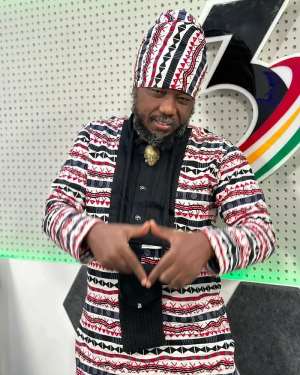
For decades, the Rastafarian movement worldwide has carried a distinct visual and ideological identity. Central to this faith and its surrounding culture is an unrelenting commitment to truth, justice, and solidarity with the downtrodden. The locks worn by a true Rastafarian are not a mere fashion statement; they represent a vow to speak truth to power, stand against "Babylonian" oppression, and shield the vulnerable from state excesses.
In Ghana, few media personalities have embodied this visual aesthetic as visibly as Blakk Rasta. With his trademark locks, reggae-infused commentary, and fiery airwave rants, he has long positioned himself as a fearless crusader for the masses. Yet, a closer examination of his recent commentary on national issues leaves a lingering and uncomfortable question: Is Blakk Rasta truly practicing Rastafarianism, or is he simply a man with dreadlocks using the culture as a convenient microphone?
The Ideological Paradox of the "Reggae Crusader"
Rastafarian philosophy is built on defending the weak against systemic overreach. Historically, reggae icons like Bob Marley, Peter Tosh, and Burning Spear used their platforms to confront state apparatuses and champion the ordinary citizen.
However, critics argue that Blakk Rasta’s recent commentary reflects the exact opposite of this tradition. Rather than directing his vocal energy toward systemic failures and state overreach, his platform frequently appears focused on highlighting the missteps of lesser-known individuals who cross paths with state authorities.
A case in point is his stance during the high-profile extradition of Frederick Kumi, popularly known as Abu Trica, to the United States. While state legal procedures played out, the commentary on Blakk Rasta’s platform leaned heavily toward endorsing the state machinery's actions rather than interrogating procedural nuances, human rights, or systemic power dynamics.
More recently, his platform has zeroed in on "Ghana Jollof," an anonymous TikTok commentator involved in ongoing legal disputes with state security apparatuses. For a broadcaster whose locks signal alignment with the marginalized, devoting significant airtime to aiding or applauding state actions against online commentators strikes many observers as a stark reversal of traditional Rastafarian values.
Silence on Pressing National Realities
What renders this stance even more glaring is his silence or muted criticism surrounding larger structural issues affecting ordinary Ghanaians today.
Strikingly, Blakk Rasta has gone quiet on the fight against illegal mining, rising fuel prices, unfulfilled political promises such as the 24-hour economy policy, and persistent youth unemployment. As environmental degradation continues to pollute water bodies and living costs climb, the masses expect a fierce, unyielding anti-establishment voice to speak truth to power. On the contrary, the "dreadlocks man" has shown little interest in these pressing issues that widen the gap between the rich and the poor.
A true Rastafarian voice does not pick and choose when to fight power; it remains consistent regardless of who sits in the corridors of authority. When a media personality reserves his sharpest arrows for online figures and ordinary citizens while remaining visibly gentle on systemic state shortcomings, the public is forced to question the authenticity of his crusade.
Dreadlocks vs. Rastafari
Wearing dreadlocks is an external choice; being a Rastafarian is an internal conviction. Anyone can grow hair, twist it into locs, and speak with a rhythmic cadence on the radio. But Rastafari demands moral clarity—it requires standing firmly with the weak, challenging state heavy-handedness, and maintaining absolute fairness in public commentary.
If Blakk Rasta wishes to remain the voice of the people, his commentary must align with the foundational tenets of the culture he projects. Until his platform turns its full focus toward holding powerful institutions accountable rather than punching down at ordinary individuals, many will continue to view his locks not as a symbol of spiritual and social resistance, but simply as a personal style choice.

 Sammy Crabbe reveals why most NPP members moved to NDC and became star performer...
 Ghana, Trinidad and Tobago sign air services agreement
 Finance Ministry to write off about US$120m of TOR’s legacy debt
 High profile busts must go with high profile prosecution – Rev Ntim Fordjour
 Ghana Maritime Authority dismisses claims of ineffective vessel monitoring in Gh...
 AI risks, Iran war to take center stage at UN
 ‘I had never heard of Eswatini’: Deported by the US to a country that rejects th...
 Transport fares increased 8% from September 26
 Golokuati residents call for operationalisation of abandoned ECG office


