




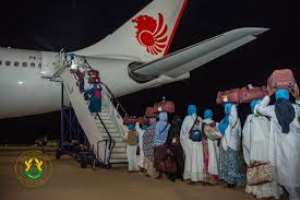
Understanding Tamattu’: Tamattuʿ consists of two separate acts of worship:
- ʿUmrah
You enter ihram → perform Tawaf → perform Saʿi → shave/trim your hair → leave ihram.
Then: You remain in Makkah without ihram until 8 Dhul-Hijjah.
- Hajj
You enter ihram again → Mina → Arafah → Muzdalifah → Mina/Jamarat → Tawaf al-Ifadah → Saʿi → Tawaf al-Wadaʿ before departure.
Stage 1 --- Before Leaving Home
Your Hajj should begin before you board the aircraft.
1. Make sincere Tawbah
Ask Allah to forgive:
- Your sins
- Deliberate and accidental mistakes
- Sins against other people
- Shortcomings in prayer
- Family disagreements
- Anything you know and anything you have forgotten.
If you owe someone money, return it. If you have ronged somebody, seek forgiveness if appropriate.
2. Settle your debts where possible
Hajj is not simply a physical journey. You want to meet Allah with as clean a record as possible.
3. Make your intention
Your intention is fundamentally in the heart. You don't need a complicated formula. When entering ihram for Umrah, you say: لَبَّيْكَ اللَّهُمَّ عُمْرَةً Labbayka Allahumma ʿUmrah "Here I am, O Allah, for ʿUmrah."
Stage 2 --- At the Miqat
This is extremely important. You must not pass the Miqat intending Umrah without entering ihram. The Saudi Ministry explains that pilgrims arriving by air should enter ihram before crossing the relevant Miqat or its parallel point.
Before reaching the Miqat, it is Sunnah to:
- Perform ghusl
- Trim your nails if necessary
- Remove unwanted body hair
- Put on perfume before entering ihram
- Wear your ihram.
For men: lower garment = izar; upper garment = rida. For women, there is no special two-piece ihram garment; ordinary modest Islamic clothing is sufficient. Then make your intention and begin the Talbiyah.
The Talbiyah
This will become one of the most familiar phrases of your Hajj. Say:لَبَّيْكَ اللَّهُمَّ لَبَّيْكَ لَبَّيْكَ لَا شَرِيكَ لَكَ لَبَّيْكَإِنَّ الْحَمْدَ وَالنِّعْمَةَ لَكَ وَالْمُلْكَلَا شَرِيكَ لَكَ
Labbayka Allahumma labbayk. Labbayka la sharika laka labbayk. Innal-hamda wan-niʿmata, laka wal-mulk. La sharika lak.
Meaning: Here I am, O Allah, here I am. Here I am; You have no partner; here I am. Surely all praise, blessings and sovereignty belong to You. You have no partner. [Men may raise their voices with the Talbiyah, while women recite it quietly. Continue making Talbiyah frequently until you reach Makkah and begin Tawaf.]
Stage 3 --- Arriving in Makkah
When you see the Kaʿbah, don't become preoccupied with taking photographs. This is an extraordinary moment. Raise your hands and ask Allah for whatever is in your heart. There is no reliably established special duʿā that you must recite upon first seeing the Kaʿbah.
You can say: اللهم زد هذا البيت تشريفاً وتعظيماً ومهابةً وأمناً
Allāhumma zid hādhā al-bayta tashrīfan, wa taʿẓīman, wa mahābatan, wa amnan. [“O Allah, increase this Sacred House in honour and dignity, in greatness and reverence, in awe and respect, and in peace and security.”] The word مهابة (mahābah) is particularly meaningful here. It conveys the feeling of awe and profound respect that the Sacred House inspires, rather than simply “fear.”
Or simply say: "O Allah, accept my Hajj, forgive my sins and make me among those whom You have accepted." Then prepare for Tawaf.
STAGE 4 --- TAWAF OF UMRAH
You will make seven circuits around the Kaʿbah. Start at the Black Stone. Face the Black Stone and say: بِسْمِ اللهِ، اللهُ أَكْبَر
Bismillah, Allahu Akbar. If you can reach it without pushing or harming anybody, you may touch or kiss it. Never fight your way through people to reach it. If you cannot reach it, simply point toward it and say Allahu Akbar! Then begin walking. The Kaʿbah must remain on your left side. One complete circuit = from the Black Stone back to the Black Stone. Seven circuits = seven.
WHAT DO I SAY DURING TAWAF?
This is where many pilgrims become unnecessarily worried. There is no authentic requirement to memorize seven different duʿās for seven circuits. You can: make dhikr, recite Qur'an, make istighfar, send salawat upon the Prophet ﷺ, make personal duʿā, ask Allah for forgiveness, ask for Jannah, ask for your family, ask for your deceased parents, ask for your children, ask for health, guidance and a good ending.
A particularly beautiful duʿā is:
Rabbana atina fid-dunya hasanatan, wa fil-akhirati hasanatan, wa qina ʿadhaban-nar. ["Our Lord, give us good in this world and good in the Hereafter, and protect us from the punishment of the Fire."] Between the Yemeni Corner and the Black Stone, this duʿā is especially well established.
AFTER SEVEN CIRCUITS
Pray two rakʿahs if possible behind Maqam Ibrahim. If the area is crowded, pray elsewhere in the Haram. Then drink Zamzam. While drinking, ask Allah for whatever good you desire.
For example:
"O Allah, grant me beneficial knowledge, righteous deeds, forgiveness, good health, a peaceful heart, a good ending and Jannatul-Firdaws."
STAGE 5 --- SAʿI BETWEEN SAFA AND MARWA
You now proceed to Safa. When approaching Safa, you may recite:
إِنَّ الصَّفَا وَالْمَرْوَةَ مِنْ شَعَائِرِ اللَّهِ --- Innas-Safa wal-Marwata min shaʿa'irillah. "Indeed, Safa and Marwah are among the symbols of Allah." Then face the Kaʿbah and praise Allah.
You can say: الله أكبر، الله أكبر، الله أكبر Allāhu Akbar! Allāhu Akbar!! Allāhu Akbar!!! [“Allah is the Greatest. Allah is the Greatest. Allah is the Greatest.”] Then: Lā ilāha illallāhu waḥdahu lā sharīka lah, lahul-mulku wa lahul-ḥamd, wa huwa ʿalā kulli shay'in qadīr. [“There is no god worthy of worship except Allah, alone, without any partner. To Him belongs the dominion, and to Him belongs all praise, and He has power over all things.”]
Together, the two portions make a powerful declaration of Allah's greatness, His oneness (tawḥīd), His sovereignty, and His absolute power. Then make your personal duʿā.
Then walk toward Marwah. Safa → Marwah = 1
Marwah → Safa = 2. Continue until: Safa → Marwah = 7
Therefore you finish at Marwah. Men should walk briskly between the designated green markers where possible. Women walk normally.
STAGE 6 --- COMPLETE YOUR UMRAH
After completing Saʿi, men either shave the entire head (halq), or trim the hair. Shaving is generally regarded as more virtuous. Women trim a small portion of the hair. You are now out of ihram.
Your Umrah is complete.
You can now wear normal clothes, use perfume, cut your nails, have marital relations, and live normally. This is the special feature of Tamattuʿ.
STAGE 7 --- THE DAYS BEFORE HAJJ
This period is precious. Don't exhaust yourself with unnecessary trips around Makkah. 1. Concentrate on: Salah (pray as much as possible in the Haram), read Qur'an, make dhikr (say: SubhanAllah, Alhamdulillah, Allahu Akbar, La ilaha illallah, Astaghfirullah, Salawat --- send blessings upon the Prophet ﷺ.) 2. Make Duʿā --- Prepare a written list of everything you want to ask Allah for. This is something I strongly recommend.
YOUR PERSONAL HAJJ DUʿĀ LIST
Divide it into categories.
- For yourself: O Allah, forgive all my sins, those I remember and those I have forgotten. O Allah, accept my Hajj and make it a Hajj Mabroor. O Allah, purify my heart. O Allah, grant me beneficial knowledge and righteous deeds. O Allah, give me a good ending.
- For your parents: O Allah, forgive my parents, have mercy upon them and reward them for raising me. If they are deceased: رَبِّ ارْحَمْهُمَا كَمَا رَبَّيَانِي صَغِيرًا Rabbir-hamhuma kama rabbayani saghira. "My Lord, have mercy upon them as they raised me when I was small."
- For your family: Ask Allah for: righteous children, unity, protection, guidance, health, halal provision, strong iman, good marriages, and protection from trials.
- For the Ummah: O Allah, forgive the believing men and women, the living and the dead.
STAGE 8 --- 8th DAY OF DHUL-HIJJAH: HAJJ BEGINS
This is Yawm al-Tarwiyah. Because you are doing Tamattuʿ, you now enter ihram again for Hajj. You can perform ghusl, wear ihram and make the intention: لَبَّيْكَ اللَّهُمَّ حَجًّا Labbayka Allahumma Hajjan. "Here I am, O Allah, for Hajj." Then begin the Talbiyah again.
STAGE 9 --- MINA
On 8 Dhul-Hijjah, pilgrims proceed to Mina. The Sunnah is to spend the day and night there and pray: Dhuhr, Asr, Maghrib, Isha and Fajr. Then proceed toward Arafah.
STAGE 10 --- 9th DAY OF DHUL-HIJJAH: THE DAY OF ARAFAH
This is the most important day of Hajj. The Prophet ﷺ said:
"Hajj is Arafah." Your objective is to be within Arafah during the prescribed time. After arriving: Pray Dhuhr and Asr. Then spend as much time as possible in Duʿā. This is not the day to spend hours taking photographs. It is a day for tears. A day for forgiveness. A day for asking Allah for everything.
THE BEST DHIKR OF ARAFAH
One of the most important supplications to memorize:
La ilaha illallahu wahdahu la sharika lah, lahul-mulku wa lahul-hamd, wa huwa ʿala kulli shay'in qadir.
"There is no god but Allah alone, without partner. To Him belongs the dominion and to Him belongs all praise, and He has power over everything." Repeat it frequently. Then make your own duʿā. Spend as much of Arafah as you can making duʿā.
STAGE 11 --- AFTER SUNSET: MUZDALIFAH
After sunset on 9 Dhul-Hijjah, proceed to Muzdalifah according to your group's official movement arrangements. At Muzdalifah, pray Maghrib and Isha as prescribed. Rest. Remember Allah. Collect pebbles if needed. Then spend the night there according to the applicable Hajj arrangements.
STAGE 12 --- 10 DHUL-HIJJAH: THE DAY OF SACRIFICE
This is Eid al-Adha. You proceed to Mina.
You perform:
- RAMI AL-JAMARAH AL_KUBRA --- Throw seven pebbles at the large Jamarah. With each throw, say: الله أكبر — Allahu Akbar. Do not throw all seven at once. One pebble = one throw.
- SACRIFICE --- Hady: Because you are performing Tamattuʿ, you are required to offer the hady sacrifice, subject to the relevant rules. Your Hajj operator will normally arrange this for you.
- SHAVE OR TRIM --- Men shave, or trim [Shaving is more virtuous.] Women trim a portion of the hair.
At this point, the first stage of release from ihram occurs according to the applicable rulings.
- TAWAF AL-IFADAH --- Return to Makkah and perform Tawaf al-Ifadah. This is one of the essential rites of Hajj. Then perform Saʿi between Safa and Marwah. Because you are doing Tamattuʿ, this Saʿi is required for your Hajj.
STAGE 13 --- 11th DAY OF DHUL-HIJJAH
Return to Mina. You throw at all three Jamarat:
- Small Jamarah --- 7 pebbles.
- Middle Jamarah --- 7 pebbles.
- Large Jamarah --- 7 pebbles.
Total: 21 pebbles. Say: Allahu Akbar! with each throw.
STAGE 14 --- 12th DAY OF DHUL-HIJJAH
Repeat:
- Small Jamarah — 7 pebbles
- Middle Jamarah — 7 pebbles
- Large Jamarah — 7 pebbles
Again, 21 pebbles. As usual, with each throw, say: Allahu Akbar! If you complete the required rites and depart Mina before sunset on the 12th according to the applicable ruling and arrangements, you may leave; otherwise you remain for the 13th and perform the additional stoning. Your Hajj group will normally organize this movement.
STAGE 15 --- TAWAF AL-WADAʿ
Before leaving Makkah, perform Tawaf al-Wadaʿ [Farewell Tawaf.] This is the final Tawaf before departure for those for whom it is required. After completing it, you should leave Makkah rather than treating it as the beginning of another sightseeing trip.
THE MOST IMPORTANT DUʿĀS I WOULD ASK YOU TO MEMORIZE
Rather than trying to memorize dozens of long Arabic supplications, learn these:
- For everything good: Rabbana atina fid-dunya hasanatan wa fil-akhirati hasanatan wa qina ʿadhaban-nar. [Our Lord, give us good in this world and good in the Hereafter and save us from the Fire.]
- For forgiveness: Allahumma innaka ʿafuwwun tuhibbul-ʿafwa faʿfu ʿanni. [O Allah, You are Pardoning and love to pardon, so pardon me.]
- For guidance: Rabbana la tuzigh qulubana baʿda idh hadaytana wa hab lana milladunka rahmah. [Our Lord, do not let our hearts deviate after You have guided us, and grant us mercy from You.]
- For your parents: Rabbir-hamhuma kama rabbayani saghira. [My Lord, have mercy upon them as they raised me when I was young.]
- For forgiveness for yourself: Rabbighfir li wa tub ʿalayya innaka antat-Tawwabur-Rahim. [My Lord, forgive me and accept my repentance. Indeed, You are the Accepter of repentance, the Merciful.]
- The great dhikr: La ilaha illallahu wahdahu la sharika lah, lahul-mulku wa lahul-hamd wa huwa ʿala kulli shay'in qadir. This is particularly beautiful to repeat at Arafah.
FIVE THINGS TO REMEMBER
1. DON'T FIGHT PEOPLE TO TOUCH THE KAʿBAH: Allah does not want you to hurt another Muslim while trying to perform a Sunnah.
2. DON'T THINK EVERY CIRCUIT HAS A SPECIAL DUʿĀ: You don't need a booklet saying "Duʿā for Tawaf 1, Duʿā for Tawaf 2..." You can make your own sincere duʿā.
3. DON'T WASTE ARAFAH: If there is one day on which you should put your phone away, it is 9 Dhul-Hijjah.
4. DON'T ARGUE: Allah says concerning Hajj: "...no obscenity, no disobedience, and no disputing during Hajj."
Your patience is part of your worship.
5. DON'T MAKE HARDSHIP YOUR MEASURE OF SUCCESS: A successful Hajj is not the Hajj in which you suffered the most. A successful Hajj is one that Allah accepts.
Finally, your Hajj should be a conversation with Allah. When you reach Arafah, don't merely recite somebody else's long Arabic duʿā. After praising Allah and making the established adhkar, talk to Allah from your heart.
Tell Allah:
"Ya Allah, You brought me here. I could not have come without You. You know everything about me. You know my weaknesses, my mistakes, my fears, my hopes and the things I cannot tell anybody. Forgive me. Accept me. Change me. Let me return home better than when I came." That, in my view, is one of the most beautiful ways to experience Hajj.
FUSEINI ABDULAI BRAIMAH
+233208282575 / +233550558008
[email protected]


 Israel must win 'because we’ve got no other choice’, PM Netanyahu tells UN
 Mahama reiterates Ghana's commitment to two-state solution to Palestine-Israel c...
 Ablakwa calls for Return of African Artefacts held abroad
 Madina MP Francis-Xavier Sosu reportedly collapses while speaking at GIMPA
 Kumasi drivers, passengers react to 8% transport fare increase
 I will unite Africa, Caribbean and Latin America into world's biggest trading bl...
 Mahama petitioned to halt Sentuo Airport Garden City construction after sod cutt...
 Government should not fund the $4 billion Accra-Kumasi Expressway project — Alan
 Democracy must deliver tangible social benefits to citizens – Mahama
 Court to rule on bail applications of six accused in 3.9-tonne cocaine seized in...


