





There is a piece of advice that sounds simple enough when spoken in a cool room: find the good in every situation. Look for the lesson. Search for the opportunity. Focus on what remains rather than what has been lost. Train the mind to see possibility where others see failure. It is an attractive piece of advice, particularly in a world people are constantly encouraged to be positive, resilient and pushful. But when life becomes genuinely challenging, the advice raises a difficult question: how possible is it, really, to find good in every situation? I suppose the answer will depend largely on what we understand by “good”.
If finding good means convincing ourselves that everything that happens to us is good, then the answer is no. Not everything is good. Some experiences are painful. Some are unfair. Some are devastating. Some leave wounds that cannot be healed by a motivational quotation or an optimistic interpretation.
Death is not made good simply because someone tells a grieving person to look for the positive. Betrayal is not transformed into something pleasant because it teaches us to be careful about whom we trust. Losing employment is not necessarily an opportunity in disguise when there are bills to pay and a family depending on an income. Failure can be humiliating. Rejection can hurt. Injustice can anger us for very good reasons. To insist that every bad experience contains something immediately good can sometimes become a subtle form of denial. It can prevent people from acknowledging their pain honestly.
But there is another interpretation of the idea, and this one is considerably more realistic: perhaps we are not required to find something good in everything that happens. Perhaps we are being invited to find something constructive in the way we respond to what happens. That distinction can change everything. A person may not be able to say, “What happened to me was good.” But he may eventually be able to say, “Something good came from the way I dealt with what happened.” The event and the response are not the same thing.
Consider the experience of losing a job. There may be nothing good about the immediate consequences. There may be anxiety, financial pressure, embarrassment and uncertainty. Yet, after the initial shock, a person may discover that the experience exposes a career he had outgrown, forces him to acquire a new skill, pushes him towards entrepreneurship or introduces him to people who eventually open another door. The job loss itself was not necessarily good. But something useful can emerge from it.
This is perhaps a more mature form of optimism. It does not require a person to lie to himself about reality. It asks him to recognize reality and then ask a different question: “Now that this has happened, what can I do with it?” That question is important because human beings do not experience events only through the events themselves. We also experience them through the meanings we attach to them.
Two people can experience similar setbacks and tell themselves entirely different stories. One might conclude, “This proves that I am a failure.” Another may conclude, “This has shown me where I need to grow.” One could see rejection as confirmation that he is unwanted. Another might see it as information that a particular relationship or opportunity was not right for him. The circumstances may be similar. But the internal interpretation can be different.
This is where the popular idea of “reprogramming the subconscious mind” enters the conversation. The phrase is often used loosely, sometimes giving the impression that the mind can be transformed simply by repeating positive statements. The reality is more nuanced. Human thought patterns can become habitual. What we pay attention to repeatedly, believe, interpret and practise can influence the way we automatically respond to familiar situations. Someone who repeatedly interprets difficulty as proof that life is against him may gradually become more pessimistic and defensive. Someone who repeatedly practises asking, “What is within my control here?” may become more inclined to search for solutions. This does not mean that a person can think his way out of every circumstance. Nor does it mean that positive thinking can prevent tragedy. It means that repeated mental habits can influence the lens through which we encounter life.
If a person repeatedly trains himself to look for possibility, his mind may become quicker at noticing possibility. If he repeatedly trains himself to expect catastrophe, his mind may become quicker at noticing danger. This is why gratitude, reframing and constructive self-questioning can be useful practices. But they work best when they are grounded in reality rather than fantasy.
There is a danger in the modern obsession with positivity. People can become so afraid of negative thoughts that they begin to treat sadness, anger, disappointment and grief as personal failures. A grieving person may feel guilty because he cannot “stay positive”. Someone who has been betrayed may be told to “forgive and move on” before he has had the opportunity to process what happened. A person experiencing failure may be encouraged to smile when what he actually needs is permission to admit that he is frightened. If truth be told, human beings are not machines designed to produce positive emotions continuously.
There is value in sadness. There is information in anger. Fear can alert us to danger. Disappointment can tell us that something mattered to us. Grief is not evidence that someone has failed to maintain the right mindset. It is often evidence that something or someone mattered deeply. The goal, therefore, should not be to eliminate negative emotions. It should be to develop the capacity to experience them without becoming permanently imprisoned by them. And this brings us to the deeper question of settlement.
How does a person find peace when life refuses to cooperate with his plans? Perhaps settlement does not begin with finding something good, but with accepting what is. Acceptance is often misunderstood as approval. But to accept something should not mean that it was right, fair or desirable. It should simply mean acknowledging that it happened. “This is what has happened. I do not like it. I wish it were different. But I cannot change the fact that it happened.”
There is tremendous psychological freedom in that sentence. Resistance often consumes energy because the mind keeps returning to an impossible negotiation with the past. “It should not have happened.” “Why did this happen to me?” “If only I had done something differently.” Such questions can be understandable, but when repeated endlessly, they can keep a person emotionally tied to an event that cannot be reversed. Acceptance does not erase the pain. It creates room to decide what comes next. This may be why some people emerge from extraordinary hardship with an unusual sense of depth. They have discovered that peace does not necessarily come from arranging life so that nothing painful ever happens. It comes partly from discovering that they can encounter painful circumstances without losing themselves completely. There is also a distinction between meaning and justification. Finding meaning in suffering does not mean that the suffering was necessary or deserved. A person who survives a terrible experience may later discover wisdom, compassion or strength through it. That does not mean the experience itself was good.
This distinction is especially important when dealing with injustice. Telling victims to “find the good” can sometimes place an unfair burden on them. The responsibility for wrongdoing belongs first to the person who caused the harm, not to the person who suffered it.
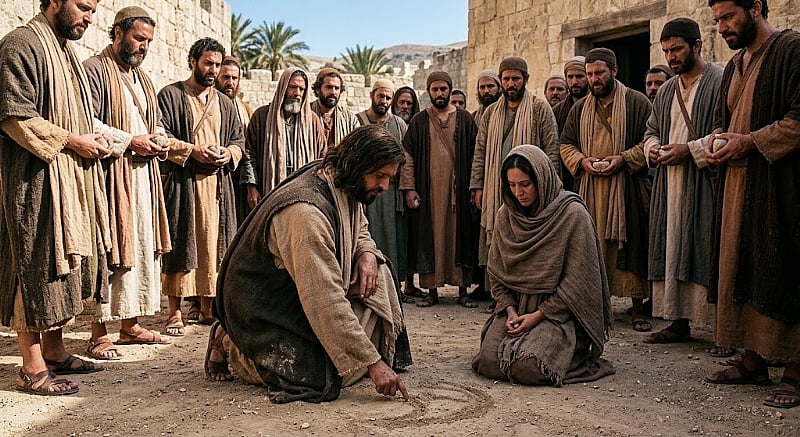
Sometimes the healthiest response to a bad situation is not reflection but action. Sometimes the good is found by leaving. Sometimes it is found by setting a boundary. Sometimes it is found by asking for help. Sometimes it is found by confronting an injustice rather than trying to make peace with it. And sometimes there is no immediate lesson. This may be the hardest truth for people who want every experience to have a neat purpose. Life does not always provide explanations on schedule. Some experiences remain confusing for years. Their meanings, if eventually they emerge, may only become visible in retrospect.
A person who is struggling today does not need to manufacture a profound lesson before he is allowed to heal. He may simply need to survive the day. Perhaps that is why a better version of the popular advice would be: look for what is useful, meaningful or within your control in every situation, but do not force yourself to call everything good. There is a quiet strength in being able to say, “This is painful, but I will face it.” There is strength in saying, “I do not understand this yet, but I will not allow it to define my entire life.” There is dignity in saying, “I cannot change what happened, but I can influence what happens next.” That is a more sustainable form of optimism than pretending that every cloud has a silver lining. Finding good in every situation may therefore be impossible if “good” means something pleasant or desirable. But finding something constructive in many situations is possible. Finding a lesson is often possible. Finding something within one's control is frequently possible. Finding meaning may become possible with time.
And sometimes the good is very small. It may be the friend who called. The lesson that was learnt. The boundary that was finally established. The courage to begin again. The decision not to become bitter. The discovery that one is stronger than previously imagined. Perhaps, ultimately, the deepest form of optimism is not the belief that everything will turn out well. It is the belief that even when something does not turn out the way we hoped, we can still participate in what comes next. We do not need to call every experience good. We need to learn how to meet reality without surrendering our capacity to grow. And perhaps that is where genuine settlement begins: not in convincing ourselves that life has never given us reasons to hurt or be hurt, but in discovering that pain does not have the final word.
Yet, considering the pain we endure from others, there is something deeply troubling, but also strangely liberating, about forgiveness. We all admire it in principle, but when the wound is ours, forgiveness becomes a dilemma. We can forgive a small offence almost without thinking, but when someone betrays us, humiliates us, cheats us, abandons us, lies about us, or deliberately causes us pain, forgiveness suddenly becomes a battlefield of the soul.
The dilemma is this: If I forgive, am I surrendering my right to justice? Am I saying that what happened did not matter? Am I allowing the offender to escape responsibility? And perhaps most troubling of all: Why should I forgive someone who has not even admitted that he was wrong?
Yet Jesus places forgiveness at the very centre of human spirituality. He does not present it as an optional virtue reserved for exceptionally gentle people. He makes it part of the prayer of ordinary people: “Forgive us our sins, as we also forgive those who sin against us.” He tells his followers to forgive not seven times, but “seventy times seven.” He tells them to love their enemies and pray for those who persecute them. But before we examine what Jesus asks us to do, we must look carefully at something extraordinary that Jesus himself did.
One day, a paralyzed man was brought to him. Jesus looked at the man and said, “Son, your sins are forgiven.” The Teachers of the Law and the Pharisees immediately began reasoning within themselves: “Who is this fellow who speaks blasphemy? Who can forgive sins but God alone?”
Their question was not foolish. In fact, there was something profoundly correct in it. They understood that sin ultimately concerns God. Who, then, is this man standing among them, claiming the authority to forgive what belongs to the realm of God? Jesus knew exactly what they were thinking. And rather than retreat from the claim, he pressed the issue further. “Which is easier: to say, ‘Your sins are forgiven,’ or to say, ‘Get up and walk’?” Then he healed the man.
There is something astonishing in this encounter. The Pharisees saw Jesus crossing a boundary that belonged to God. They asked, in effect, “Who do you think you are?”
And that question takes us directly into the mystery of forgiveness. If only God can forgive sins, why does Jesus repeatedly command human beings to forgive one another? Is Jesus simply transferring a divine privilege to humanity? Is he clothing humanity in the garments of deity? Is he saying that the human being can become, in some sense, equal to God?
Perhaps we need to approach the question from another direction. What if Jesus was revealing something about the character of God by teaching human beings to forgive? Perhaps the command to forgive is not an invitation to become God in the sense of acquiring God's identity. Rather, it is an invitation to participate in something that belongs to God's character.
The Bible says, “Be merciful, just as your Father is merciful.” Jesus teaches his followers to forgive because forgiveness is a divine quality that human beings can embody. Because we forgive, we are forgiven. And this brings us to the invisible higher ground of forgiveness.
When somebody wrongs us, something happens inside us. We experience ourselves as the injured party and the other person as the offender. The offence creates a psychological relationship: “You owe me.” Something has been taken from me, and therefore something is owed to me. That is why forgiveness can feel so difficult. To forgive seems, at first, like giving up a legitimate claim. But look more closely. When I refuse to forgive, the offender may be physically absent, but psychologically he remains present. The person who wounded me may have gone on with his life, but I continue to carry the event at heart. I replay the conversation. I reconstruct what should have been said. I imagine what I should have done. I rehearse my anger. I revisit the injustice. The offender has moved on, but the offence has only moved into me. Forgiveness begins to break that chain. When I forgive, something invisible happens. I am no longer standing entirely beneath the offence. I begin to rise above it. I do not deny what happened but I refuse to allow what happened to determine the condition of my soul. That is the higher ground. And perhaps this is why Jesus places such extraordinary emphasis on forgiveness. Forgiveness is not merely an act performed for the benefit of the offender. It is also a transformation in the person who forgives.
The forgiver says, consciously or subconsciously, “You have hurt me, but you will not dictate what I become.” That is power. The person who cannot forgive may imagine that he is punishing the offender. But sometimes he is allowing the offender to continue exercising authority over his inner life. The person who forgives does not necessarily lose power. He may be recovering it.
This does not mean that forgiveness means pretending that evil is good. It does not mean refusing justice. It does not mean remaining in an abusive relationship. It does not mean trusting someone who has demonstrated that he cannot be trusted. Forgiveness and reconciliation are not identical. Forgiveness can take place even when reconciliation is impossible. Forgiveness says, “I release my personal claim to revenge.” Justice may still say, “There must be accountability.” Both can exist. And the distinction is important because sometimes we are afraid to forgive because we think forgiveness means surrendering justice. But Jesus himself never taught that evil does not matter. He taught that we must refuse to become evil in response to evil. And here lies the paradox.
The person who forgives appears, on the surface, to be giving something away. Yet inwardly, he may be gaining something. He gains freedom from perpetual resentment. He gains the ability to remember without continually reliving. He gains emotional distance from the offender. He gains the capacity to choose his response rather than merely react to his wound. He gains a larger identity than “the person who wronged.” This is the invisible elevation.
Perhaps this is what Jesus was demonstrating when he forgave the paralyzed man's sins. The Teachers of the Law saw forgiveness as a divine prerogative. Jesus revealed forgiveness as something that flows from divine authority and then commanded his followers to practise it toward one another. So was Jesus making humanity equal to God?
I would say no—not in the sense that human beings become God or acquire God's absolute authority. But neither was Jesus saying, “Forgiveness is God's business; humans have nothing to do with it.” Quite the opposite. Jesus was drawing humanity into the character of God. If God forgives, then the human being who forgives is reflecting something of God. If God releases people from their debts, then the human being who releases another from personal vengeance is participating in that divine pattern. Perhaps Jesus was saying that forgiveness is not exclusively a divine act in the practical human sense. Human beings can forgive because human beings can choose not to remain imprisoned by another person's offence.
And this makes the Lord's Prayer almost revolutionary: “Forgive us our debts, as we also have forgiven our debtors.” Notice the order. We ask to receive the very thing we are being asked to practise. We want mercy, yet we are challenged to become merciful. We want forgiveness, yet we are challenged to forgive. We want God to release us from our failures, yet we are challenged to release others from the debts they have created in our lives. This is the dilemma of forgiveness: we want to be forgiven without necessarily wanting to forgive. But Jesus will not allow us to separate the two.
Perhaps, then, forgiveness is one of the places where humanity comes closest to reflecting God—not because we become divine, but because we imitate the divine character. The Pharisees asked Jesus, “Who can forgive sins but God alone?” Perhaps Jesus' answer, taken together with his later teaching, is more profound than simply, “I can.” Perhaps he was also revealing what humanity can become when it lives from the character of God.
The human being can forgive. The human being can release vengeance. The human being can refuse to reproduce an injury. The human being can rise above the level of the offence. And when that happens, something invisible takes place. The person who was wounded is no longer defined entirely by the wound. The person who was offended is no longer governed entirely by the offender. The debtor has been released. But so, in a mysterious way, has the creditor. And perhaps that is the great secret of forgiveness: sometimes the person we think we are setting free is the person who hurt us, when in fact the first person being set free is ourselves.


 Ghana, Panama sign MoU to deepen bilateral political consultations
 Founder’s Day: NAPO urges Ghanaians to uphold Kwame Nkrumah’s legacy
 Founder’s Day: Mahama urges Ghanaians to draw inspiration from Nkrumah’s vision
 Mahama to build 400-bed Mother and Child Block at Korle Bu – Kwakye Ofosu
 GES threatens sanctions against SHS heads imposing unauthorised charges
 Betting could destroy future of Ghana’s youth in 3–5 years – Akim Swedru MP
 Zimbabwe Suspends Journalist for One Year Over ‘Unethical’ Reporting on Chinese ...
 Third Drug Mule in 3 Weeks: R2m Heroin Found in SA Man’s Luggage at OR Tambo
 NACOC Debunks MP’s Claim as France’s €225m Cocaine Case Deepens
 Putin party retains majority in first vote since 2022 invasion of Ukraine


