




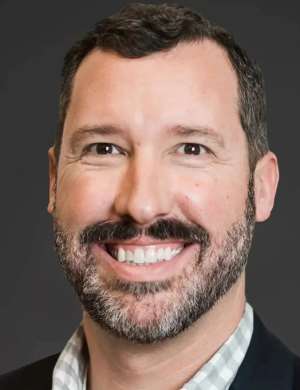
As Mercy Ships' hospital vessel Global Mercy continues its field service docked at the Port of Tema, Hospital Director David Quigg sat down to explain how the organization selects patients, why Ghana was chosen as a host nation, and what makes the charity's surgical model different from conventional medical aid.
You work alongside the Ghanaian government.
How does that partnership actually function?
Mercy Ships is invited by the government, and we work alongside the Ministry of Health and the broader health system to determine where the greatest needs are. We don't simply decide on our own where to go or who to treat that's a collaborative process with our national partners from the very beginning.
What kind of surgical care does Global Mercy actually provide?
We're a hospital ship a surgery ship, really. We provide seven categories of surgery, all chosen because, worldwide, they've been shown to give patients the best possible outcomes and the best chance at a normal life afterward.
We do hernia repairs, so people can go back to work. We do orthopedic surgeries on children with bone deformities, so they can stay in school instead of being hospitalized long-term. We treat women's health conditions, so mothers can remain fully part of their families.
And we perform eye surgeries for people living with blindness, so they can return to work and independence. It's a deliberately specific set of services, chosen for impact.
Why do you think many people outside Ghana haven't heard much about this mission?
Part of it is that many African nations already have some strong hospitals, and people sometimes assume the need isn't as acute. But we're specifically asked to reach the people with the greatest need patients with the greatest financial need, people who couldn't access this kind of surgery otherwise, because even the cost of standard treatment and insurance can put it out of reach.
How do you find and select those patients?
When we arrived, we set up patient selection teams working across seven different regions. Through that process, we've identified the patients we're able to treat this field service, and we have contingency plans in place for them.
But I'll be honest there are still people in every town who need help that we simply can't reach. We can only do so much, and that's a hard reality. It's often not the person in the city with more options who needs us most it's the person in a rural area who can't afford proper treatment. That said, I don't want to give the impression urban need doesn't exist too it absolutely does.
What happens when someone needs help but you have to turn them away?
That's one of the most difficult parts of this work. Sometimes a patient has other underlying conditions cancerous , diabetes, for example, or other illnesses that make surgery unsafe for them. In those cases, we have to say no, and that's genuinely disheartening for our teams, not just for the patient.
How has the relationship with Ghanaian authorities been during this field service?
It's been genuinely refreshing. The Ministry of Health and city officials have been welcoming and helpful, but they've also held us accountable they've set clear rules and conducted inspections of the ship to make sure we're actually doing what we said we would do. We want that. We're not just here to provide the services we promised for this field service we want that standard to continue after we've left.
This isn't Mercy Ships' first time in Ghana.
No Mercy Ships has had a relationship with Ghana for about 20 years now, and it's good to be back. One encouraging thing is that Ghana also has some strong hospitals capable of providing world-class care, for Ghanaians and visitors alike. That's not something we see everywhere we go, and it says a lot about the direction the country's healthcare system is heading.
Mustapha Bature Sallama
Medical/ Science Communicator,
Private Investigator, Criminal Investigation and Intelligence Analysis,
International Conflict Management and Peacebuilding. ( USIP)


 Constitutional amendment: Five-year presidential, parliamentary terms will weake...
 Constitutional review: NPP calls for constituent assembly before referendum
 BOST cuts fuel exports to Burkina Faso and Mali over domestic demand
 Rent Control Commission needs more funding to function effectively – Acting Comm...
 September 17: Cedi sells at GHS12.15 on forex market, GHS11.51 on BoG interbank
 Mahama, IFC boss discuss Ghana's plans to boost agriculture, infrastructure and ...
 'We are not targeting Konkombas over Agbogbloshie 24-Hour Market project' — AMA ...
 Abandoning Nkrumah's 7-year development plan for 1D1F, Nkoko Nkitinkiti, Big Pus...
 ‘Young people will chase politicians away if something drastic is not done’ – Pr...
 Govt GH¢1 billion intervention saved diesel from hitting GH¢28 per litre – NPA C...


