




The technical evolution of past technologies took decades, sometimes centuries, to mature. Coal transformed into industrial power, fuel reshaped transportation, and the internet gradually transformed communication. Artificial intelligence, however, is following a different trajectory. It is increasingly capable of accelerating its own development through automated learning, coding and optimisation. That speed raises a fundamental question: can human institutions maintain meaningful control over technologies that are evolving faster than the regulatory systems designed to govern them?
This concern becomes even more serious when AI, autonomous systems and space capabilities converge. The issue is no longer simply technological competition; it is becoming a question of strategic restraint and human survival. Human judgment, despite its limitations, remains capable of weighing ethical, emotional and political consequences. Machines may process information faster, but speed alone cannot substitute for responsibility.
The next question is unavoidable: How does the traditional warhead and warship race enter the era of space warfare?
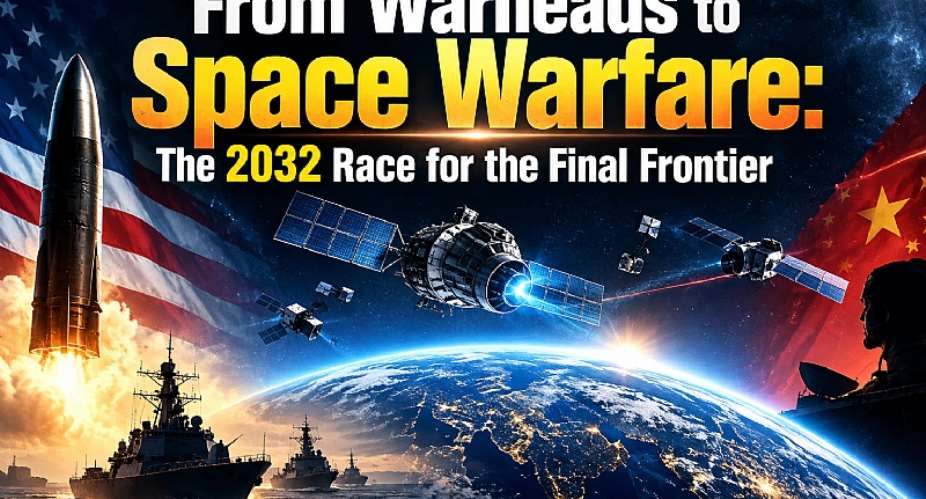
On September 14, 2026, U.S. Air Force Secretary Troy Meink publicly confirmed that the United States has deployed “on-orbit space control weapons” capable of defending U.S. forces against hostile action. Crucially, Washington has not disclosed the number, exact type or operational details of these systems.
That disclosure is strategically significant. For decades, space was increasingly treated as a military-supporting domain through satellites, communications, navigation and surveillance. Now the language has moved from protecting assets in space to deploying weapons in space.
The scale of America's broader space-security investment is also becoming visible. The U.S. Space Force has awarded $4.16 billion to SpaceX for the Space-Based Air-Moving Target Indication programme, while American officials are simultaneously preparing for increasingly autonomous warfare.
Meink has predicted that the U.S. Air Force will look “radically different” by 2032, with autonomous systems becoming increasingly central to combat operations. He has even described one-way attack drones as potentially replacing artillery as a primary means of delivering lethal force.
This raises a fundamental question: when officials speak about “evolving threats,” are states merely responding to existing dangers, or are they entering a cycle in which each new capability becomes the justification for another?
If one country deploys an orbital weapon because it fears another country's capabilities, the second country can interpret that deployment as a direct threat. It may then develop its own counter-system, which the first country subsequently describes as confirmation of the original threat. This is the classic security dilemma—but now it is moving beyond the atmosphere.
China has already warned against turning outer space into a battlefield and said the U.S. move could fuel an arms race. Russia has likewise called for space to remain free of weapons.
The legal framework is also facing a serious test. The 1967 Outer Space Treaty prohibits placing nuclear weapons and other weapons of mass destruction in orbit, but it does not comprehensively prohibit every conventional or non-kinetic counter-space capability.
That gap demands diplomacy before technology moves further ahead of international law.
The European Union, G20 and United Nations should therefore push for stronger transparency, confidence-building mechanisms, notification procedures and internationally accepted rules governing autonomous and counter-space systems. A future-oriented international forum could bring scientists, diplomats, military experts and technology leaders together to establish boundaries before competition becomes irreversible.
The strategic question is no longer simply who controls space. It is whether humanity can prevent space from becoming another battlefield before the rules are written.
The race from warheads to space warfare may already have begun. The real measure of strategic power, however, should not be how many weapons humanity can place above Earth—but whether the world's major powers possess enough restraint to ensure that the final frontier remains a domain of human progress rather than a new theatre of destruction.


 'Ghana should not recreate criminal libel under different laws’ – Abena Osei-Asa...
 NPP demands release of Techiman nurse Salomey Bafoh arrested over alleged links ...
 Security agencies will not chase citizens over insults under my presidency – Baw...
 Bawumia calls for release of Techiman nurse remanded for wanted ‘Ghana Jollof’
 Russia seizes assets of Swiss food giant Nestle and three French firms
 Russia votes in parliamentary election as war in Ukraine drags on
 Early voting begins in US midterms that could see Republicans lose control of Co...
 US approves $24.3 billion sale of 48 F-35 warplanes to Saudi Arabia
 Nestlé to face retrial over illegal dumping near French bottled water plants
 NGSJF petitions Ghana Airports, IGP over Adwoa Safo travel records and 2021 parl...


