




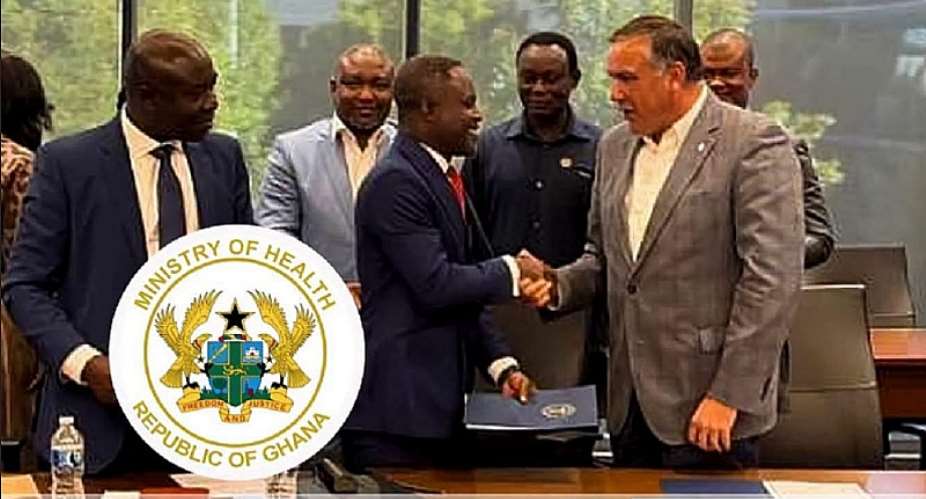
In May 2025, Ghana's President John Dramani Mahama announced the Youth Export Programme (export, by definition, is selling abroad something someone owns after negotiating with the buyer on price, terms, and conditions). On September 15th 2026, the Ministry of Health signed an MoU with a health service provider in the USA to send qualified Ghanaian nurses to the country, which once saw slaves entering the workforce. Neither the exported youth nor the nurses will want to return to a country that did not cherish and value them in the first place. They will settle abroad, enjoy a comfortable lifestyle with social benefits as a security net, and have prospective spouses and future children. The Ministry for the Diaspora stimulating Ghanaians to return is a waste of money. Who wants to return need not be challenged and should be covered with incentives.
Annually, around 150.000 Germans leave Germany temporarily to look for greener pastures or spend their low pension in low-cost countries around the world. In the 1960s and 70s, when labour in Germany was short (Wirtschaftswunder), Germany opened German Jobcenters in e.g. Turkey, Italy, Spain and Portugal and more than 4 Mio. foreign workers came to help Germany. Germany has no Ministry for the Diaspora at Flagstaff House to welcome home Germans who decided to live abroad but changed their mind. Instead, in respective Embassies in Ghana to set up a Jobcenter Desk for the respective countries to promote them to Ghanaians; Ghana rather signs contracts to " export "their precious people. Whether or not government officials get a percentage for each work contract signed and executed is subject to speculation until proof is presented of wrongdoing.
To release pressure from the employment system to open doors to foreign countries is like a football with too much air. Instead of fixing the ball or replacing it altogether, Ghana's government uses the easy way out and releases air pressure. Does it solve the fundamental problems behind the decision and MoU signed? Qualified nurses remaining in Ghana will feel the heat of the MoU signed in months, possibly years to come. The pressure is on them: poor salary, delayed payment of salaries and poor working conditions.
Meanwhile, Ghana spearheads the UN motion on the Transatlantic Slave Trade (TST), many of whom ironically left for the USA. Voluntary employment cannot be compared to the TST, critics say. History never repeats itself, but it always comes back in a different form. This wisdom is for every German student of history, the first wisdom to be confronted with at university. The principle of a matter matters more than the exact wording or structure when comparing historical facts and situations. In this regard, it can be said with confidence that Ghana has a double face, as the similarity between TST and the MoU is too obvious.
God: I pray to you. Please hear me. Ghanaians deserve better!


 Ketu South: Four-year water crisis deepens hardship in Agbozume
 Show evidence of higher operating costs to justify fare hike – NPA CEO to transp...
 Ivorian footballer Malick Yalcouyé falsely accused of lying about his age
 South Africa's president taken ill after BRICS summit
 Chief Justice praising government policies is problematic – Kwesi Pratt
 Police interdict seven officers for allegedly forcing victim to withdraw money f...
 GAF ready to deepen defence cooperation with Russia – Major General Annan
 WHO sees 'encouraging signs' in DR Congo Ebola response but says outbreak 'far f...
 GRA challenges GH¢79.65m Servestar Minwax judgment debt
 EPA shuts down Empire Cement over alleged environmental breaches


