




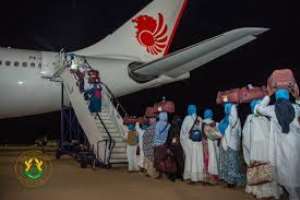
Every year, when Ghanaian Muslims prepare to travel to Makkah for Hajj, an old argument resurfaces in some Christian circles: “Why does the government sponsor Muslims to go to Mecca every year, yet it says it cannot build the National Cathedral for Christians?” At first hearing, the question may sound reasonable. It appears to compare two religious interests and to demand fairness. But there is a fundamental problem with the argument: some of the assumptions behind it are simply not accurate.
Hajj, Umrah, the National Mosque and the National Cathedral involve different religious, financial, institutional and constitutional arrangements. Putting them together as though they were four versions of the same government-funded religious project produces more heat than light. Ghanaians --- Christians and Muslims alike --- deserve a more factual discussion.
What exactly is Hajj?
Hajj is not simply a Muslim holiday or an annual religious excursion. It is one of the Five Pillars of Islam, and it is obligatory once in a Muslim's lifetime for those who have the physical and financial ability to undertake it. The pilgrimage takes place in and around Makkah and includes prescribed rites associated with Makkah, Mina, Arafat and Muzdalifah. It commemorates important events in Islamic history and, above all, represents submission to Allah. This explains why thousands of Ghanaian Muslims save money for years to undertake the journey.
But here is the first important fact: Ghanaian Muslims pay for Hajj. The ordinary Ghanaian Muslim does not simply walk into a government office, collect a free ticket and fly to Saudi Arabia at the taxpayer's expense. Pilgrims pay the official Hajj fare.
In 2025, for example, the announced fare was GH¢62,000, reduced from GH¢75,000 in 2024. The Ghana Hajj Task Force said the reduction followed negotiations with service providers at the Saudi Hajj conference. The government also facilitated arrangements for payments and logistics. There is therefore an important distinction between government facilitating Hajj and government paying every Muslim's Hajj expenses. The former is clearly true. The latter should not be casually asserted without evidence.
But didn't government reduce the Hajj fare? Yes. And this is where the debate sometimes becomes confusing. The government announced a reduction of GH¢13,000 --- from GH¢75,000 to GH¢62,000 --- for the 2025 pilgrimage. The President described the reduction as fulfilling an election promise to make Hajj more affordable. But that GH¢13,000 was not paid by the Ghana Government! The Hajj Task Force explained that it achieved the reduction through negotiations and favourable agreements with service providers.
Indeed, the Parliamentary record contains differing political characterizations of the arrangement: one contribution described it as a subsidy, while another MP specifically insisted that government had not subsidized the fare, saying the reduction resulted from competitive negotiation. That disagreement itself tells us something important. We should distinguish between a reduction in the price paid by a pilgrim and a direct taxpayer-funded subsidy. If government negotiates a cheaper hotel, cheaper transportation or cheaper air service, the pilgrim pays less. That does not automatically mean government has paid the difference from the Consolidated Fund. There can, of course, be legitimate questions about government expenditure on Hajj administration, logistics, personnel and other arrangements. Those expenditures should be transparent and accountable. But that is very different from saying that the Ghanaian taxpayer pays the full pilgrimage expenses of ordinary Muslims.
What about Umrah?
Umrah is different from Hajj. Unlike Hajj, which takes place during a prescribed period in the Islamic calendar and is one of the Five Pillars, Umrah can be performed at other times of the year. Ghanaian Muslims generally arrange and pay for Umrah privately, usually through travel operators or other arrangements. Therefore, the popular statement that “government sponsors Muslims for Hajj and Umrah every year” is even more misleading. The state has an administrative role in Hajj. That should not be confused with government financing every Muslim pilgrimage.
Then why is government involved in Hajj at all? This is a reasonable question. The answer is that Hajj involves thousands of Ghanaian citizens travelling internationally at approximately the same period. It requires coordination involving: Saudi authorities; visas and immigration; air transportation; accommodation; feeding; movement between holy sites; medical assistance; security; consular matters; pilgrim education; and negotiations with service providers. The government therefore has a legitimate administrative interest in protecting the welfare of Ghanaian pilgrims and ensuring that the national Hajj operation is properly organized.
The problem arises not from government facilitating citizens' religious exercise, but from poor administration, political interference, lack of transparency or misuse of public resources. The 2025 Hajj itself demonstrated why scrutiny is necessary. Parliament heard complaints about accommodation, feeding and other difficulties affecting pilgrims. Muslims should therefore not demand that Hajj be above accountability simply because it is a religious undertaking. Quite the opposite. Because public institutions are involved, Hajj administration should be transparent, professional and accountable.
The National Mosque
Here is another widespread misconception: “The Ghana Government built the National Mosque for Muslims.” That is not an accurate description of what happened. The Ghana National Mosque Complex at Kanda was inaugurated in 2021. The Ghana News Agency reported that the approximately US$10 million complex was built by the Turkish Hudai Foundation, with support from the Turkish government. It was described as a gift from Turkish philanthropists to Ghana's Muslim community.
The land is another part of the story. The land was handed over to the National Chief Imam in 1995 by the Rawlings administration, following the demolition of an earlier mosque to make way for Rawlings Park. Construction had initially begun through the Ghanaian Muslim community but stalled because of lack of funds. The project subsequently received Turkish backing and was completed through the partnership involving the Hudai Foundation, Turkish religious authorities and Ghanaian partners. So the accurate description is: The Ghanaian state provided the land and facilitated the project, while the major construction financing came through Turkish philanthropic and governmental support. It is therefore misleading to say that the Ghana Government built the National Mosque with Ghanaian taxpayers' money. This is an important fact whenever comparisons with the National Cathedral are made.
And What about the National Cathedral?
Here the financial story is substantially different. The National Cathedral was conceived as a major Christian national monument and place of worship. There is nothing inherently wrong with Christians wanting such a monument. Nor is there anything inherently wrong with Muslims wanting important religious institutions. The question is: Who should pay for them? That is where the National Cathedral controversy becomes much more complicated.
Substantial public funds and state resources were committed to the project. By 2024, Parliament had been informed of expenditure running into hundreds of millions of Ghana cedis. Subsequently, a Deloitte & Touche audit commissioned by government identified serious concerns about procurement, contracts, consultancy payments and financial controls. The Presidency reported in July 2025 that the audit had identified, among other things, unexplained differences in consultancy payments, payments made before formal contractual and procurement approvals, payments after contracts had expired and overlapping project-management arrangements. The government subsequently ordered the dissolution of the National Cathedral Secretariat and initiated processes relating to the Board of Trustees, while also calling for further forensic examination.
These findings do not mean that every Christian associated with the National Cathedral project acted improperly. Nor do they mean that the idea of a National Cathedral is inherently wrong. They mean that public money requires public accountability. That principle applies equally to Hajj.
So are Hajj and the National Cathedral Comparable?
Only to a limited extent. Both involve religion. Both have national political implications. Both have attracted government involvement. But their funding arrangements and purposes are fundamentally different. The National Mosque, for example, was built largely through Turkish support. Hajj is a pilgrimage paid for by the pilgrims themselves, although the Ghanaian state administers and facilitates the national operation and governments may intervene in pricing and logistics. The National Cathedral, on the other hand, became the subject of controversy precisely because substantial public resources were committed to the project and questions subsequently arose about procurement, expenditure and accountability. Therefore, saying: “Government pays Muslims to go to Mecca, so government should build a cathedral for Christians” does not accurately describe the evidence.
The Bigger Question for Ghana
We should move beyond the narrow Christian-versus-Muslim argument. Ghana's Constitution protects freedom of religion. A Muslim should be free to practice Islam.
A Christian should be free to practice Christianity. A person belonging to another religion should equally enjoy that freedom. And a person who does not believe in any religion should not be discriminated against. This raises an important question: Should the government of a religiously diverse country use taxpayers' money to build places of worship? There is a strong argument that the state should be religiously neutral.
Government can provide roads, security, health services, water, sanitation and other public infrastructure that citizens of all religions use. Government can also facilitate citizens' religious activities where there is a legitimate administrative or public-interest reason. But when government begins directly financing religious buildings or religious obligations, questions of fairness inevitably arise. If taxpayers' money builds a Christian cathedral, what should Muslims receive? A mosque? What about traditional African religions? What about other religious communities? And what about citizens who belong to no religion? These questions cannot be answered simply by saying, “Christians are the majority” or “Muslims also deserve something.” The better principle is equality before the state.
There is another misconception worth correcting. Some people ask: “If government could provide land for the National Mosque, why couldn't it provide money for the National Cathedral?” The answer is that providing land and paying construction costs are not the same thing. Land may be public property made available for a public or community purpose under particular circumstances. Paying hundreds of millions of cedis from public resources for construction is an entirely different financial commitment. That distinction should be maintained.
Likewise, government organizing Hajj does not automatically mean government is paying for Hajj. Administration is not the same as sponsorship. What should Muslims say? Muslims should not respond to criticism by saying: “If Christians can have a cathedral, Muslims must also have government-funded Hajj.” That would be a weak argument. The stronger Muslim response is: “Please get your facts right. Ghanaian Muslims who perform Hajj pay the prescribed fare. Government facilitates the national pilgrimage and negotiates arrangements, but that is not the same as paying every Muslim's pilgrimage expenses.”
Muslims should also welcome scrutiny of the Hajj Board. If public money is used, let the accounts be published. If pilgrims are charged GH¢60,000, let the components of that GH¢60,000 be known. If government negotiates reductions, let the savings be demonstrated. If there are allegations of mismanagement, investigate them. Islam does not require Muslims to defend incompetence or corruption simply because the matter concerns Hajj.
What should Christians say?
Christians, equally, should not repeat the claim that government gives Muslims free Hajj unless they can produce evidence. And Christians should recognize that the National Mosque was not simply a Ghanaian taxpayer-funded gift to Muslims. The principal construction funding came from Turkish sources. If Christians want the National Cathedral completed, they have every right to make that case. But the argument should be based on the merits of the Cathedral itself, not on the inaccurate claim that “government builds mosques and pays Muslims to go to Mecca.” The National Cathedral should be judged on its own merits. There is nothing inherently wrong with Ghana having a National Cathedral. A national monument can have historical, cultural, architectural and religious significance.
But once the state becomes financially involved, citizens have the right to ask:
- How much has been spent?
- Who received the money?
- Were contracts properly awarded?
- Were procurement rules followed?
- How much more will completion cost?
- Who will own and operate the facility?
- Will it be genuinely national or primarily denominational?
- What happens to the money already spent if the project is abandoned?
These are not anti-Christian questions. They are questions of public accountability. Likewise, asking how much government spends administering Hajj is not anti-Muslim. It is responsible citizenship.
Religion as a Political Weapon
We must stop turning religion into a political weapon. Ghana has something precious that many countries have struggled to preserve: relatively peaceful coexistence among Christians and Muslims. Our mosques and churches stand alongside each other. Muslims attend Christian funerals. Christians attend Muslim ceremonies. Families sometimes contain both faiths. We should therefore be very careful when political arguments begin turning religious communities against one another. The question should never be: “What has government given Muslims that Christians have not received?” Nor should it be: “What has government given Christians that Muslims have not received?” The better question is: “Has government treated Ghana's citizens fairly, transparently and constitutionally?” That question protects everybody.
Six Facts worth Remembering
Let us therefore put the argument in simple terms.
- Hajj is a religious obligation for Muslims who are physically and financially capable of performing it.
- Ghanaian pilgrims pay the official Hajj fare. Government's role includes organizing, facilitating and negotiating the national pilgrimage arrangements. In 2025, the fare was reduced from GH¢75,000 to GH¢62,000, with the Hajj Task Force attributing the reduction to negotiations with service providers.
- Umrah is not the same as Hajj and is generally undertaken privately by Muslims at their own expense.
- The National Mosque was not simply built with Ghanaian taxpayers' money. The approximately US$10 million complex was built by the Turkish Hudai Foundation with Turkish government support and philanthropic backing, while Ghana provided the land and facilitated the project.
- The National Cathedral involved substantial public financial commitments, and subsequent audits raised serious questions concerning procurement, contracts, consultancy payments and financial controls.
- The real national debate should therefore not be Christianity versus Islam. It should be about religious freedom, equality, constitutional neutrality, public expenditure, transparency and accountability.
The Final Lesson
A Muslim should not have to apologize for going to Makkah. A Christian should not have to apologize for wanting a National Cathedral. But neither should use inaccurate information to attack the other. The Muslim who saves for years to perform Hajj is exercising a fundamental religious obligation. The Christian who contributes to the construction of a cathedral is exercising religious freedom. The taxpayer, however, has another right --- the right to know how his or her money is being spent. That right belongs to the Muslim. It belongs to the Christian. It belongs to the traditionalist. It belongs to the atheist. It belongs to every Ghanaian. And perhaps this is where the debate about Hajj and the National Cathedral should finally arrive: Religion should unite Ghana, not become another battlefield in our partisan politics. And we cannot pretend we do not know the strangers in our midst who are stoking the fire. If you could not coexist with your own countrymen and women for whatever reasons, this is Ghana, the most civilized nation in West Africa and beyond.
Let government facilitate religious freedom without discriminating against any faith. Let religious communities finance their religious institutions wherever possible. And whenever public money is involved, let there be complete transparency, irrespective of whether the beneficiary is a mosque, a cathedral, a church, a Muslim pilgrim --- or any other citizen. The issue is not whether Ghana belongs to Christians or Muslims. Ghana belongs to all Ghanaians. And public money belongs to all of us.
FUSEINI ABDULAI BRAIMAH
+233208282575 / +233550558008
[email protected]


 64.7% of Ghanaians say Double-Track system has reduced SHS quality – IEA
 I felt very ashamed Accra lost major international conferences to Dakar over ina...
 'He is ignorant' – Mahama hits back at Paul Yandoh over soldiers constructing ro...
 OpenAI, Anthropic and Google in talks to create a standards body as AI fears ris...
 Don’t trust anybody; take your partner to test for HIV before any relationship –...
 Dr Ayew Afriye sues Rev. Owusu Bempah for GH¢10m over alleged defamatory comment...
 Atewa Forest under siege: Five million Ghanaians risk losing water source
 TRAFFITECH-GH: Police to use cameras, PDAs to detect traffic offences from Octob...
 AMA gives Dogo Beach squatters one week to vacate ahead of demolition
 Twin brother of late CLOGSAG executive Isaac Bampoe Addo also dies


