




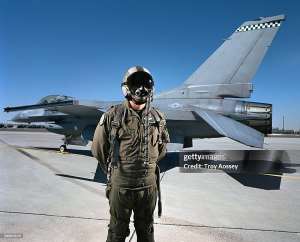
When a US Air Force F-15E Strike Eagle was shot down over Iran, the immediate military crisis was larger than the loss of an aircraft. Two American airmen had ejected into hostile territory, and Iranian forces were actively searching for them. One was recovered within hours. The other, a weapons systems officer identified by the mission call sign “Bravo”, disappeared into mountainous terrain with serious injuries and a damaged parachute. Nearly 50 hours later, Bravo was alive and in American hands.
His survival was extraordinary. So was the operation that brought him home. Bravo’s first public account, given to CBS’s 60 Minutes, provides a rare view of the human and military dimensions of a combat-search-and-rescue mission conducted deep inside hostile territory. It was a story of physical endurance, intelligence work, deception, aviation skill, special operations and command decisions made under extreme pressure. It also demonstrated a central truth of modern warfare: even when a military possesses overwhelming technological advantages, the recovery of a single human being can become one of the most complicated operations imaginable.
The F-15E, operating under the mission designation Dude 44, had been conducting a strike against Iranian industrial facilities associated with missile and drone production in a mountainous area south of Isfahan. By that stage of the war, American forces had conducted thousands of missions and established substantial air superiority. Yet air superiority had not eliminated the possibility of a devastating tactical surprise. A shoulder-fired missile struck Dude 44, proving once again that control of the air does not mean control of every inch of the battlespace.
Modern air forces can suppress sophisticated air-defence networks, destroy missile sites and dominate large areas of airspace, but mobile, concealed and relatively inexpensive weapons can remain dangerous. An adversary does not have to defeat an entire air campaign; it needs only one successful engagement. For the crew of Dude 44, that engagement transformed a strike mission into a fight for survival.
The missile strike damaged the aircraft so severely that the crew quickly realized they could not keep flying. The pilot, identified as “Alpha”, ejected both men, and they descended roughly five miles apart. Alpha’s parachute functioned normally. Bravo’s did not. The missile strike had damaged Bravo’s parachute, leaving him in a rapid descent towards the Iranian ground. Military specialists later estimated that, given the severity of his injuries, he may have struck the ground at between 70 and 100 miles per hour. He survived the impact, but survival at that moment was only the beginning.
Bravo suffered fractures to his back, arm and shoulder, as well as a sprained ankle and cuts to his head and face. Yet he remained conscious and immediately understood another danger: the wreckage of an American fighter in Iran would attract attention, and anyone found near it would be a potential prize for Iranian forces. He moved away from the crash site and began climbing toward higher ground. By daylight, he realized that he was in a high desert valley surrounded by steep cliffs, and he understood that remaining in the valley would leave him exposed. Despite his injuries, he began climbing towards a ridge approximately 7,000 feet high.
The climb was slow and agonizing, but it was also tactically sound. Mountainous terrain can be both an obstacle and an ally. It complicates movement, restricts lines of sight and creates countless places where a person can disappear. For a wounded survivor trying to evade a large search force, concealment may be more important than speed. Bravo understood that instinctively. This is where military training becomes more than a checklist of procedures. Aircrew members operating in hostile environments are trained to anticipate the possibility of isolation, capture and evasion. Such training cannot prevent injury or guarantee rescue, but it provides a framework for making rational decisions when normal support disappears. Bravo applied that training under extraordinary circumstances.
Meanwhile, the American military had begun the search. Alpha was located first. About six hours after the F-15E went down, a rescue force moved into the area with two helicopters as part of a 21-aircraft package. The scale of the force reflected a basic reality of combat search and rescue: the helicopter that physically reaches a survivor is only one element of a much larger system. Rescue aircraft need protection, intelligence, communications, surveillance, medical capability and command-and-control support. They may also need combat aircraft capable of suppressing threats while the rescue is underway. The rescue force therefore becomes vulnerable precisely because it is trying to recover someone else.
The initial rescue operation encountered Iranian fire. American aircraft came under attack as they moved towards the downed airmen. Despite the danger, the rescue force reached Alpha and brought him out. But Bravo was still missing.
The Race Against the Search
That changed the character of the mission. The United States now knew that one airman had been recovered and another remained somewhere inside Iran. The search became a race between American intelligence and Iranian ground forces. According to US officials, Iranian forces were actively attempting to locate the Americans. Gen. Dan Caine, chairman of the Joint Chiefs of Staff, said Iranian ground forces were clearly searching for the downed airmen, while Adm. Brad Cooper, commander of US Central Command, estimated that approximately 1,500 Iranian personnel were operating within a 10-mile radius of the area.
The numbers were stark: one injured American was trying to remain hidden while a large enemy force searched for him. Iran had the advantages of geography and proximity, with its forces operating on their own territory and able to search roads, valleys and settlements without crossing an international boundary. The United States had different advantages: sophisticated intelligence, surveillance capabilities, communications and the ability to deploy forces over great distances. But technology did not immediately solve the problem. Bravo remained hidden, and at one point Iranian forces reportedly came within several hundred metres of his position.
The first rescue attempt had failed to locate him, and commanders considered another attempt during the night. They ultimately determined that conditions did not permit it. Bravo therefore faced another night alone in the mountains, injured and with limited food and water. That was the moment when the operation became as much an intelligence mission as a rescue mission.
Eventually, Bravo established communications with American forces. He confirmed that he was alive, injured and still moving. That communication was a critical breakthrough. It did not solve the problem, but it narrowed it. The United States now had a living survivor capable of communicating with his rescuers; the challenge was to determine his location accurately enough to send a rescue force without exposing him to the Iranian search.
According to CBS, the CIA played an important role in locating Bravo and helping protect him from Iranian forces. Intelligence personnel reportedly mounted a deception effort intended to confuse the Iranian search while classified technology was used to help determine Bravo’s position. The details remain classified and should be treated accordingly. What is clear is that the final rescue depended on an intelligence architecture extending well beyond the aircraft visible in the sky.
This is one of the least understood aspects of modern combat search and rescue. The rescue helicopter is the visible end of the process; the invisible work often begins much earlier. Analysts must determine where the survivor may be. Surveillance systems must monitor the area. Communications specialists must maintain a link. Intelligence officers must track enemy movement. Commanders must weigh the risks of another attempt. Special operations planners must identify routes and landing zones. Combat aircraft must be prepared to protect the rescue force. The mission is therefore less a single operation than a chain of interconnected decisions. If one link fails, the survivor may remain trapped.
The United States also had to consider the consequences of being detected. Iranian forces did not merely represent a threat to the rescue aircraft; they represented a threat to Bravo himself. If Iran located him first, the entire purpose of the operation could be defeated. The final mission therefore required more than speed. It required control. American commanders had to create enough uncertainty around Bravo’s position to prevent Iranian forces from reaching him while simultaneously assembling enough information to allow American forces to reach him.
That is the essence of personnel recovery in hostile territory: finding the survivor without exposing him.
The Rescue Inside Iran
The final operation was extraordinary in scale. Cooper said approximately 92 US service members went onto the ground inside Iran. Hundreds of additional personnel supported the mission from the air, while another 3,000 to 5,000 contributed to the wider effort. Those figures reveal the institutional commitment behind a seemingly simple objective: recover one wounded airman.
The size of the force was not excessive. It reflected the dangers involved. A rescue force entering hostile territory cannot concentrate solely on the survivor. It must also protect itself. It must have backup plans for aircraft failure, enemy contact, medical emergencies, communications problems and extraction difficulties. That is why combat search and rescue is inherently resource-intensive.
Two large search-and-rescue aircraft landed on a makeshift airstrip in the Iranian desert. From there, smaller Little Bird helicopters carried Air Force pararescuemen towards Bravo’s position. The architecture of the operation was deliberate. Large aircraft provided the range and capacity needed to support the mission, while smaller helicopters could operate closer to difficult terrain. Pararescuemen could reach the survivor, assess his condition and prepare him for extraction. Other aircraft and personnel provided protection and support. Intelligence remained the connective tissue.
Eventually, the rescue team reached Bravo. After nearly two days alone in the mountains, he was finally in American hands. The most dramatic phase of the operation, however, was not quite over. The rescue force still had to leave Iran, and that became another emergency.
When the rescuers returned to the desert airstrip, the landing gear of the large aircraft became stuck in the sand. More than 90 American personnel were suddenly stranded inside Iran, alongside the airman they had entered the country to recover. The mission had produced a second personnel-recovery problem: the rescuers themselves needed extraction.
This episode illustrates an important principle of special operations: reaching the objective is only part of the mission. Withdrawal can be as dangerous as entry. A force operating deep inside hostile territory must plan for the possibility that aircraft may be damaged, landing zones may become unusable or mechanical failures may prevent departure. The deeper the operation, the greater the potential consequences of a seemingly minor problem.
The United States had to solve the problem without allowing sensitive military equipment to fall into Iranian hands. A clandestine Air Force unit was brought in to extract the stranded personnel. The United States subsequently destroyed the stranded aircraft, along with the Little Bird helicopters, to prevent sensitive technology from being captured. The financial value of the equipment was substantial. Public accounts put the two large aircraft at roughly $100 million each, although exact replacement values depend on configuration and accounting methods.
But the more important issue was not money. It was technology. Modern military aircraft contain sensors, communications systems, navigation equipment, electronic-warfare capabilities and other technologies that can provide an adversary with valuable intelligence if captured intact. Destroying the aircraft therefore served an intelligence-denial purpose. The decision also reflected the hierarchy of priorities in the mission: the equipment could be replaced; the personnel could not.
About 50 hours after Dude 44 was shot down, Bravo was safe. He was rescued as the sun rose on Easter Sunday and later spoke to his wife in the United States.
American Military Power
The successful recovery is significant because it demonstrates how far American personnel-recovery capabilities have evolved since the disastrous 1980 attempt to rescue US hostages in Iran. Operation Eagle Claw ended in tragedy at the Desert One staging area after an aircraft and helicopter collided, killing eight American service members. The failure exposed serious weaknesses in joint planning, command structures, communications, aircraft reliability and special-operations integration. The lessons were profound. The United States subsequently strengthened its special-operations architecture, improved joint command arrangements, invested in specialized aircraft and developed a more integrated approach to difficult missions.
More than four decades later, American forces again entered Iran to recover Americans. The comparison is unavoidable, but the difference is equally important. The Dude 44 rescue was not risk-free. Aircraft were threatened and damaged. The first rescue attempt failed to find Bravo. The final extraction encountered serious difficulties. Expensive equipment had to be abandoned and destroyed. Yet the operation did not collapse when the original plan failed. It adapted.
That is one of the clearest indicators of military maturity. A sophisticated military is not one that never experiences setbacks. It is one capable of absorbing setbacks without losing sight of the mission. The Dude 44 operation repeatedly encountered circumstances that could have ended it: the aircraft was shot down, the crew landed separately, Bravo was seriously injured, the first search failed, Iranian forces came close, a second rescue attempt could not be launched immediately, the final rescue required a large force to enter hostile territory, and the rescuers themselves became stranded. At each stage, American commanders adapted the operation rather than abandoning the objective.
That persistence is more significant than any individual piece of equipment. It demonstrates institutional resilience. It also explains why personnel recovery is a strategic capability rather than merely a humanitarian function. A military that cannot credibly recover isolated personnel must factor that weakness into every operation involving high-risk missions. A military that possesses credible recovery capabilities can accept risks that might otherwise be unacceptable.
That does not make its personnel invulnerable. It changes the calculation. Aircrew members know that aircraft can be shot down, that rescue forces can be delayed and that capture remains possible. But they also know that their country has specialized units trained and equipped to find them. That confidence has operational value. It affects morale, willingness to undertake dangerous missions and trust between service members and commanders.
Capturing an American service member can provide an adversary with intelligence, propaganda value and political leverage. Preventing that capture denies the adversary those advantages. Personnel recovery therefore has a deterrent dimension. The objective is not only to retrieve a person; it is to deny the enemy the opportunity to exploit that person.
The operation also exposes the limits of technological superiority. The United States possesses some of the world's most sophisticated surveillance and intelligence capabilities, yet one injured man hiding in rugged terrain remained difficult to locate. That should not be surprising. Technology can make a battlefield more transparent, but terrain can make it opaque again. Mountains create shadows, blind spots and unpredictable movement. A survivor can remain still. Sensors must distinguish human activity from natural features. Weather can interfere with surveillance. Enemy forces can create false indicators. A small change in position can place a person behind a ridge or inside a ravine.
The problem becomes even harder when the survivor is deliberately trying not to be found. Bravo relied on concealment and evasion; the United States countered with intelligence fusion, surveillance, communications, deception and precision operations. Neither was sufficient alone. The rescue succeeded because they were combined.
That is a wider lesson for future conflicts. Contested airspace, drones, mobile missiles, electronic warfare and advanced surveillance will make personnel recovery increasingly difficult. Rescue forces may themselves become targets, while an enemy may be able to locate helicopters almost as effectively as rescuers locate survivors.
Future recovery operations will therefore require resilient communications, improved sensors, autonomous systems, electronic-warfare support, long-range aviation, intelligence integration and highly trained personnel. Yet technology cannot eliminate the human element. A survivor must know how to stay alive; commanders must judge when rescue is possible; intelligence officers must find the target; pilots must enter danger; and pararescuemen must reach and treat the wounded.
Bravo's survival illustrates that convergence. His training helped him evade capture, his determination kept him moving despite severe injuries, and his communications helped American forces maintain contact. Most importantly, his decision to leave the crash site and climb into difficult terrain bought the time needed for rescue. He did not simply survive the crash; he helped create the conditions for his own recovery.
The operation also demonstrated the practical meaning of the military commitment to leave no one behind. The United States accepted significant costs, including aircraft losses, damaged equipment, failed attempts and the deployment of a large rescue force. That does not mean every survivor can or should be recovered at any price. Commanders must balance the value of rescue against the risks to other personnel. But when a viable opportunity exists, credible personnel recovery requires a willingness to take extraordinary risks.
That commitment matters because military power depends on trust. Service members accept dangers most civilians will never face because they believe in their mission and in the institution behind them. Demonstrating that the institution will make extraordinary efforts to recover them strengthens that trust.
The Dude 44 operation also showed the value of persistence. The first rescue recovered Alpha but not Bravo. The mission did not end. Intelligence efforts continued, another operation was prepared, and when the rescuers themselves encountered danger, another force was mobilized. The result was not perfection. It was resilience.
That distinction matters. Modern military power is not the absence of failure; it is the ability to adapt when plans fail and still achieve the objective. The operation required conventional forces, special operations personnel, intelligence organizations, aircraft and command networks to work toward a single purpose. The fighter, surveillance systems, rescue helicopters and intelligence network were different parts of one larger architecture.
For Iran, the incident also carried a strategic lesson. Destroying an American aircraft did not necessarily mean capturing its crew. One airman was recovered quickly, while Bravo evaded capture and was eventually rescued. Iran therefore failed to turn the destruction of the F-15E into the greater political and intelligence prize that an American prisoner might have represented.
For the United States, the message was equally clear: its forces are not invulnerable, but defeating an aircraft does not necessarily end the mission. The first plan may fail, equipment may be lost and rescuers may face danger, yet the system can adapt and continue.
The story is ultimately about more than one airman. Bravo survived the crash, a fall estimated at as much as 100 miles per hour, severe injuries, difficult terrain and an Iranian search effort. Behind that individual struggle stood an enormous military system: intelligence officers, analysts, commanders, pilots, rescue crews, pararescuemen and support personnel, all working towards the same objective. Military campaigns are often measured in territory seized, weapons destroyed, aircraft lost or missions completed. Personnel recovery requires a different measure. Sometimes success is simply a human being returning alive.
That may sound simple. In war, it is anything but. The Dude 44 operation demonstrated that military power is not merely the ability to strike an enemy. It is also the ability to protect personnel, manage uncertainty, absorb failure and recover those who become isolated behind enemy lines. The operation showed that the strength of a military is not measured only by what it can destroy, but also by what it is willing and able to recover.
Nearly 50 hours after Dude 44 was shot down, the objective was achieved. Bravo came home. That is the most important measure of the operation, and its most enduring lesson: when one of its people is stranded behind enemy lines, the United States is prepared to go very far to bring that person back.
The writer is a journalism and media lecturer and the editor-in-chief of The International Lens. (theinternationallens.com). Email: [email protected]


 'Name NAPO as Running Mate again, kickstart 2028 campaign' – Former Manhyia Nort...
 September 15: Cedi sells at GHS12.20 on forex market, GHS11.47 on BoG interbank
 Government launches initiative to reduce maternal deaths by 20% annually
 SHS placement: Report anyone demanding payment — Education Ministry urges parent...
 Kwaso Chief applauds Mahama over Accra-Kumasi Expressway, calls for national sup...
 Julius Debrah champions cocoa transformation as Ghana targets 50% local processi...
 Catholic Bishops' Conference calls for 20% SHS admission into Catholic schools f...
 Catholic Bishops' Conference calls for probe into SHS placement for sale allegat...
 Trump calls concerns over rogue AI a 'hoax' promoted by a ‘SICK conspiracy’
 US Space Force confirms weapons deployed in space for first time


