




A man boards a trotro at Kaneshie. A stranger beside him is warm, generous, offers him a sachet of pure water for the journey. Two hours later he wakes up in a hospital ward, his pockets empty, his memory a fog he cannot walk back through. Somewhere in Koforidua, a taxi driver accepts a "malt drink" from a well-dressed passenger and wakes up bruised, his cab gone. These are not scenes from a Bogotá crime documentary. They happened here, on Ghanaian roads, and they were reported in Ghanaian newspapers. The question this column asks — carefully, and without inventing monsters where none exist — is whether the drug behind the world's most notorious "zombie" crimes, scopolamine, has quietly found its way into how some Ghanaian criminals operate, and what that means for how we protect ourselves, our families, and our national conversation about drug safety.
What Scopolamine Actually Is
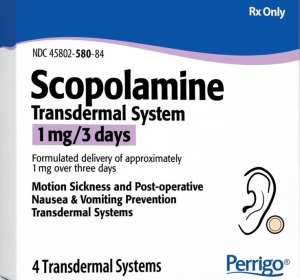
Scopolamine, also called hyoscine, is not an exotic poison invented for crime thrillers. It is a legitimate, decades-old medicine. Derived from plants in the nightshade family, it is prescribed worldwide to prevent motion sickness and post-surgical nausea, to calm gastrointestinal spasms, and to dry secretions before operations. It is sold as tablets, skin patches, and injections, and appears in familiar over-the-counter products such as Buscopan-type formulations found in Ghanaian pharmacies for menstrual cramps and stomach upset. Used correctly, it is safe and unremarkable — the kind of drug your pharmacist hands over without a second thought.
The trouble is its other face. Scopolamine is a powerful anticholinergic, meaning it blocks the brain chemical acetylcholine, which governs memory formation, alertness, and free will over one's own actions. In small, medical doses, this simply settles the stomach. In concentrated, weaponised doses, it can strip a person of the ability to resist instructions, wipe out short-term memory, and leave them functioning almost normally to onlookers while they are, in effect, not in control of themselves.
The Global Reckoning With "Devil's Breath"
This darker use has a name — "devil's breath" or, in South America, burundanga — and a well-documented history. Colombia carries the heaviest recorded burden: unofficial estimates there put scopolamine-related crime incidents at roughly fifty thousand a year, and Bogotá hospital data from the late 1990s and early 2000s found the drug implicated in a meaningful share of poisoning cases tied to criminal intent. Victims describe a dreamlike compliance — handing over bank cards, unlocking their own homes, loading their own belongings into a stranger's car — with little or no memory of it afterward.
The pattern has since surfaced far from South America. Three men were arrested in Paris in 2015 for allegedly using the drug to turn victims into compliant accomplices in their own robbery. In the United Kingdom, an Irish dancer's 2019 death was linked to scopolamine poisoning by thieves, and British health researchers writing this year have flagged fresh concerns after cases on London's public transport. West Africa has not been silent on this either: Nigerian commentators and crime writers have argued for years that the mysterious "one chance" robberies — in which passengers on shared taxis or buses are found dazed, compliant, and stripped of their belongings, sometimes blamed on "juju" — bear the clinical signature of anticholinergic poisoning rather than the supernatural.
Ghana's Own Documented Cases — With an Honest Caveat
Here is where I must be precise, because a columnist's job is to inform, not to frighten. Ghana has real, reported cases of drink-spiking robbery. In 2008, the Daily Graphic reported a trader arrested in Bolgatanga after allegedly lacing a co-passenger's soft drink with sedative tablets, having boarded a Kumasi-bound vehicle intending to rob her once she fell asleep. In Koforidua, police confirmed to Starr FM and Citi News that a suspect spiked a taxi driver's drink, leaving him slurring and disoriented in hospital while the suspect attempted to flee with the vehicle. And on the Elubo-to-Accra route, two women traders were found unconscious at Kaneshie station, with a Korle-Bu physician confirming toxic substances in their system consistent with sedation, after one accepted a sachet of water from a fellow passenger.
What none of these Ghanaian reports state, however, is a laboratory-confirmed finding of scopolamine specifically. The substances named or suspected in our local cases have included valium-type sedatives, chloroform, and unnamed "unknown substances" — not the tropane alkaloid that dominates Colombian toxicology reports. This is not a small distinction, and any responsible conversation about "devil's breath in Ghana" must hold it clearly: we have a well-documented pattern of drug-facilitated robbery on our roads and in our lorry stations, but we do not yet have the forensic paper trail to say with certainty that scopolamine itself, as opposed to other sedatives, is the weapon of choice here. That gap exists partly because Ghana's toxicology and forensic laboratory capacity remains limited outside major teaching hospitals, and because scopolamine clears the body within roughly half a day, making it notoriously hard to detect even where testing exists.
How the Trap Is Set
Whatever the exact chemistry, the social engineering behind these crimes is consistent and worth naming plainly, because recognising the pattern is the first defence. Perpetrators exploit ordinary Ghanaian courtesy: the shared taxi, the friendly conversation on a long trotro ride, the stranger who "just wants to help" at a lorry park, the new contact from a dating app who suggests a drink before meeting properly. The drug, whatever form it takes, is slipped into a beverage, food, or occasionally blown as a powder toward the face. The victim feels normal enough to walk, talk, and even withdraw cash, which is precisely what makes the crime so effective and so under-reported — victims often doubt their own story, embarrassed that they "let a stranger close."
What Can Actually Be Done
Prevention here is not exotic; it is discipline. Never accept an open drink, sealed sachet, or food item from someone you met minutes ago, no matter how disarming they are — insist on buying your own or watching it opened. Be wary of unusually persistent friendliness from strangers at transport terminals, a favourite hunting ground in every documented Ghanaian case above. If you begin to feel sudden, disproportionate drowsiness, confusion, or dry mouth after a drink from someone else, tell a visible third party immediately and get to a hospital rather than "sleeping it off" in a vehicle. And critically: report it. Every case above only became public because a driver, a fellow passenger, or hospital staff intervened; the ones that go unreported teach criminals that the method works.
Institutionally, the responsibility is shared. The Food and Drugs Authority regulates the manufacture, import, and sale of medicines like hyoscine-based products in Ghana under the Public Health Act, 2012 (Act 851), and works alongside the Narcotics Control Commission, the Ghana Police Service, and Ghana Standards Authority on enforcement raids and public education campaigns, as seen in Parliament's own account of joint task force actions against illicit drug imports. Victims of drug-facilitated crime should report to the nearest police station and insist on a hospital toxicology screening where available — Korle-Bu and the regional teaching hospitals are best placed for this. NACOC's remit covers the criminal trafficking end; the FDA's covers whether the substance entering the market was ever a legitimate, properly labelled medicine in the first place.
The Steel-Man: Are We Chasing a Panic?
A fair critic would stop me here and ask whether this column is doing exactly what it warns against — importing a Latin American moral panic onto a Ghanaian crime problem that is, in truth, ordinary sedative-facilitated robbery with a long local history predating any "devil's breath" headline. That critic has a point. Ghana already had a name for this before international media discovered burundanga: the drugged drink con has featured in Ghanaian crime reporting since at least the 2000s, using whatever sedative was cheap and available. Slapping an exotic label on a familiar crime risks two harms — it can make victims feel their ordinary vigilance was inadequate against a "supernatural" drug, and it can distract public attention and FDA resources toward a specific compound when the real gap is broader: weak point-of-sale controls on sedatives generally, thin forensic toxicology capacity, and low reporting rates driven by stigma. I take this seriously enough to state it outright rather than bury it: the accurate headline may be "Ghana has a drug-facilitated robbery problem," not "devil's breath has arrived," and our public health response should be built for the former.
The FDA Debate Worth Having
This is where I will say something likely to provoke argument, because a column that pleases everyone has said nothing. Ghana's FDA currently permits hyoscine-based products to remain reasonably accessible over the counter, as they are in most of the world, because they treat genuinely common ailments — menstrual cramps, motion sickness, travel nausea — for a population that cannot always afford a doctor's visit for every stomach spasm. Given the documented global misuse of scopolamine and the anecdotal but persistent West African reports linking anticholinergics to "one chance" style crimes, should the FDA tighten scheduling, require prescriptions, or mandate pharmacist-logged sales for hyoscine products the way some jurisdictions already restrict certain cold medicines prone to abuse? I suspect many pharmacists and ordinary Ghanaians will resist this, and reasonably so — punishing millions of legitimate users for the sins of a criminal minority is a blunt instrument, and Colombia's own experience shows most scopolamine used in crime is diverted from illicit plant extraction and informal markets, not pharmacy shelves. But the FDA cannot simply assume our shelves are clean because our forensic labs have not yet proven otherwise. An absence of confirmed cases is not the same as an absence of the problem, and I would rather see the debate had loudly now than see it forced on us later by a tragedy.
A Ghanaian Reckoning
We are a country that prides itself on hospitality — the stranger you help today is the neighbour you may need tomorrow. That instinct is not a weakness; it is one of the finer threads of our social fabric, and I refuse to write a column that asks Ghanaians to trust each other less. What I ask instead is narrower: trust your neighbour, but do not drink from an unopened container handed to you by someone whose surname you do not know. Teach your children, your house help, your elderly parents who still take the last trotro from Kejetia, this one specific caution. It costs us nothing to keep and could cost us everything to ignore.
Author's Note
I did not write this column to sell fear. I wrote it because I have sat in enough Kaneshie and Kejetia lorry parks to know how easily kindness is weaponised against kind people, and because I believe Ghanaians deserve facts sharper than rumour and calmer than panic. If this piece sparks argument about whether our FDA is doing enough, or whether "devil's breath" is even the right name for what is happening on our roads — good. That argument, held honestly, is how a country gets safer.
About the Author
Chief Tutu Baffour Asare Brownsy Williams is an author, filmmaker, and opinion columnist based in Accra, Ghana, and the founder of Brownsy Silva Company, a multi-disciplinary creative platform spanning novels, films, and public-interest commentary. He writes regularly for Modern Ghana, reaching readers across Ghana and the diaspora communities of the UK, USA, Canada, and Germany, and is currently a student of engineering at Accra Technical University.


 Ghana won’t back down on mining value addition – Ambassador Kojo Bonsu
 How Dr Jesse Amuah, wife was murdered over GH¢1,500 payment dispute
 Mahama announces 20% salary incentive for health workers in deprived areas
 Dafeamekpor accuses IMF of meddling in Ghana’s internal politics
 Christian Council forms committee to revive National Cathedral Project
 Two remanded over alleged GH¢127million cyber theft
 'Cocaine Coast' — Ntim Fordjour accuses gov't as drug busts connected to Ghana c...
 Mahama explains phased approach to Big Push road projects
 Ghana must move from plastic policies to implementation – EPA CEO
 EPA pushes coordinated action to tackle Ghana’s plastic pollution crisis at nati...


