




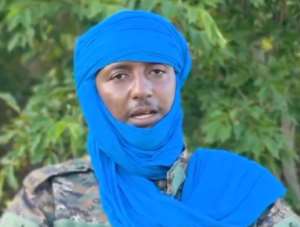
In a new speech, a senior JNIM commander operating under the nom de guerre Uwais Al Ansari has described the April 25 offensive in Mali as a decisive turning point in the Sahel conflict, declaring that the era of simple hit-and-run raids is giving way to more intense, systematic operations with civilians in Burkina Faso now squarely in the group's crosshairs.
The April 25 Reference Point
The speech's framing is consistent with how jihadist propaganda across the region has treated the April 25 offensive in Mali. On that day, Jama'at Nusrat al-Islam wal-Muslimin (JNIM) launched a coordinated, nationwide assault in alliance with the Tuareg-led Azawad Liberation Front (FLA), striking Bamako, Kati, Bourem, Sévaré, Senou, and Mopti simultaneously, while the FLA seized Kidal and parts of Gao.
The operation killed Mali's Defence Minister, Sadio Camara, in a suicide bombing and was described by analysts as unprecedented in scale and coordination since Mali's conflict began in 2012.
Al-Qaeda-aligned commentary elsewhere in the movement has already cast the offensive in similarly historic terms, describing it as the culmination of a decade-long strategic plan and a "profound strategic shift" reshaping governance and influence across West Africa .
If Uwais Al Ansari's speech mirrors that language, it would extend this messaging to JNIM's Burkina Faso theatre specifically framing April 25 not as a Mali-only event but as the opening of a new operational phase across the wider AES bloc (Mali, Burkina Faso, and Niger).
From Raids to Systematic Offensives
The shift describedaway from smaller hit-and-run raids toward larger, more sustained offensives tracks with a documented escalation in JNIM's Burkina Faso operations over the past year and a half.
Coordinated assaults on military camps, including the assault on the Djibo military base, have already involved swarms of motorcycle-borne fighters, indirect fire, and vehicle-borne improvised explosive devices a doctrine analysts describe as a continuation and intensification of tactics refined over more than a year, rather than an entirely new method.
The scale has been climbing for some time. JNIM issued 121 statements in a single month (May 2025) covering Burkina Faso, Mali, Niger, and Togo, the bulk of them tied to Burkina Faso operations, reflecting a sustained and geographically expanding campaign rather than sporadic strikes.
A Pattern of Civilian Targeting
The warning that civilians in Burkina Faso face intensified targeting is consistent with previous statements attributed to JNIM's Burkina Faso leadership. Following the Djibo attack, JNIM's Burkina Faso commander urged civilians to stay away from the army and leave contested towns, accused Burkinabè security forces and allied militias of targeting civilians, and warned that reprisals would continue, declaring "what's coming is worse".
That messaging combines a claimed protective posture toward civilians who distance themselves from the state with an explicit threat against those who do not.
The human cost of this dynamic has already been severe. Burkina Faso's rural populations have increasingly fled state forces and turned to JNIM for protection, a pattern regional security analysts link to distrust of the military, weak intelligence, and limited state response capacity.
Both jihadist violence and, separately, alleged state and militia abuses have produced mass civilian casualty events in the country in recent years, including reprisal attacks on villages accused of state collaboration.
Why the Escalation Warning Matters
Analysts tracking the broader Sahel trajectory describe the region as having entered "a new phase of systemic risk" in 2026, driven by the April–June events in Mali: the coordinated offensive, the death of Mali's defence minister, the withdrawal of Russia's Africa Corps from parts of northern Mali, and the consolidation of armed groups in Kidal and Gao.
If JNIM's Burkina Faso wing is now explicitly linking its own operational posture to that same turning point, it suggests the group intends to synchronise pressure across the AES bloc rather than treat each country's insurgency in isolation a strategic signal regional governments and their Russian security partners will likely be parsing closely in the weeks ahead.
A note on sourcing: This piece is built around the framing described to me, cross-checked against open-source jihadist monitoring and regional security analysis. A video still shared alongside this piece, bearing the Al-Zallaqa media watermark JNIM's official propaganda arm captions the speaker as "الأخ أويس الأنصاري حفظه الله" ("Brother Uwais al-Ansari, may God preserve him"), confirming the video is a genuine, group-attributed release rather than a third-party mislabelling.
That said, open-source monitoring (Counter Extremism Project) has previously identified the alias "Uwais Al Ansari" as belonging to Ousmane Dicko, Djaffar Dicko's brother and JNIM'sown commander in Burkina Faso distinct from Djaffar Dicko, who leads the allied group Ansarul Islam. Before publication, it's worth confirming the full transcript and whether this specific video identifies the speaker by his given name, so the article correctly attributes the speech to the right Dicko brother.
Mustapha Bature Sallama
Medical/ Science Communicator,
Private Investigator, Criminal Investigation and Intelligence Analysis,
International Conflict Management and Peacebuilding. ( USIP)
[email protected]
+233555275880
Sources
2026 Mali offensives, Wikipedia; Mali: Avoiding the Trap of Military Escalation, International Crisis Group, May 2026.
Attacks in Mali Mark Long Trajectory of Worsening Security, Africa Center for Strategic Studies, May 2026.
The Mali Offensive as a Turning Point: Between Operational Achievement and the Vision of a Global Caliphate in Al-Qaeda's Discourse, International Institute for Counter-Terrorism (ICT), June 2026.
JNIM's Coordinated Attacks in Mali Reveal Deadly Doctrine, Africa Defense Forum, July 2026.
Sahel Monitoring May 2025, Counter Extremism Project.
West Africa and the Sahel: Threat and Strategic Risk Assessment, African Security Analysis, 2026.

 Algeria cuts diplomatic ties with United Arab Emirates over 'provocative and hos...
 Colombia court orders President de la Espriella to hide social media videos of h...
 Account for GH¢49.7m South Africa evacuation expenditure – Minority tells Ablakw...
 Ghana wishes Guyanese diplomat well in UN Secretary-General bid – Ablakwa
 Galamsey 'stealing' boys from classrooms in Bongo – DCE raises alarm
 Leaving Majority Leader role for ministerial position was my choice – Mahama Aya...
 A Rocha Ghana stands by claim of 50-plus forest reserves affected by galamsey
 September 10: Cedi sells at GHS12.15 on forex market, GHS11.45 on BoG interbank
 Open aviation fuel supply to more players to reduce airfares – Akim Swedru MP to...
 Pay my salary arrears, terminal benefits by September 11 or face court – Former ...


