




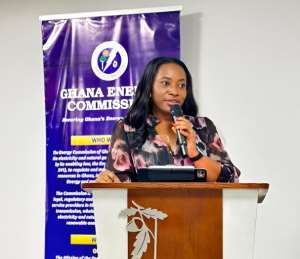
The Energy Commission has led key stakeholders in Ghana’s power sector in validating the 2026 Integrated Power System Master Plan (IPSMP), a strategic framework aimed at strengthening the country’s electricity supply and ensuring long-term power security.
The stakeholder validation meeting, led by the Acting Executive Secretary of the Energy Commission, Ms. Adwoa Serwaa Bondzie, brought together major institutions across the energy sector, including the Volta River Authority (VRA), Ghana National Petroleum Corporation (GNPC), Electricity Company of Ghana (ECG), Ghana Grid Company Limited (GRIDCo), Northern Electricity Distribution Company (NEDCo), Nuclear Power Ghana, Bui Power Authority, and the Ministry of Energy and Green Transition.
Addressing participants, Ms. Bondzie stressed the importance of coordinated, evidence-based planning to secure Ghana’s electricity future, noting that decisions on the country’s power system must be informed by reliable data, technical analysis and the practical experiences of institutions operating within the sector.
Stakeholders at the meeting reviewed key issues and observations raised in the IPSMP, with members of the IPSMP Technical Group providing responses and additional technical explanations to facilitate a comprehensive assessment of the plan.
Among the major areas discussed were Ghana’s future electricity demand, the amount of generation capacity required to be maintained as reserve, and the country’s potential to export electricity to neighbouring markets.
The stakeholders also examined the future role of various energy sources in Ghana’s generation mix, including solar photovoltaic (PV), small-scale hydro, natural gas and liquefied natural gas (LNG).
The 2026 IPSMP goes beyond simply forecasting electricity demand. It provides an integrated assessment of the country’s generation, transmission, distribution and energy-resource requirements, providing a basis for institutions to coordinate their development plans and investment decisions.
The validation exercise is therefore expected to help promote greater alignment among key players in the electricity sector while supporting efforts to build a more resilient and reliable national power system.
With Ghana’s electricity needs expected to evolve alongside population growth, industrialisation and economic development, the plan is expected to serve as an important guide for future investments and policy decisions in the energy sector.
The stakeholder meeting ultimately reinforced a common objective among Ghana’s power sector institutions: using data, technical expertise and collaboration to build a dependable electricity system capable of meeting the country’s future needs and keeping the power on.


 Spiritualist found dead in suspected suicide at Assin-Amoabeng
 ‘Bunkpurugu must choose development over violence’ – MP tells residents
 Court orders Ghana Police to file disclosures in Labone robbery case
 Mahama inaugurates five-member Independent Fiscal Council, demands objective ove...
 Trump tells Putin he wants swift end to Ukraine war, Kremlin says
 Poor refereeing destroying Ghana's football — Mahama
 No businessman will sponsor NPP again because of its ‘evil and greedy nature’ – ...
 Failure to jail corrupt NPP officials will haunt NDC in election 2028 – Hopson A...
 Illegal miner who posed as pastor to defile student jailed 15 years
 Mamprugu Youth calls for crackdown on fake Facebook accounts over alleged false ...

