




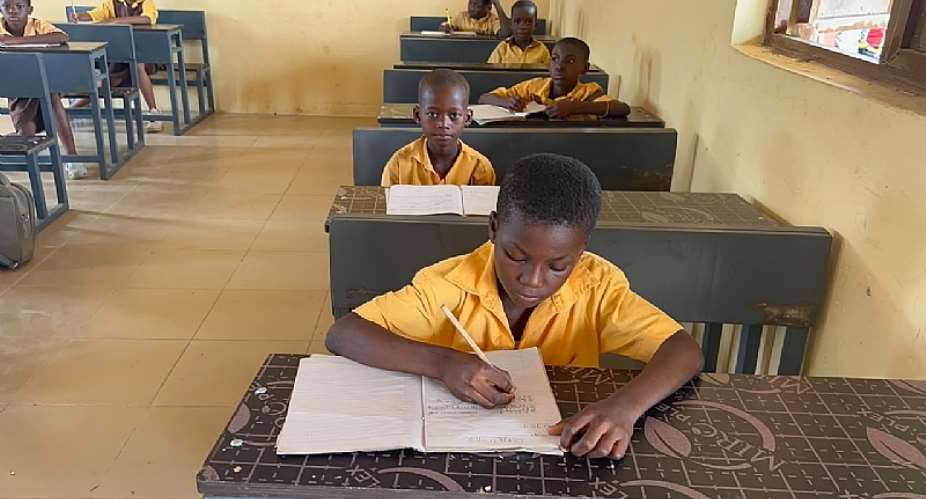
Digital technology is becoming increasingly prevalent in all areas of our lives, reshaping not only how we live-but also how we learn. However, a persistent digital divide, one of the defining development changes of the 21st century, prevents many learners from accessing technologies that could provide these benefits.
Today, an estimated 2.2 billion people – about 30 percent of the global population-do not have internet access. At the same time billions are ‘under-connected’, and lack reliable broadband, and digital devices, or the skills required to participate in data-driven economies. In the field of education, over two thirds of primary schools lack digital tools. For millions of learners and teachers, access to digital learning platforms is severely limited, and resources are often rudimentary or unreliable.
No doubt, inequalities worsen unless deliberate measures are taken to close to digital divide. Digital technologies should be used to support basic education. Digital technologies can equip teachers with better tools to advance teaching methods and interaction with learners. This can be accomplished through accessing secure online platforms and class video call schedules using laptops, tablets, and smartphones.
In today’s world, digital literacy is a foundational requirement for participation and progress. Yet access to access to digital education still remains uneven. UNESCO report regarding digital skills gaps shows that entire communities lack computers, reliable connections, or learning materials and the continuing intergenerational exclusion resulting not from unwillingness but from systemic constraints is ongoing.
More should be done to address structural barriers that prevent equal digital literacy around the globe. Also required are, robust strategies and actions that could empower a holistic transformation in the education sector.
It is encouraging to learn that the African Union Development Agency (AUDA-NEPAD) has developed a continental framework for transformation education through technology. If well implemented, the Africa EdTech 2030 Vision and Plan could respond to Africa’s demographic realities where over 60 percent of the population is under 25, and there is urgent need to close learning divides, with millions of children still out of school and teacher shortages projected to reach 17 million by 2030.
Ultimately, the Africa EdTech 2030 Vision & Plan is a call to action for governments, educators, innovators, and partners to unite in building inclusive, resilient, and innovation-driven education systems. By leveraging digital public infrastructure and local innovation, it seeks to close learning divides, empower youth, and ensure Africa’s education transformation contributes to both continental prosperity and global knowledge economies.
The integration of digital technologies in education is increasingly recognized as a critical driver for improving teaching, learning, and learner assessment, as emphasized in global and regional initiatives such as the African Union Development Agency–NEPAD EdTech Vision and reports by UNESCO and the World Bank.
It is more encouraging that the Spix Foundation, a charity organisation based in the United States aiming to advance global education, has partnered with the Ministries of Education in African countries including Kenya, and is leading the pre-pilot phase of RESPECT initiative to test the full RESPECT Ecosystem - a digital public infrastructure aimed at integrating multiple educational applications into a unified platform to enhance access, efficiency, and data-driven decision-making in education systems.
RESPECT is an open-source digital library for EdTech apps. It makes it easier for educators to discover and use high-quality apps with a single account in all settings, while giving developers the platform they need to grow their impact globally. RESPECT uses strong interoperable technical standards that ensure data sovereignty, and enables open source and proprietary developers alike to monetise their tools through a simple organisational sponsor supported revenue model. RESPECT makes it easier to access, build, scale and sustain resilient edtech innovations.
At its core, RESPECT connects the needs of developers and educators, enabling developers to build and maintain high-quality, locally contextualised tools that reflect real classroom conditions and align with local languages and curriculum goals. It's about building EdTech that lasts, where it matters most. Such technologies and existing digital learning initiatives, successfully piloted in schools like Wangu Comprehensive Primary School in Nairobi's Dandora area in Kenya, an underserved area, hold great promise, and they need to be strengthened, replicated and scaled up.
As Ms Audrey Azoulay, the Director-General of UNESCO, remarked on the occasion of the International Day for Digital Learning, last year; to ensure that technology effectively improves learning outcomes and does not widen existing educational inequalities, we must actively steer the digital revolution in education.
Mr Obonyo is a Public Policy Analyst. Email: [email protected]
 Anti-galamsey campaigner found dead in suspected suicide at Assin Amoabeng
 National smartphone penetration reached 71.8% as of June 2026 – Communications M...
 It will cost about US$20m to repair fibre cuts this year – Communications Minist...
 Aggressive Big Push road projects responsible for 49% of Ghana’s fibre cuts – Sa...
 How 21-year-old man dies after jumping into Volta Lake as cow struggles in canoe
 Over 12,000 national service personnel demand GH¢41 refund as NSA cites missing ...
 September 7: Cedi sells at GHS12.15 on forex market, GHS11.41 on BoG interbank
 Forex gains accounted for more than 50% of SOE profit margins – Kpessa-Whyte adm...
 Justice Baffoe-Bonnie only stopped short chanting party slogan – Prof Kwesi Yank...

