




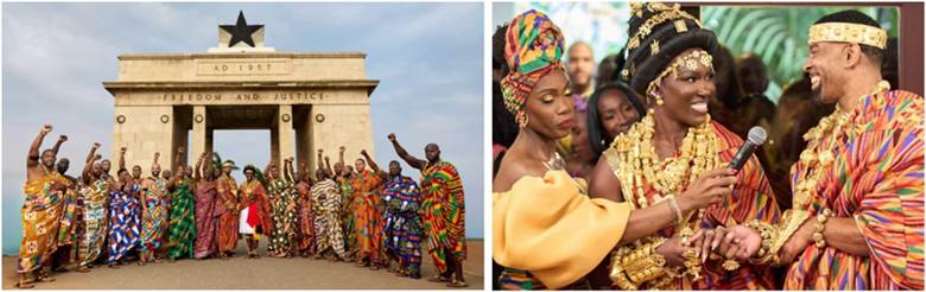
Ghana may have one of the most valuable and least systematically exploited tourism marketing assets in the world: people with enormous global audiences voluntarily choosing to associate themselves with Ghana. This is not the usual celebrity endorsement where a destination pays a famous person to appear in an advertisement, pose beside a hotel or read a scripted message. Ghana has something potentially much more powerful. Celebrities come here because they want to.
They trace ancestry here. They get married here. They celebrate here. They invest here. They post Ghanaian food, fashion and music. They visit the castles and heritage sites. They wear Kente. They bring friends. They tell millions of followers that Ghana feels like home. And yet, after decades of this extraordinary phenomenon, I struggle to believe Ghana still has not fully understood the commercial value of what is happening before her eyes year in year out.
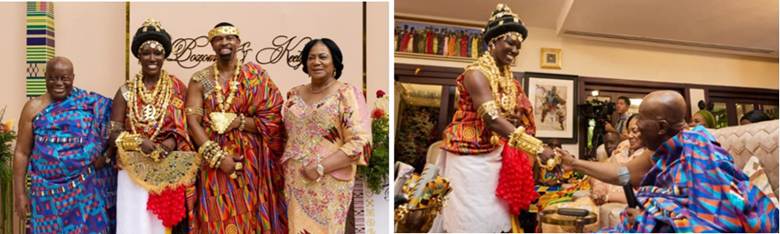
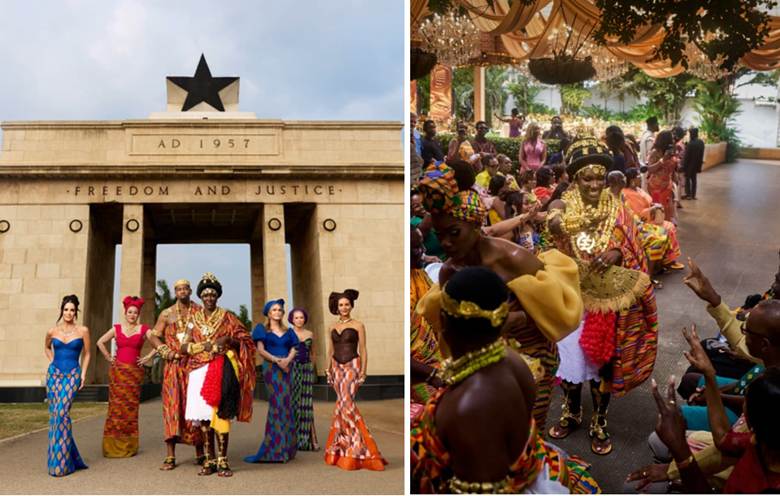
The latest example is the wedding of Ghanaian-American marketing executive and Real Housewives of Beverly Hills star Bozoma Saint John and Keely Watson. On August 21, 2026, the couple held a traditional Ghanaian wedding in Accra, attended by major Real Housewives of Beverly Hills personalities including Kyle Richards, Dorit Kemsley, Kathy Hilton, Jennifer Tilly and Sutton Stracke. The event was filmed for the television series, people.com. Think about that for a moment. Ghana did not buy that television exposure. Ghana became the television exposure. And that distinction is enormous.
THE BOZOMA SAINT JOHN MOMENT IS BIGGER THAN A WEDDING
Bozoma Saint John is not simply another celebrity visiting Ghana. She is a globally recognised marketing executive, a Ghanaian citizen and a person who has been connected to Ghana's diaspora diplomacy for years. Indeed, former President Nana Akufo-Addo specifically acknowledged her and Boris Kodjoe for using their influence to help attract people to Ghana during the Year of Return. Now, years later, Bozoma has chosen Ghana as the location for one of the most important personal celebrations of her life. But wait a minute, there is another dimension.
Her wedding has brought a group of internationally recognisable television personalities to Ghana, and their experience is being captured for a global entertainment audience. Recent reporting indicates that the Ghanaian ceremony will become part of The Real Housewives of Beverly Hills season 16. Social media clips from the visit have already generated considerable interest, with the cast seen embracing Ghanaian culture and wearing modern Kente. This is destination marketing gold. A conventional tourism advertisement might give Ghana 30 seconds. A reality television programme can give Ghana an entire storyline.
And unlike an advertisement, viewers aren't necessarily watching because somebody told them to watch a tourism commercial. They are watching because they are emotionally invested in the personalities. That is the power of embedded destination marketing. The destination Ghana becomes part of the story.
GHANA HAS BEEN RECEIVING THIS GIFT FOR YEARS FOR FREE
The Bozoma wedding should therefore not be treated as an isolated event. It should force us to look backwards. The extraordinary celebrity visibility surrounding Ghana became particularly obvious during the period leading to and following the 2019 Year of Return. The country welcomed or attracted personalities including: Idris Elba, Naomi Campbell, Steve Harvey, Michael Jai White and Boris Kodjoe. Others are, Ludacris, T.I., Rick Ross, Cardi B, Rosario Dawson, Kofi Kingston, Lupita Nyong'o, Danny Glover, Samuel L. Jackson (my man), Jidenna and the rest. The list is remarkable and endless.
More than 40 African-American and international celebrities were associated with the Full Circle Festival and the broader Year of Return phenomenon. The government's own reporting recorded strong growth in international arrivals in 2019, while subsequent analyses identified the celebrity component as one of the important mechanisms through which the campaign generated international attention. There was something particularly ingenious about the strategy. Ghana did not merely say: "Come to Ghana." It created an environment in which influential people could come to Ghana and then tell their own audiences what Ghana meant to them. That is much more powerful than any commercial campaign by Ghana.
STEVE HARVEY DEMONSTRATED THE POWER OF EMOTIONAL MARKETING
Perhaps the most instructive example was Steve Harvey. His visit to Cape Coast Castle generated an emotional response that travelled far beyond the people physically present in Ghana. A research study examining Ghana's Year of Return social-media strategy notes that a video of Steve Harvey's Ghana experience received almost 700,000 views and describes his endorsement as reaching multiple generations of Black Americans (Taylor and Francis Online). The important lesson here is not the number of views. It is why people watched. Steve Harvey was not simply saying: "Ghana has beautiful beaches." He was communicating something much deeper, identity, ancestry, belonging and home. That is precisely the emotional territory in which destination brands become powerful. Tourism is ultimately not just about places. It is about stories people tell themselves about places. Ghana has been extraordinarily fortunate because some of the world's most influential Black personalities have been telling those stories for us for free.
THE REAL MISSED OPPORTUNITY
Here is where I believe Ghana has fallen short. We have often celebrated the celebrity visit as an event rather than treating the celebrity as a long-term marketing asset. A celebrity comes. There are photographs. The minister meets them (probably the celebrity meets the President). The Ghana Tourism Authority posts pictures. The celebrity visits a castle. Social media explodes. The celebrity leaves. And then we wait for the next celebrity. That is not a strategy. That is event publicity (what is gradually becoming our trademark in recent years). There is a fundamental difference between publicity and destination marketing. Publicity asks: "How much attention did we receive?" Destination marketing should ask: "What did we convert that attention into?"
Did the celebrity's followers receive curated Ghana travel itineraries? Did they receive links to licensed Ghanaian tour operators? Did they receive information about heritage tourism? Did they receive hotel and resort packages? Did we create dedicated landing pages around the celebrity's Ghana experience? Did we retarget people who watched the celebrity's Ghana content? Did we measure increases in searches for Ghana? Did we measure flight searches? Did we measure hotel bookings? Did we measure visits to Ghanaian tourism websites? Did we measure diaspora investment enquiries? Did we develop annual partnerships with the celebrities? Did we invite them to become formal Ghana destination ambassadors? These are the questions that matter and we must answer them truthfully..
THE YEAR OF RETURN PROVED THE CONCEPT
The remarkable thing is that Ghana already demonstrated that the model works. The Year of Return 2019 was one of Ghana's most successful destination campaigns. The Ghana Tourism Authority itself describes the campaign and its successor, Beyond the Return, as major tools for positioning Ghana in American, Caribbean, European, African and sub-regional markets. Beyond the Return was subsequently designed around seven pillars, including experiencing Ghana, investing in Ghana, diaspora pathways, celebrating Ghana, branding Ghana and promoting Pan-African heritage and innovation. But the fundamental question is: Have we converted the celebrity momentum into an enduring global destination-marketing machine? My argument has always been, we have not done enough.
In fact, a 2025 doctoral study examining Ghana's diaspora marketing found that although Beyond the Return increased visibility, cultural pride and diasporic curiosity, its impact was constrained by event-oriented planning. The study specifically identified celebrity and influencer endorsement as one of the strategies being used, but argued for moving from symbolic and seasonal marketing towards long-term engagement and diaspora co-ownership (UEWScholar). On Thursday 20th of August in his inaugural lecture Professor Ishahuka Adam made a similar case that Ghana has not taken advantage of the enormous opportunities the year of return and Beyond the Return presented the country. These findings should concern policymakers. Because they describe precisely the problem.
GHANA HAS CREATED ATTENTION WITHOUT BUILDING A SUFFICIENTLY POWERFUL SYSTEM FOR CONTINUOUSLY CONVERTING ATTENTION INTO ECONOMIC VALUE.
Imagine if Ghana had built a "Ghana Celebrity Tourism Network"
Imagine a formal platform consisting of 30–50 globally influential personalities with Ghanaian heritage or a demonstrated emotional connection to Ghana. Not necessarily paid ambassadors. Rather, friends of Ghana. Imagine:
- Bozoma Saint John: Destination storytelling, luxury, lifestyle, diaspora and global business.
- Boris Kodjoe: Hollywood, diaspora and family tourism.
- Idris Elba: Film, music, fashion and African creative industries.
- Steve Harvey: African-American family, heritage and experiential tourism.
- Kofi Kingston: Sports tourism and youth audiences.
- Naomi Campbell: Fashion, luxury tourism and African creative industries.
- Michael Jai White: Film, heritage and cultural tourism and others.
GHANA SHOULD TURN CELEBRITY VISITS INTO "CONTENT ECOSYSTEMS"
The Bozoma wedding provides a perfect model. One celebrity wedding could generate: Television exposure (Real Housewives of Beverly Hills), Social media exposure, Fashion exposure (Kente, Ghanaian designers, jewellery and beauty), Culinary exposure (Ghanaian food and hospitality), Heritage exposure (Castles, traditional ceremonies, chieftaincy and history), Destination exposure (Accra, Central Region, Eastern Region, Ashanti and other tourism destinations), Wedding tourism (Ghana as a destination for African diaspora weddings), Luxury tourism (Hotels, resorts, private villas and premium experiences), Creative economy (Music, DJs, photographers, videographers, designers and filmmakers) and Diaspora engagement (A message to millions of people: you can celebrate your most important moments in Ghana. That is no longer a wedding). It becomes a destination-marketing ecosystem.
GHANA SHOULD AGGRESSIVELY PURSUE WEDDING TOURISM
There is another enormous opportunity hidden inside the Bozoma wedding. Destination weddings. Ghana should be positioning itself as one of Africa's premier destinations for diaspora weddings, vow renewals, milestone birthdays, family reunions and cultural celebrations. Imagine a campaign: "Say I Do in Ghana" target, African-Americans, Ghanaians in the diaspora, Nigerians in the diaspora, Caribbean communities, African-descended Europeans, Pan-African families, celebrities and high-net-worth individuals. The Bozoma wedding could become the flagship case study. Instead, we risk allowing it to become simply another news cycle.
THE BIGGEST ASSET IS NOT CELEBRITY, IT IS CREDIBILITY
There is an important distinction policymakers must understand. People are increasingly skeptical of traditional advertising now. If the Ghana Tourism Authority says: "Ghana is amazing," people know that Ghana Tourism Authority has an interest in Ghana being considered amazing. But when Steve Harvey, Bozoma Saint John, Idris Elba or another influential personality says: "I came to Ghana and this is what I experienced," the message is perceived differently. It is third-party validation. That is why influencer marketing has become so powerful. But Ghana possesses something even more valuable than influencers. It possesses cultural insiders with global influence. These are people who can speak about Ghana without appearing to sell Ghana.
WE MUST STOP MEASURING CELEBRITY MARKETING BY LIKES
My policy recommendation is this: Ghana needs a Celebrity Destination Marketing Measurement Framework. Every major celebrity association should be tracked across: the reach, engagements, searches, sentiments, website traffic, leads, bookings, arrivals, spend, investments, content, media value and conversion.
FROM YEAR OF RETURN TO YEAR OF CONVERSION
This is ultimately the conversation Ghana needs to have. The Year of Return was extraordinarily successful at generating awareness. Beyond the Return was intended to sustain the momentum. But the next stage should be about conversion which I think the new project Black Star Experience must still create opportunity for Beyond the Return project. People must not merely return but visit, stay, spend, invest, celebrate, return again and bring somebody with you. That is the difference between a campaign and a tourism economy.
GHANA CANNOT AFFORD TO KEEP GIVING AWAY ITS BIGGEST MARKETING ASSET
The irony is almost painful. Countries spend millions trying to manufacture the kind of destination visibility Ghana has repeatedly received organically. A-list personalities have come here. They have cried at Cape Coast. They have danced to Ghanaian music. They have worn Kente. They have visited our historical sites. They have celebrated Christmas here. They have spoken about Ghana to millions. They have brought their friends. They have invested their personal credibility in the Ghana story. And now a major American reality television franchise has come to Ghana because a Ghanaian woman chose to celebrate her wedding here.
WHAT MORE EVIDENCE DO WE NEED?
The question is no longer whether celebrity endorsement works. Ghana already knows that it does. The question is whether we are sophisticated enough to institutionalise it, measure it and convert it into sustained tourism, investment and destination-brand value.
THE BOZOMA OPPORTUNITY SHOULD BECOME A POLICY LESSON
I would therefore urge the Ministry of Tourism, the Ghana Tourism Authority, the Ghana Tourism Federation, private-sector tourism operators and the creative industries to treat the Bozoma Saint John wedding not merely as a celebrity story. Treat it as a destination-marketing case study. Study the global reach. Track the social-media conversation. Measure Ghana-related searches. Monitor the television exposure. Identify the hotels, designers, caterers, venues, transport companies and tourism attractions benefiting from the event. Then build a strategy around it. Because the greatest missed opportunity would be for the world to watch The Real Housewives of Beverly Hills discover Ghana, and for Ghana itself to simply watch along with them.
THE WORLD IS ALREADY HELPING GHANA TELL ITS STORY.
What Ghana needs now is the strategy to make sure that when the cameras stop rolling, the tourists keep coming. And perhaps that should become the next evolution of Ghana's tourism strategy: From Celebrity Visits to Celebrity Partnerships. From Visibility to Conversion. From Year of Return to Years of Revenue. Ghana has spent years accumulating something money cannot easily buy: global cultural credibility. The time has come to turn that credibility into an economic asset.


 Attorney-General appeals ruling halting trial of former Buffer Stock CEO, wife
 NAIMOS destroys 1,970 changfans, 863 Illegal mining structures in three months —...
 Let's see how Asiedu Nketia becomes NDC flagbearer with same people he conspired...
 Asiedu Nketiah opts out of NDC chairmanship race amid flagbearership speculation
 NDC insists Nkwanta North elections will proceed despite court injunction
 'My side of the story will shock you; I'm waiting for court days' – Obuasi SHTS ...
 Obuasi SHTS sexual abuse: 'GES must distant itself, allow the law to work' — For...
 Upper East: Fear grips nine Kusaug communities over mysterious fish deaths in da...
 NDC suspends Amasaman Communications Officer over 'irresponsible' remarks on Obu...
 Parliament secures religious leaders’ support to end witchcraft accusations


