




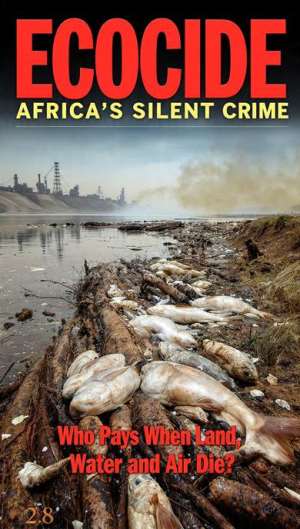
Crime Scene: Kitwe, Zambia, February 18, 2025
On February 18, 2025, the Kafue River turned to acid. According to Zambia’s Environmental Management Agency, six tailings facilities at Sino-Metals Leach Zambia failed, releasing acidic effluent. ZEMA recorded pH as low as 4.1 downstream, with elevated copper, cobalt, and other metals.
That morning, mothers in Kitwe stopped washing their children. Government declared water unsafe and deployed tankers for an estimated 300,000 people in Kitwe and nearby areas. Fish died. Cattle dropped. Crops failed. Wells were poisoned. Taps ran dry.
"We stopped using the river that week", a Kitwe resident told local media.
"The smell was chemical".
This is not just a spill. Environmental lawyers and civil society now call events like this ecocide. And Kitwe is not alone. Africa has many such crime scenes.
What Is Ecocide?
Bullets kill a body. Ecocide destroys what the body needs to live: water, food, land, breath, culture. Poison one river, and a community’s way of life is erased without firing a shot.
The term gained prominence during the 1970s debates on Agent Orange usage during the Vietnam War. Today, ecocide means:
"Extreme damage to nature that destroys communities tied to that land".
The law is catching up. On September 9, 2024, Pacific nations of Fiji, Samoa, and Vanuatu submitted a proposal to the International Criminal Court (ICC) to add ecocide to the Rome Statute.
As of 2026, ecocide is not yet a standalone ICC crime. But momentum is building. In 2025, the African Court on Human and Peoples’ Rights received a request for an advisory opinion on state duties regarding climate and environmental harm under the African Charter. The question is now: "Who is liable?"
The Plus: Need Of Resources
Africa needs mining, energy, and jobs. Copper and cobalt power the energy transition. Forests and oil fund budgets. No one is saying stop development. The demand is: develop without destroying. Profit without poisoning.
Ecocide is devastating Africa. The continent is rich in resources, but deep in poverty and weak in governance. Decades of exploitation, pollution, and destruction have made environmental destruction common. But the Pan-African movement to criminalize it is growing. African nations and civil society are no longer calling this a regulatory breach. They are calling it what it is: ecocide — a serious crime against the environment and humanity that must be prosecuted. It will not be easy. But given the scale of destruction across the continent, it is a debate Africa must have.
Africa Ecocide Crime Scenes At A Glance
Water Crimes: Poison the River, Poison the People
1. Kitwe, Zambia: The Acid River
ZEMA confirmed February 2025 discharges into the Kafue. Water supply was disrupted. Cleanup and liability assessments are ongoing.
2. Ghana: Mercury in the Taps
Ghana’s EPA and Water Commission report "galamsey" has polluted the Pra, Offin, and Ankobra with mercury and cyanide, forcing treatment plants to close. Health facilities report skin and neurological complaints in mining towns.
3. Nigeria, Niger Delta: 50 Years of Oil
UNEP’s 2011 Ogoniland assessment found petroleum contamination in groundwater and soil, with impacts projected for 30 years. Decades of spills have destroyed fishing and farming. Cleanup has lagged.
4. Okavango Basin, Namibia/Botswana: One Drill, Two Risks
Seismic oil exploration licenses were granted near the Okavango Delta, a UNESCO site and water source for the San and wildlife. Environmental groups and local communities have challenged the project in court, citing spill and water risks.
5. Senegal, Saint-Louis: The Sea Takes the City
IPCC and Senegalese government reports document coastal erosion of up to 1-2 meters per year in Saint-Louis. Rising seas and storms have displaced fishing communities and threatened heritage sites.
6. Zimbabwe: Gold, Mercury, and Poisoned Rivers
The EMA and WHO note widespread use of mercury in artisanal gold mining, contaminating rivers like Mazowe and Odzi. Miners also face silicosis from unsafe underground work.
Land & Forest Crimes: Kill the Land, Kill the Future
7. DRC, Upemba National Park: Chainsaws and Bullets_
UN and park authority reports link illegal charcoal, timber, and mining to deforestation and ranger deaths. Forest loss threatens watersheds and wildlife.
8. Madagascar, South: Dust and Hunger
Four years of drought hit southern Madagascar, per WFP and FAO. Land degradation and deforestation worsened food insecurity, leaving children acutely malnourished.
9. Congo Basin: The Lungs of Africa Gutted_
Industrial logging and mining concessions, documented by Global Forest Watch and Greenpeace, have cleared primary forest. This releases carbon and displaces Indigenous communities.
10. Tigray, Ethiopia: War on the Land
The AU peace agreement and FAO noted destruction of irrigation, seed stocks, and farmland during 3 years of war. An entire farming season was lost, deepening food insecurity.
Air Crimes: Choke the Sky, Choke the Children
11. South Africa, Mpumalanga: Coal Towns and Inhalers_
South Africa is the world’s 12th largest CO2 emitter. CER and groundWork report that air pollution in the Highveld exceeds WHO limits. Communities, including children with asthma, live next to 12 coal plants and acid mine drainage.
What Must Happen Now?
1. Criminalize Ecocide in AU Law. Make "wanton environmental damage" a crime with prison, not just fines.
2. Polluter Pays.Companies responsible, including those linked to the Kitwe spill, oil majors and loggers, must fund cleanup and compensation. Create a continental reparations fund.
3. Consent or No Deal. Enforce Free, Prior, and Informed Consent before mining, drilling, or dams.
4. Protect Defenders.Fund and legally protect rangers, journalists, and activists.
5. Moratorium + Restoration. Halt new clearing in Congo Basin and Madagascar until restoration plans exist.
6. Prosecute Now.Use Article 8(2)(b)(iv) of the Rome Statute and the African Charter to take test cases on mass environmental harm.
Conclusion
"Prosecute Or Perish"
By 2026, we know what ecocide is.We have the evidence.
. Poison a river, poison a nation.
.Burn a forest, burn a future.
. Choke the air, steal a child’s breath.
To African nations: Publish the audit. To Addis Ababa: Table the Ecocide Protocol.To The Hague: Open the case.
The ICC is debating.The African Court has the question.The AU must act. Africa’s resources can come out of the ground. The poison cannot go into our water.
Silence is complicity.Prosecution is the path.


 Ghana lost 1.1 million ounces of gold to smuggling in 2023 – GHEITI report
 Stranded Ghanaian fishermen narrate how they ate fresh fish, drunk sea water to ...
 How notorious armed robber died on the way whiles leading police to arrest accom...
 'We must continuously improve cargo handling, coordination among port operators'...
 GPHA honours industry players, former leaders and staff at 40th anniversary awar...
 Nii Lante Vanderpuye confident of winning NDC national chairmanship despite Gold...
 Agalga dismisses critics, assures Builsa North of progress on Sandema–Wiaga Road
 NDC Lawra constituency polls: We are not going to disappoint you – Chairman Bati...
 Ghana's President Mahama calls for new West African security accord, stronger AU...


