




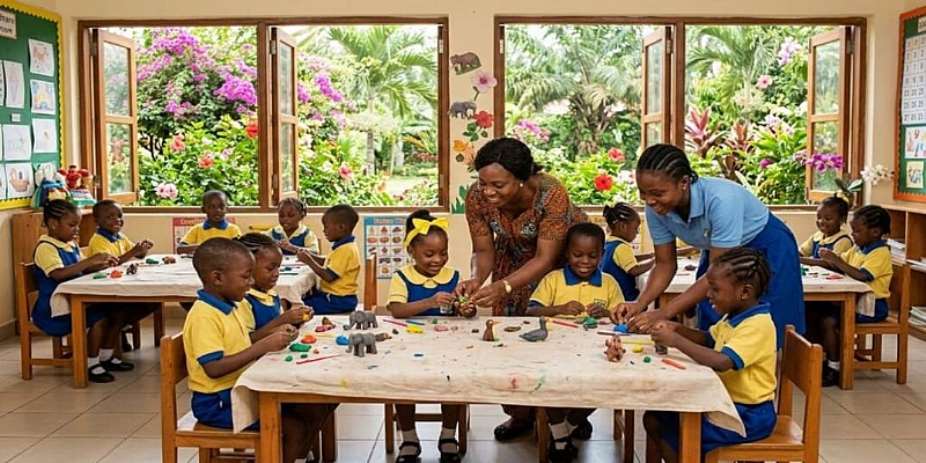
Nigeria’s pre-primary education system occupies a foundational position in the country’s educational structure, yet the level of coordination among pre-primary schools across the various states remains limited. Although the Federal Government has established national policies, curriculum frameworks and minimum standards for early childhood care, development and education, the actual implementation of pre-primary education is largely decentralized. This has resulted in considerable differences in the quality, content, teaching methods, learning materials and extracurricular activities available to young children in different parts of the country.
A more deliberate nationwide pre-primary coordination programme is therefore necessary to ensure that Nigerian children, regardless of their state of residence or whether they attend public or private schools, receive a broadly comparable foundation for subsequent learning. There is already a basis upon which such coordination can be developed. The Federal Government, through such institutions as the Federal Ministry of Education and the Nigerian Educational Research and Development Council (NERDC), has developed national policies and curriculum frameworks for early childhood and pre-primary education. The Universal Basic Education Commission (UBEC) also plays an important role in coordinating basic education programmes and supporting states. These institutions provide a national direction within which state governments, local authorities and educational institutions operate. Private schools are also subject to regulatory requirements and are expected to operate within the broader national educational framework.
The existence of a national curriculum, however, does not automatically produce a nationally coordinated pre-primary education system. In practice, state ministries of education, State Universal Basic Education Boards, local education authorities and individual schools exercise substantial influence over what happens in classrooms. Private schools may introduce additional curricula, teaching philosophies and programmes that are based on their individual objectives and market preferences. Some schools might adopt Montessori methods, others could emphasize academic preparation, while others might decide to focus more strongly on play, creativity, religious instruction, technology or language development. These differences are not necessarily undesirable. Diversity can encourage innovation and allow schools to respond to local circumstances.
The problem arises when differences in implementation become so wide that children receive fundamentally unequal educational opportunities during the earliest and most formative years of their lives. A nationwide pre-primary coordination programme should therefore not seek to eliminate legitimate differences among states or schools. Rather, it should establish a common national platform upon which states and schools can build. The objective should be national alignment rather than rigid uniformity. Children in Enugu state, Lagos state, Kano state, Rivers state, Kaduna state, Anambra state, Imo state or any other state should be exposed to common foundational competencies appropriate to their age, while they are still allowed to learn through local languages, cultural practices, traditions and environments.
Such a programme could establish a national calendar of developmentally appropriate learning themes and activities. For example, schools across Nigeria could periodically participate in coordinated competitive activities that are related to environmental awareness, personal hygiene, road safety, Nigerian culture, friendship, kindness, nutrition, creativity, science discovery, reading, music and responsible citizenship.
These activities could be adapted to local circumstances while common national objectives are still retained. A school in a rural community could teach environmental awareness through farming and local ecosystems, while a school in an urban centre could explore the same theme through waste management and neighbourhood observation. The children would therefore be learning within their own environments while participating in a broader national educational experience. The importance of such coordination begins with equality of opportunity. Early childhood is not merely a period of preparation for primary school, it is a critical stage in cognitive, social, emotional, linguistic and physical development. Children who receive stimulating and well-structured early education are better positioned to develop the skills required for later schooling. If the quality of pre-primary education differs dramatically according to geography or family income, inequalities can become established before children even enter primary school. A coordinated national programme would help reduce these disparities by establishing minimum expectations and providing states and schools with common resources that can be implemented regardless of their financial capacity. The programme would also help improve teacher quality.
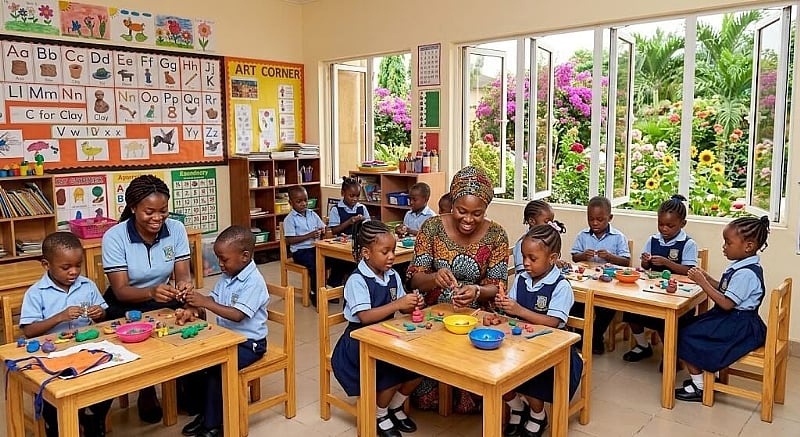
One of the challenges of early childhood education is that teachers and caregivers may have different levels of training and different understandings of appropriate teaching practices. A national coordination programme would provide standardized activity guides, teacher-training modules, demonstration lessons and professional development opportunities. Teachers across the country could periodically receive training on the same developmental themes, classroom strategies and child-centred approaches. This would create a professional community in which teachers are not isolated within individual schools or states but are part of a larger national early-childhood education system. Coordination would also make it easier for government to monitor educational outcomes.
At present, it can be difficult to obtain a consistent picture of what children are learning across the country when implementation differs substantially from one jurisdiction to another. A nationwide programme could establish a small number of age-appropriate developmental indicators covering such areas as language, early numeracy, social interaction, physical development, creativity and problem-solving. These indicators should not become high-pressure examinations for young children. Instead, they should provide government and educators with information about whether or not children are receiving appropriate developmental support and where additional intervention might be required.
Another major advantage would be the promotion of national cohesion. Nigeria is an extraordinarily diverse country, and children often begin developing their understanding of other communities and cultures at an early age. A carefully designed national programme could introduce children to the diversity of Nigeria without undermining their local identity. Schools could participate in activities celebrating Nigerian languages, traditional music, clothing, food, occupations, festivals, geographical features and historical personalities. Children could learn that their local community is part of a larger national community by being introduced to the three major Nigerian languages, Hausa, Igbo and Yoruba. In this way, pre-primary education could contribute not merely to academic development but also to social integration and mutual respect.
The programme should equally involve private schools. Government should not create a system in which national coordination applies only to public institutions. Private pre-primary schools constitute an important part of Nigeria’s educational landscape and often possess resources, innovations and teaching practices that can benefit the wider system. Government could therefore establish a voluntary but strongly encouraged national activity framework, accompanied by accreditation incentives, teacher-development opportunities and recognition for participating schools. Private schools should retain the freedom to enrich the curriculum, provided that their programmes meet national standards and support the developmental needs of children.
Technology would make such coordination considerably easier. A national digital platform could provide teachers with weekly or monthly activity plans, songs, stories, printable learning resources, instructional videos, professional-development materials and opportunities for schools to share successful practices. Schools in different states could participate in common projects without having to travel. A digital platform could also allow teachers to submit feedback about activities, thereby enabling policymakers to understand what works in different cultural and geographical environments. For the Federal Government, the recommendation should therefore be to establish a National Pre-Primary Coordination Framework jointly involving the Federal Ministry of Education, NERDC, UBEC, relevant agencies, state ministries of education, SUBEBs, teacher-training institutions and representatives of private schools.
The framework should identify core developmental competencies, common national themes, minimum resources, teacher-support requirements and mechanisms for monitoring implementation. It should be designed collaboratively rather than imposed exclusively from Abuja, because state governments possess important knowledge about their local populations and educational realities. State governments, for their part, should establish dedicated mechanisms for translating the national framework into practical programmes. States should appoint or designate officers responsible for early childhood coordination, support teacher training, monitor public and private centres, encourage participation in national activities and document successful local innovations.
States should also ensure that national programmes are adapted to local languages and cultures rather than simply reproduced mechanically. The ultimate goal should not be to make every Nigerian pre-primary classroom identical. Children should still experience the richness of their communities. Rather, Nigeria needs a system in which diversity exists within a framework of shared national purpose. Every child should have access to quality early learning, regardless of state, community or school type. A nationwide pre-primary coordination programme would consequently represent more than an administrative reform. It would be an investment in human capital, educational equality, national cohesion and Nigeria’s long-term development. The Federal and state governments should recognize that the most effective way to improve the education system is not to wait until children reach primary or secondary school age, before addressing disparities.
The foundation must be strengthened at the earliest stage. By combining national standards with local creativity, government can build a coordinated pre-primary system in which Nigerian children begin their educational journeys with greater sense of equality, stronger developmental foundations and a shared sense of belonging to one nation.
Asinugo is a London-based British-Nigerian veteran journalist and author. He is the Publisher of ROLU Business Magazine [Website: https://rolultd.com]


 'The height of absurdity' — Ayew Afriye slams BNI over invitation of Efya Royal ...
 US envoys arrive in Moscow to thrash out plan to end war in Ukraine
 'Chief Justice was talking as a citizen; you have to look at the context in whic...
 Mandatory towing to remove broken-down, stationary vehicles from roads to begin ...
 Domelevo backs OSP probe into alleged GH¢70,000 payment to Appiagyei despite den...
 WAEC releases 2026 WASSCE results, cancels entire results of 861 candidates for ...
 Baffour Agyeman-Duah explains why profitability may not be only reason behind SO...
 Kofi Bentil defends Mahama’s dissolution of nine State Boards
 5-year-old girl dies after falling into water-filled manhole at Winneba
 Sierra Leone ex-president to return after treason case dropped

