




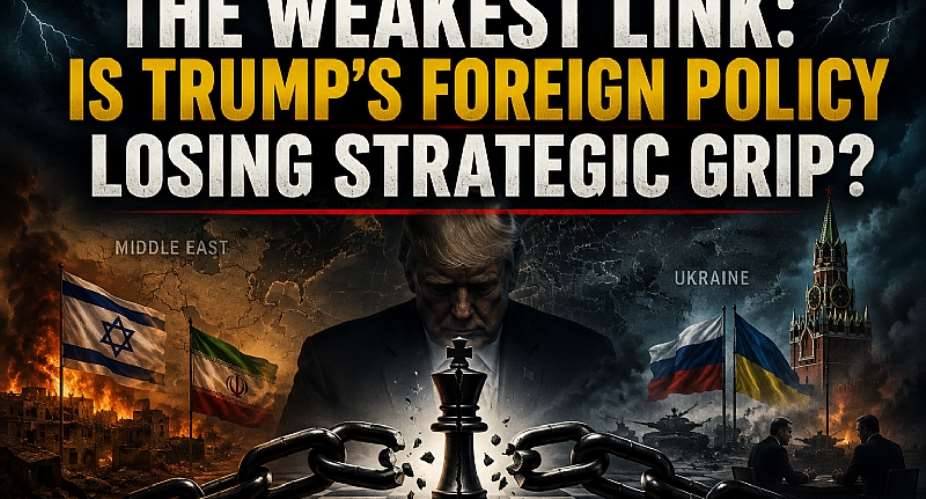
The power rule of weakness is simple: a chain is only as strong as its weakest link. You cannot fight on two frontiers at the same time without exposing the weaknesses of your strategy. Diplomatically, negotiations are taking much longer than expected, while on the war front, two separate theatres are testing the Trump administration’s ability to manoeuvre events in the right direction. The reasons may be many, but Trump’s wildcards have little experience in this kind of difficult negotiation. They may possess strong business instincts, but recent events have demonstrated a rather pathetic display of diplomatic engagement. The sum, therefore, remains uncertain.
As narrated by Trump and White House spokespersons, the emerging post-war order is being shaped through the strategic calculations of US think tanks. The Trump administration is reportedly working on a post-war strategy focused on a regional effort to contain Iran and expand the normalization of relations between Israel and its neighbours. The question, however, is whether Washington is actually designing a new regional order or simply repackaging an old security architecture under a new political label.
The first phase appears to be the security of Tel Aviv and the creation of a regional defence umbrella that could eventually pave the way for what might be described as a Mecca Pact. If this is indeed the strategic direction, then security is being placed ahead of reconciliation. But can a durable Middle Eastern order be built primarily around the security requirements of one ally?
While the plan remains in its early stages, it is reportedly intended to guide the US approach in the Middle East after the Iran war and during the final two years of President Trump’s term. Two major political events loom over this planning: Israel’s October 27 election and the US midterm elections in November. Electoral processes could change the names, personalities and political packaging of the strategy, but the real question remains: can the United States successfully transfer the burden of regional security to its allies without losing strategic control itself?
Behind the scenes, the initial work on the strategy is reportedly taking place both at the senior political level of the Trump administration and across working-level agencies. In recent weeks, Trump has reportedly held meetings with senior advisers where the plan was discussed and different ideas were raised. Trump has also privately suggested that he is working on “something much bigger” for the Middle East after the war with Iran. If that is the case, Washington must answer whether “something bigger” means a genuine regional settlement or simply a broader containment strategy against Iran.
Three main elements have emerged as possible components of this strategy: creating a regional alignment among US allies to contain Iran, with Washington acting as guarantor; bringing the regional fallout from the October 7, 2023 attacks closer to an end by securing the next phase of Trump’s Gaza plan, reaching a security agreement between Israel and Syria, and implementing the Israel-Lebanon agreement; and expanding the Abraham Accords while pursuing a Saudi-Israeli normalization agreement.
So, is it the Abraham Accord or the Mecca Accord? The Trump administration still appears to be searching for the way out. Meanwhile, Iranian officials, including Abbas Araghchi, have reportedly warned neighbouring states against becoming instruments of externally driven extremism or strategic confrontation. The danger is that a regional security framework imposed from outside could deepen the very instability it claims to resolve.
The second loose end is Moscow. Trump’s diplomatic engagement with Russia remains another major test. The visit to Moscow, where Trump’s representatives are expected to meet Vladimir Putin, could potentially deliver a map for ending the Ukraine war. Yet Russia remains in a commanding position and could reject any argument it considers too lenient or disadvantageous. President Trump’s envoys, Steve Witkoff and Jared Kushner, are travelling to Moscow and Kyiv for talks aimed at ending the war. Trump has described their mission as carrying a plan to end the conflict.
The timing is significant. Negotiations between Russia and Ukraine, mediated by the Trump administration, were paused after the Iran war began. Witkoff and Kushner have held separate discussions with Russian and Ukrainian negotiators, but meaningful progress has remained limited. At the same time, Ukrainian officials remain deeply sceptical of Putin’s intentions, while Russia has intensified missile and drone strikes against Ukrainian cities, including Kyiv.
What will actually emerge from these simultaneous diplomatic battles may determine the shape of the new post-war era. The real test, however, is not merely whether Trump can announce another ambitious plan. It is whether his administration can carry the strategic weight of two major theatres at once.
The question is becoming unavoidable: can the king’s men carry the king’s burden?


 There’s nothing called luck; success is built, not given — Karaga MP tells yout...
 'I’m not a coward' – Sylvester Tetteh defends move from Ningo Prampram to Bortia...
 Eduwatch urges WAEC to complete malpractice investigations before releasing resu...
 NPP Youth Wing drags Owusu Bempah to National Security over attack allegations a...
 Stranded Ghanaians in South Africa plead for extension of evacuation exercise
 Four Ghanaians killed in South Africa xenophobic violence - Ablakwa
 Israel intensifies South Lebanon strikes, killing 13 in new escalation
 All TV stations on DTT platform to pay US$7,000 monthly under new cost-sharing s...
 ‘WhatsApp grammar, poor reading habit caused decline in 2026 WASSCE English Lang...
 Israel warns of 'full-scale war' if Palestinian Authority launches Oct. 7-style ...

