




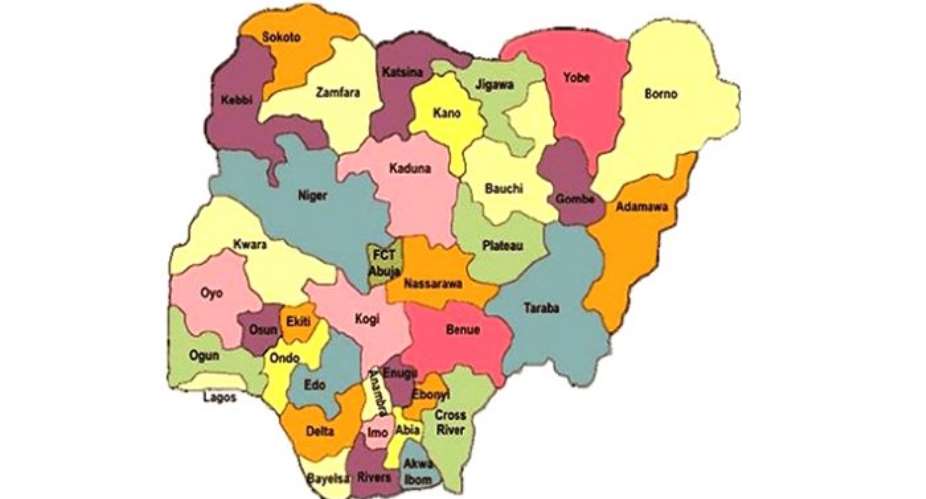
Nigeria's 36 state governments are collectively carrying a domestic debt burden of N5.3 trillion, even as twelve state governors approach the end of their tenures, The Punch reported in its September 3, 2026 edition.
At the official Nigerian Foreign Exchange Market (NFEM) rate of roughly N1,329.43 to the dollar quoted on September 2, 2026, that debt stock translates to approximately $3.99 billion; at the parallel-market rate of around N1,405 to the dollar quoted the same day, it works out closer to $3.77 billion.
The disclosure places renewed scrutiny on the borrowing patterns of outgoing administrations, with some states ramping up fresh foreign loans in their final stretch in office while others continue adding to already elevated debt stocks.
A Familiar but Worsening Pattern
Nigeria's sub-national debt profile has climbed steadily for years. Domestic debt owed by the 36 states and the Federal Capital Territory stood at roughly N4.46 trillion at the end of 2021, before rising to N6.43 trillion later that year on a broader measure covering both domestic and external obligations, and to N5.33 trillion in purely domestic terms by the close of 2022.
By the first quarter of 2023, combined state domestic debt had reached N5.5 trillion, driven in part by states such as Delta, Imo, Cross River and Oyo, which alone borrowed roughly N130 billion within three months.
The latest N5.3 trillion figure reported by The Punch suggests the debt stock remains at historically elevated levels even after a period of fluctuation, with fresh borrowing by several states offsetting any gains from debt servicing elsewhere.
Who Is Borrowing, and Who Is Nearing Exit
According to The Punch's front-page breakdown, Gombe, Imo and Kwara States have moved to raise fresh foreign loans, while Yobe, Borno and Ogun States continue to borrow more on top of existing obligations.
The report frames this borrowing wave against the backdrop of twelve state governors nearing the end of their constitutionally mandated tenures, raising familiar questions in Nigerian fiscal governance about whether outgoing administrations are taking on debt obligations that successor governments, and ultimately taxpayers, will be left to service.
Experts Divided on Whether the Borrowing Is Sound
The Punch's report cites experts offering a qualified defence of state borrowing, noting that debt taken on can be justified where it is channelled into productive, revenue-generating projects rather than recurrent spending.
This view echoes a long-standing argument within Nigeria's fiscal policy debate: that debt itself is not inherently harmful if it finances infrastructure or investments capable of servicing itself over time.
Nigeria's Labour Congress has previously voiced concern along similar lines, warning that loans not tied to productive activity risk becoming a burden rather than a boost to development.
Economists quoted in the same report struck a more cautionary note, warning against what they described as "dead-weight" debts and costly foreign loans that add to Nigeria's overall debt-servicing burden without a clear productive return.
That caution mirrors broader national anxieties about Nigeria's debt trajectory: total public debt, spanning both federal and state obligations, has been on a sharply upward path in recent years, a trend that has drawn criticism from opposition figures and fiscal watchdogs alike over the sustainability of the country's borrowing habits.
Why It Matters
The timing of the new borrowing is significant. States raising fresh loans as their governors near the end of their tenures have historically drawn criticism from civil society and accountability groups, which have in the past demanded that outgoing administrations account for how loan proceeds were spent and on which projects.
With twelve states set for gubernatorial transitions, the question of whether current borrowing is being directed toward lasting infrastructure or short-term political expediency is likely to shape early relations between incoming governors and the debt obligations they inherit.
This is a developing story, drawing on The Punch's September 3, 2026 front-page report. Further details on individual state debt breakdowns will be added as they become available.
Mustapha Bature Sallama
Medical/ Science Communicator,
Private Investigator, Criminal Investigation and Intelligence Analysis,
International Conflict Management and Peacebuilding. ( USIP)


 Accra-Kumasi Expressway to be fully funded without borrowing by end of 2026 – At...
 GRA explains why carrying more than two phones or laptops does not automatically...
 Chief Justice Baffoe-Bonnie is a statesman, not a coward – Anatu Bogobiri Esq bl...
 Minerals Commission suspends underground mining in Gbane over boundary dispute
 A-Plus, Afenyo-Markin make peace; commit to ending Effutu-Gomoa tensions
 Chief Justice is the wrong person to make such comments – Dr. Jabir Mohammed
 September 4: Cedi sells at GHS12.15 on forex market, GHS11.37 on BoG interbank
 Stop touring SOEs and fix issues in the judiciary – Dr. Arthur Kennedy tells Chi...
 Your comments were beneath the dignity of your office – Arthur Kennedy to Chief ...
 FAKE: Deputy Minority Leader returns GHS70,000 received from vetting of Minister...

