




The Upper East and North East Regions have recorded a total of 77 active conflicts, with land and chieftaincy disputes accounting for the majority of the cases, according to data compiled by the Navrongo-Bolgatanga Catholic Diocesan Development Organization (NABOCADO).
The Upper East Region accounts for 56 of the active conflicts, while the North East Region has recorded 21.
The conflicts span several categories, including land, chieftaincy, ethnic and mining-related disputes, with land-related conflicts emerging as the most prevalent.
According to NABOCADO’s data, land conflicts account for 72 percent of the recorded cases, followed by chieftaincy disputes at 21 percent. Ethnic conflicts constitute four percent, while other forms of conflict make up the remaining three percent.
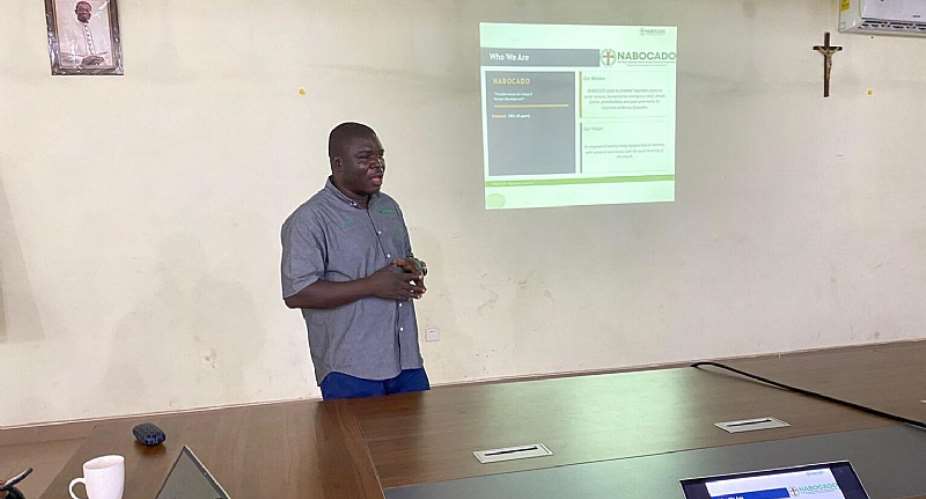
The figures were disclosed by Theophilus Abolga, Director of the Justice and Peace Directorate of NABOCADO, during a training programme for journalists on conflict-sensitive reporting.
Mr. Abolga said the situation highlights the need for stronger collaboration among the media, traditional authorities, community leaders and young people to prevent disputes from escalating into violence.
The disclosure comes despite interventions by NABOCADO under its Integrated Peacebuilding for Improved Food and Nutrition Supply in the Diocese of Navrongo-Bolgatanga (INPEACE) Project.
The project, according to the organisation, has contributed to a 70 percent reduction in conflicts across its 26 implementation communities.
It has also trained 1,018 peacebuilding multipliers to participate in early warning systems and support efforts to identify and respond to potential conflicts before they escalate.
Traditional rulers have further been engaged to lead peacebuilding initiatives and work with Municipal and District Assemblies to promote non-violent approaches to conflict resolution.
The INPEACE Project is being implemented in Bunkpurugu-Nakpanduri, Yunyoo-Nasuan, Bawku Municipal and Kassena-Nankana West Districts.
A total of 26 communities have benefited from the project, with six additional communities recently added to the programme.
Mr. Abolga said NABOCADO had intervened in all 21 recorded conflicts in the North East Region and 32 of the 56 conflicts in the Upper East Region.
“The Upper East and North East Regions that make up the Diocese of Navrongo-Bolgatanga have the highest number of violent conflicts. We have a total of 77 active conflicts, 21 for North East and 56 for Upper East,” he said.
He explained that the conflicts cover land, chieftaincy, ethnic and other disputes, including mining-related conflicts.
Speaking to the media after the training, Mr. Abolga urged journalists to adopt conflict-sensitive approaches when reporting on disputes, warning that media coverage could either help de-escalate or worsen tensions.
He called on the media, community leaders and the youth to play a more active role in conflict prevention, early warning and the peaceful resolution of disputes.
“We have been able to intervene in all 21 for the North East but have intervened in 32 out of the 56. But it is not just NABOCADO. The media has an important role to play depending on how you report on issues of conflict. It can either de-escalate or escalate any form of conflict,” he stated.
He said NABOCADO was therefore exploring ways to strengthen collaboration with the media as part of efforts to address the region’s conflict challenges.
Mr. Abolga also expressed concern over the growing number of widows and orphans resulting from violent conflicts in the two regions.
He said the consequences of violence extend beyond the immediate loss of lives and property, with children in particular facing difficulties as a result of losing their parents.
“The violent nature of conflicts is such that whenever they happen, men are killed and children are left orphaned and women become widows,” he added.
He stressed the need for stakeholders to intensify peacebuilding and early intervention efforts to prevent localised disputes from escalating into violent conflicts and causing long-term social and economic harm to affected communities.


 The New Economy is a scam, a rebrand of failed 24-hour economy – Oppong Nkrumah
 Ghana announces discovery of new oil and gas deposits
 No prima facie case in petition against Justice Pwamang – Presidency
 Mother invokes generational curse on daughter during heated verbal exchange
 SA evacuation: OSP must not allow media pressure to dictate investigations – Bra...
 NPP closes portal for expression of intent in parliamentary primaries today
 Ghana targets 70% 5G coverage by March 2027 – Sam George
 Women’s Development Bank submits licence application to Bank of Ghana – Vice Pre...
 Ghana Must Reset — Not Just In Words, But In Deeds!
 SA evacuation: OSP must punish those who took hotel money while evacuees slept i...


