




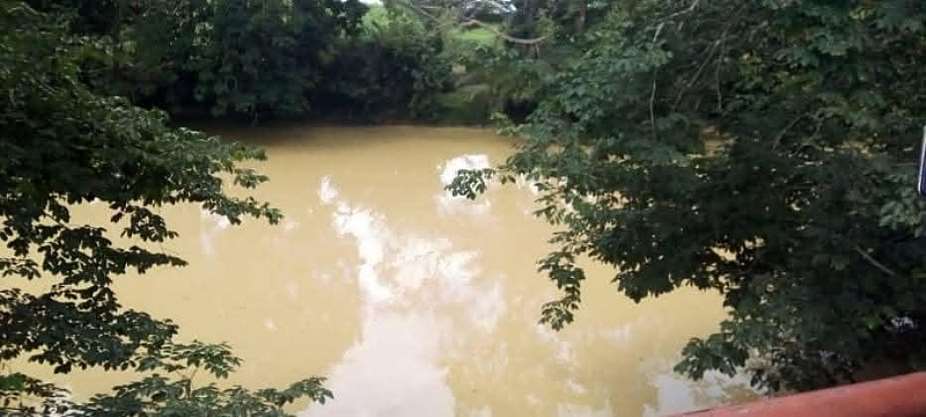
Illegal mining first became a political weapon in the 2016 electioneering campaign. The New Patriotic Party (NPP), for instance, exploited this life-threatening problem while campaigning. It promised to tackle it head-on upon winning power.
Ghanaians really needed a lasting solution to this problem. So, they voted for the NPP. True to his word, President Nana Addo Dankwa Akufo-Addo escalated the fight against illegal mining. He did this by involving the media to expose the problem to the public. Upon recognizing the magnitude of the menace, the public wailed and called for a lasting panacea to the problem.
Convinced that he had the support of the citizens, President Akufo-Addo waged a full-scale war against galamsey. Task forces were formed. A group of politicians and security agents were mandated to clamp down on the perpetrators of this illegality. Work started. Illegal miners were arrested. Some were prosecuted and jailed. Excavators and other mining equipment were confiscated and burnt.
Despite all these efforts, water bodies remained murky as lands became more degraded and forest reserves depleted. That is how the term "turbidity" became common among Ghanaians. The determined Nana Akufo-Addo did not give up, though. His government banned small-scale mining in several areas where the environment had fallen victim to this illegality. "Thanks be to God!" Ghanaians exclaimed in ecstasy as our water bodies recovered from their pollution.
Then, the military went to sleep and the criminals went back to work. Before we knew it, the illegal miners had done even more harm than in the past. Their activities did not only affect the environment; their ripple effects extended to public health. Kidney cases soared in the country. Children in mining communities were born deformed. All this happened because of the poisoned water and food substances they consumed in galamsey-plagued areas.
Then came the National Democratic Congress (NDC). They campaigned on the issue, promising to deal with the problem upon winning the 2024 elections. They accused the Nana Akufo-Addo government of being complicit in galamsey. They called for an outright ban on mining activities. They went to the extent of saying that if the government were serious about the fight against galamsey, it could stop it in two weeks. I can still hear the authoritative voice of Hon. Samuel Nartey George, alias Dzata, echoing as I write this article.
Just as the NPP did in 2016—leveraging a national crisis to win power, the NDC did the same and won the 2024 elections. After the elections, Ghanaians expected the John Dramani Mahama-led government to go ahead and ban mining activities to restore the sanctity of our water bodies. But that did not happen. Galamsey still remained an issue.
Well, President Mahama did not turn a blind eye to illegal mining. He decided to do something. His government formed the National Anti-Illegal Mining Secretariat (NAIMOS) to deal with the issue. Just like other task forces, NAIMOS also invaded galamsey pits, arrested illegal miners, and seized and burnt mining equipment. Regardless, nothing changed. The turbidity levels of our water bodies grew worse as lands remained degraded and forest reserves became further depleted.
After fighting the menace for some months, President Mahama gathered the media, religious bodies, civil society organizations, and all relevant stakeholders at the seat of government to brief them. That was when the Chief Executive Officer of the Environmental Protection Authority (EPA), Professor Nana Ama Browne Klutse, gave Ghanaians hope. Concerning the polluted water bodies, the scientist and politician, told Ghanaians she would use a scientific process called dechemicalisation to purify the rivers.
It has been over one year now since the boss of the EPA talked about the dechemicalisation of our water bodies. Since then, galamsey has continued unabated. President Mahama even admitted members of his political party are involved in this illegality.
As a citizen living under a democratic government, I can only call for accountability from the highly paid politicians whose lives are made comfortable by my overly taxed "dying wage." It is against this backdrop that I ask, "How far with the fight against galamsey?" Has the dechemicalisation of our water bodies taken place, or was it just another political statement?
The author is a regular contributor to News Commentary, a current affairs programme by the Ghana Broadcasting Corporation, and a columnist with Modern Ghana, an esteemed online news portal.

 Germany’s far-right AfD landslide winner in key Saxony-Anhalt vote, early result...
 'The height of absurdity' — Ayew Afriye slams BNI over invitation of Efya Royal ...
 US envoys arrive in Moscow to thrash out plan to end war in Ukraine
 'Chief Justice was talking as a citizen; you have to look at the context in whic...
 Mandatory towing to remove broken-down, stationary vehicles from roads to begin ...
 Domelevo backs OSP probe into alleged GH¢70,000 payment to Appiagyei despite den...
 WAEC releases 2026 WASSCE results, cancels entire results of 861 candidates for ...
 Baffour Agyeman-Duah explains why profitability may not be only reason behind SO...
 5-year-old girl dies after falling into water-filled manhole at Winneba
 Sierra Leone ex-president to return after treason case dropped

