




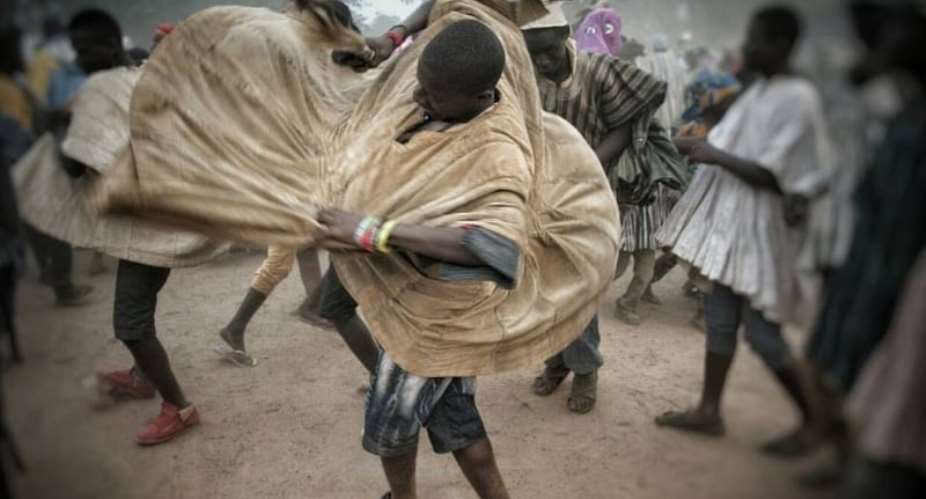
Damba is not simply a festival of dancing, drumming, horse riding and colourful royal pageantry. It is a historical institution, deeply embedded in the religious, political and cultural evolution of the Islamised traditional kingdoms of northern Ghana, and its true significance cannot be understood by looking only at the spectacle that unfolds during its public celebration. To reduce Damba to a day of entertainment is to see the performance while missing the history, to admire the ceremony while overlooking the institution, and to witness the celebration without understanding the civilisation and traditions that produced it.
For generations, Damba has occupied a revered position within the traditional life of several northern Ghanaian societies. Yet much of the contemporary conversation surrounding it has concentrated on what is most visible: the rhythmic beating of drums, the elegance of traditional dances, the splendour of royal regalia, the procession of horsemen and the gathering of communities in celebration. These elements are undoubtedly important, but they are only the visible surface of a much deeper cultural tradition whose historical meaning extends into questions of Islam, kingship, traditional authority, communal identity and the evolution of northern Ghanaian societies.
The real significance of Damba begins with an understanding that it is not adequately defined by a single day on the calendar. Its traditional character is better appreciated as an extended ceremonial cycle involving preparation, the principal celebration and activities that continue after the main festivities. In this broader understanding, the Damba season can be considered through three important stages: the Pre Damba period, the Damba period itself and the Post Damba period. Each stage forms part of the larger cultural process through which the tradition is prepared, celebrated and eventually brought to a close.
The Pre Damba period represents a time of preparation and anticipation during which traditional authorities, royal households, families, performers, palace officials and community members make arrangements for the forthcoming ceremonies. Traditional regalia are prepared, horses and horsemen are organised, music and drumming are rehearsed, food and hospitality are considered and various ceremonial responsibilities are observed. More importantly, this preparatory period provides an avenue through which cultural knowledge is transmitted from one generation to another. Elders have the opportunity to explain customs and traditions to younger people, while the younger generation becomes actively involved in the preparations that sustain the continuity of the institution. The period before the main celebration is therefore not merely a waiting period. It is itself part of the cultural process through which Damba is preserved and reproduced.
The principal Damba period is the stage that receives the greatest public attention because it is when the most recognisable ceremonies and cultural displays take place. Chiefs and members of royal families appear in traditional regalia, horsemen participate in ceremonial processions, drummers provide the rhythms that accompany the celebrations and communities gather to participate in dances and other traditional activities. Yet even these highly visible elements should not be interpreted merely as entertainment. The palace represents the authority and continuity of traditional institutions, the participation of chiefs and royals reflects the hierarchical structure of traditional society, the horses and horsemen evoke a historical culture in which horsemanship was closely associated with status, mobility, warfare and political authority, while the communal gathering reflects the social bonds that traditional festivals have historically strengthened.
The Post Damba period is equally important, although it often receives far less attention because the most spectacular public ceremonies have already taken place. The conclusion of the principal festivities does not necessarily mean that the entire cultural significance of Damba immediately disappears. Social visits, community interactions and other traditional engagements may continue as the season gradually comes to an end. The Post Damba period therefore forms part of the broader ceremonial cycle and provides a natural conclusion to activities that began during the preparatory stage. Viewed in this manner, Damba is not simply an event that appears on a calendar and disappears after a day of celebration. It is a cultural cycle that begins with preparation, reaches its principal ceremonial expression and eventually concludes through a period of continued social and traditional engagement.
The religious history of Damba is another dimension that deserves serious attention. Damba is widely associated with the commemoration of the birth of the Prophet Muhammad, and its historical development is closely connected with the spread and establishment of Islam among several societies of northern Ghana and the wider West African region. Islam did not enter these societies in isolation. Its historical expansion was influenced by long standing networks of trade, migration, Islamic scholarship, clerical activity and political interaction that connected communities across West Africa. As Islam became increasingly established within some northern societies, it interacted with existing indigenous customs and political institutions rather than simply replacing them. This historical interaction produced distinctive cultural traditions in which Islamic influence and indigenous practices became intertwined.
It is within this historical context that Damba should be examined. Its Islamic associations are important, but they should be understood alongside the indigenous cultural traditions that have shaped the way it is celebrated. The existence of Islamic inspiration does not mean that every element of contemporary Damba constitutes an Islamic religious ritual. The dances, drumming, horse riding, royal processions, traditional costumes and ceremonial practices reflect the indigenous cultural environments in which the celebration developed. Damba therefore provides a particularly interesting example of how religious influence can become incorporated into the political, social and cultural institutions of a traditional society without necessarily eliminating the cultural practices that existed before that influence.
This historical relationship also explains why Damba is strongly associated with Islamised traditional kingdoms and societies in northern Ghana. It would be misleading to describe the celebration merely as a generic northern festival without acknowledging the particular historical institutions and communities that preserved and developed it. At the same time, historical accuracy requires caution against presenting all Damba traditions as identical. Different communities have preserved different practices, interpretations and ceremonial arrangements, and traditions naturally evolve as societies change. The most credible discussion of Damba must therefore acknowledge both its historical Islamic associations and the diversity of the communities through which its traditions have been transmitted.
The royal character of Damba is equally significant. The festival is deeply connected with traditional authority in the societies that preserve it, and the involvement of chiefs, royal families, palace officials, elders and traditional leaders demonstrates that its significance extends beyond ordinary communal entertainment. The traditional palace is not simply a backdrop against which the celebration takes place. It is an important institutional centre through which aspects of the celebration are organised, interpreted and transmitted. The involvement of royal authority gives Damba a character that distinguishes it from an ordinary public festival.
The prominence of horses and horsemen also deserves greater historical appreciation. In many northern societies, the horse historically represented much more than transportation. Horses were associated with warfare, political power, social status, mobility and royalty. The ceremonial appearance of horsemen during Damba therefore carries historical symbolism that cannot be fully understood if the celebration is viewed exclusively through the lens of modern entertainment. The horses, regalia, palace, chiefs, drummers and dancers together form a cultural language through which history is publicly remembered and reproduced.
Unfortunately, one of the greatest dangers facing traditional culture is simplification. When a complex historical institution is reduced to colourful costumes, dancing, drumming, horse riding and public excitement, its deeper meaning gradually becomes obscured. The younger generation may learn how Damba looks without learning why it exists. They may inherit the performance without inheriting the historical consciousness behind the performance. That is why the preservation of Damba cannot be limited to preserving its outward ceremonies. Its history, symbolism, religious associations, royal institutions and traditional knowledge must also be documented and transmitted.
There is also a responsibility to approach the history of Damba with intellectual honesty. Strong claims about the origins, chronology or exclusivity of any traditional festival should be supported by credible historical evidence and considered within the context of the particular communities being discussed. Cultural pride is valuable, but it should not depend on historical exaggeration. Likewise, historical complexity should not become an excuse for diminishing the Islamic or royal dimensions that are central to the historical understanding of Damba among the communities that have traditionally observed it. The appropriate objective is neither exaggeration nor erasure, but accuracy.
Damba also offers Ghana an opportunity to appreciate the extraordinary complexity of its national cultural heritage. Ghanaian identity is not derived from one ethnic group, one language, one religion or one historical tradition. It is a vast tapestry created through the experiences of numerous communities, kingdoms, religious traditions and cultural institutions. The traditional societies of northern Ghana form an important part of that national history, and Damba provides a remarkable window into the interaction between Islam, indigenous culture, traditional authority and community identity.
For this reason, Damba should not be treated merely as a northern spectacle or a colourful annual attraction. It deserves serious historical study and documentation. Universities, traditional councils, cultural institutions, schools, researchers, journalists and community historians all have a role to play in ensuring that the meaning of Damba is not lost beneath its outward magnificence. The festival should be recorded not only through photographs and videos of the dances and horse processions, but also through oral histories, archival research, scholarly publications and conversations with the traditional authorities and elders who possess knowledge of its historical development.
Ultimately, the most important question is not simply whether we attend Damba, but whether we understand what we are witnessing. When the drums sound, there is history behind the rhythm. When the dancers move, there is cultural memory behind the movement. When the horsemen appear in ceremonial procession, there is a history of power, status and traditional authority behind the horses. When chiefs and royals emerge in their regalia, there is an institutional history behind the symbols they carry. And when communities gather in celebration, there is a profound story of faith, tradition, social cohesion and identity connecting the present generation to those who came before it.
Damba is therefore more than dancing, more than horses, more than colourful clothing and more than an annual gathering. It is a cultural institution whose historical development reflects the encounter between Islam, indigenous traditions, traditional authority and the evolving identity of northern Ghanaian societies. Its royal character, its Islamic associations and its extended ceremonial cycle deserve to be understood with the seriousness they command.
If we genuinely want to preserve Damba for future generations, we must do more than preserve the celebration itself. We must preserve the knowledge that gives the celebration meaning. We must teach its history, document its traditions, respect its institutions and encourage serious scholarship about its development. A society that preserves only the appearance of its traditions but forgets their meaning may eventually retain the festival while losing the heritage.
Damba should therefore not merely be watched. It should be understood, studied, respected and preserved, because behind the dance is history, behind the royalty is institution, behind the celebration is faith, and behind the tradition is the enduring memory of a people.
By Sulley Kone
Columnist | Writer | Public Commentator
+233244805619


 UCC-UTAG demands clearer boundaries for GTEC’s regulatory role to avoid interfer...
 Mahama congratulates Lula da Silva on ‘well-deserved’ re-election as Brazil Pres...
 Mahama arrives in Moscow to push for Russia-Ukraine ceasefire at Russia–Africa S...
 'Irresponsible media coverage is hurting Obuasi SHTS abuse probe' – Gender Minis...
 ECG announces 7-hour power outages in parts of Ashanti Region on Tuesday
 World Cup visa scandal deepens discontent among NDC grassroots – Prof Smart Sarp...
 'It is frivolous' – State declines to respond to motion challenging its oppositi...
 'We still have feelings' — Wontumi proposes conjugal visit facilities for marrie...
 'Young men must work and eat' – Prophet Badu Kobi backs Sammy Gyamfi on galamsey
 Foreign Affairs Ministry seeks names of evacuees allegedly shortchanged in GH¢5,...


