




Networking education spans areas including network architecture and protocols, requirements and design, IP addressing and segmentation, LAN and Ethernet operations, network management, performance, security and troubleshooting. These areas are often examined individually, while telecommunications operations reveal relationships among selected network functions, infrastructure and specialist responsibilities. For students, encountering those relationships in an operating environment can provide context for concepts studied separately.
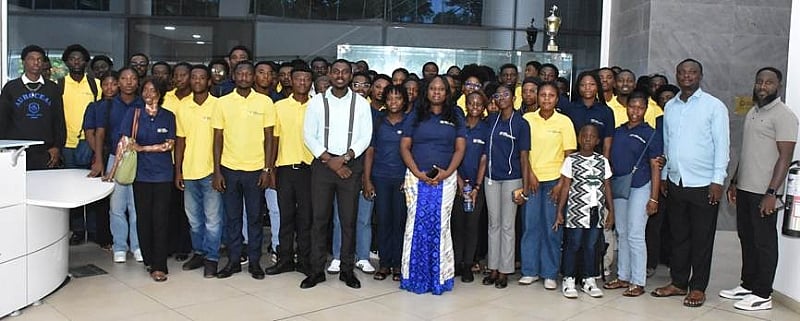 Dr. Augustina Dede Agor with MTN Ghana professionals and Day 2 participants from the UPSA Developers Hub.
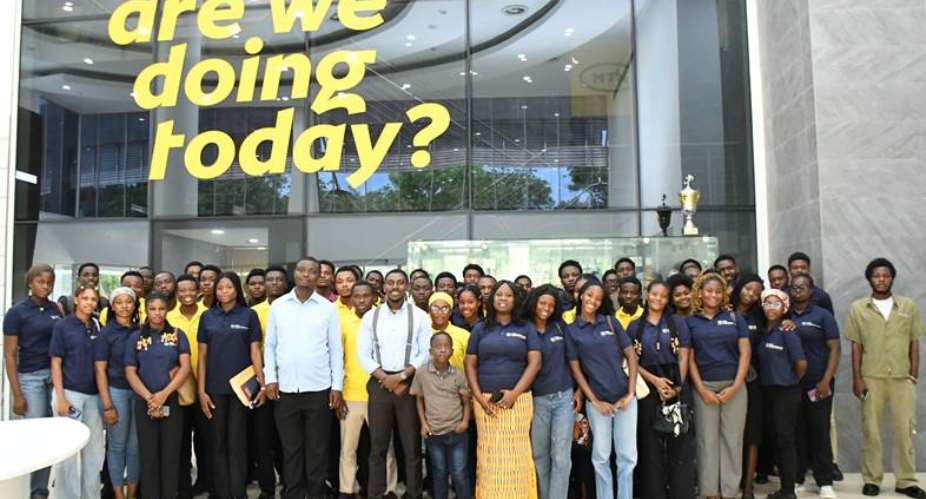
On 15 and 16 April 2026, MTN Ghana hosted two groups of students from the University of Professional Studies, Accra (UPSA), at its headquarters in Accra, with a different group participating each day. All participants were members of the UPSA Developers Hub, while most, but not all, were enrolled in a semester-long Networking Development and Management course during the second semester of the 2025/2026 academic year. For those enrolled in the course, the engagement formed part of the semester's learning activities. Across the two days, the programme combined a Corporate Affairs orientation, technical instruction, rotations through selected technical settings, and guidance on professional development and workplace expectations.
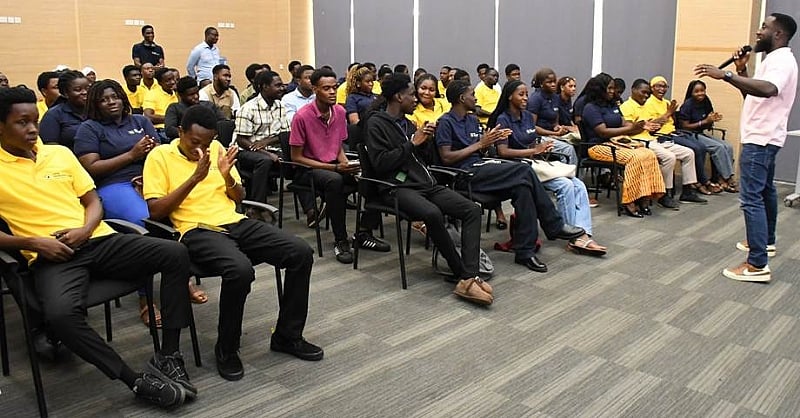
 An MTN Ghana Corporate Affairs representative introducing the organisation during the corporate orientation.
From Mobile Network Evolution to Telecommunications Architecture and Operations
Each day began with a Corporate Affairs orientation. MTN Ghana representatives introduced the organisation’s history, structure and strategic direction, as well as MTN Ghana Foundation activities and MTN Ghana’s sustainability framework: Doing for People, Doing for Planet, Doing it Right and Doing for Growth.
MTN Ghana engineers began the technical instruction by tracing developments in mobile communications from the Global System for Mobile Communications (GSM) through the Universal Mobile Telecommunications System (UMTS) to Long-Term Evolution (LTE).
The engineers then examined key elements of GSM architecture. They described the Base Station Subsystem (BSS), including the relationship between a Base Station Controller (BSC) and the Base Transceiver Stations (BTSs) it controls. They also explained how BTSs support radio communication within their respective cells.
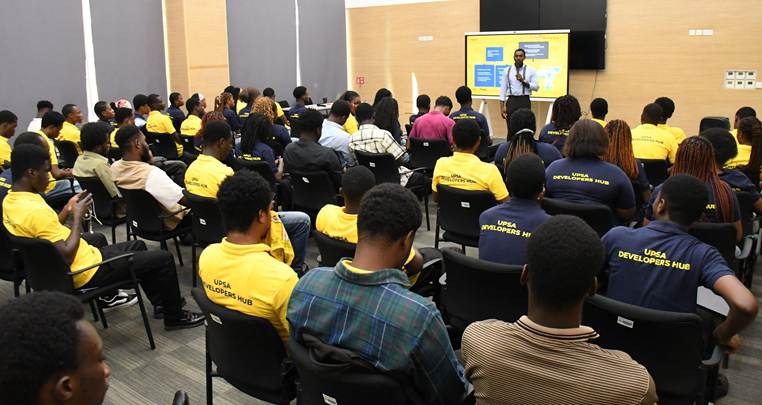
 An MTN Ghana professional delivering technical instruction on mobile telecommunications architecture on Day 1.
The instruction also covered the Mobile-services Switching Centre (MSC), Visitor Location Register (VLR) and Authentication Centre (AuC). Their functions were discussed in relation to switching and signalling, temporary subscriber and location information, and subscriber authentication, respectively, alongside other entities addressed during the session. The discussion then broadened beyond the GSM components to radio access, transmission, core network and Internet Protocol (IP) functions. The MTN Ghana engineers also distinguished the IP, core network and transmission teams and explained the specialist responsibilities associated with each network function within the organisation.
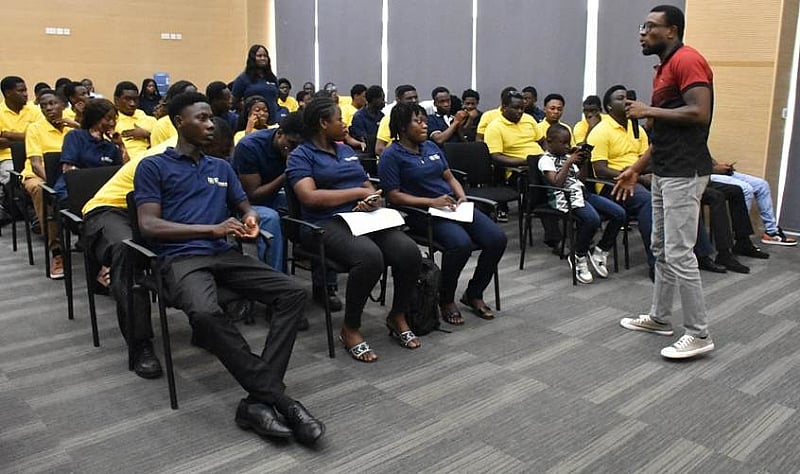 An MTN Ghana professional delivering technical instruction on mobile telecommunications architecture on Day 2.
After the main technical instruction, students were divided into three smaller teams on each day. Each team rotated through three technical areas: the Network Operations Centre (NOC), cell-site infrastructure, and servers and information systems. Across the rotations, students interacted with MTN Ghana technical staff, who explained the equipment, systems, network functions and specialist responsibilities associated with each area.
At the NOC, staff explained how network conditions are monitored and how responses to service issues are coordinated. In the cell-site area, MTN Ghana technical staff explained physical infrastructure associated with radio coverage and transmission. In the servers and information systems area, staff discussed digital platforms and systems supporting business operations.
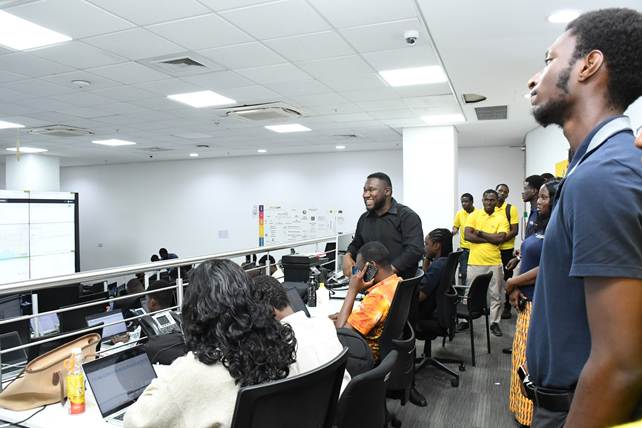 Students during a session at MTN Ghana’s NOC on Day 1.
The programme also addressed continuing professional development. MTN Ghana professionals encouraged students to deepen their technical knowledge through further learning and professional certifications, with networking and security among the areas discussed. Project management, Agile approaches and the Scrum framework were discussed as complementary areas for professional development. The discussion also covered communication, accountability, punctuality and professional conduct when working with colleagues and stakeholders.
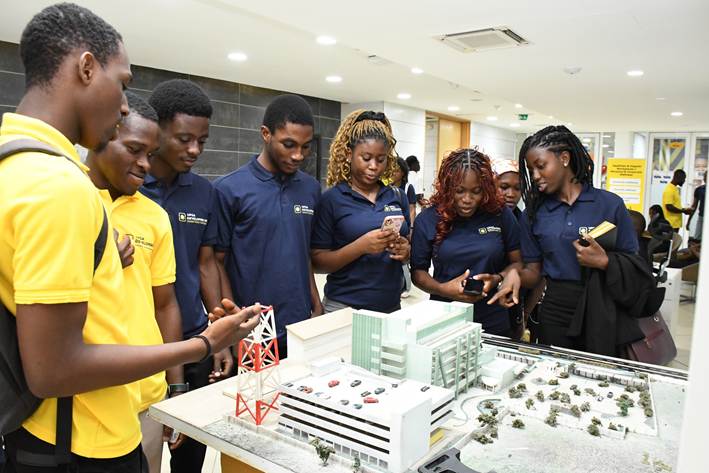 Students examining a physical infrastructure model at the end of one of the technical sessions at MTN Ghana.
 Students during a session on servers and information systems at MTN Ghana.
The Larger Lesson for Networking Education
For students enrolled in Networking Development and Management, the engagement complemented a course that also incorporated Cisco learning activities, project work, mentorship and other networking engagements. Some concepts encountered at MTN Ghana had already been covered, while others were addressed later in the semester. The engagement therefore served two distinct instructional purposes: reinforcing earlier study and providing operational reference points for subsequent learning.
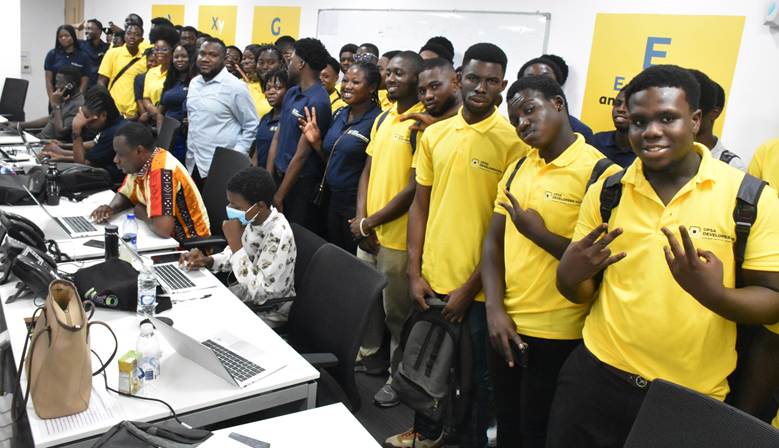 Students during a session at MTN Ghana’s NOC on Day 2.
The mobile-network sessions connected course concepts in network architecture and communication functions with the division of specialist responsibilities among IP, core network and transmission teams. At the NOC, monitoring and coordinated responses to service issues provided operational context for network management, performance and troubleshooting. The cell-site, server and information systems sessions provided further reference points for physical infrastructure, radio coverage, transmission and supporting digital systems.
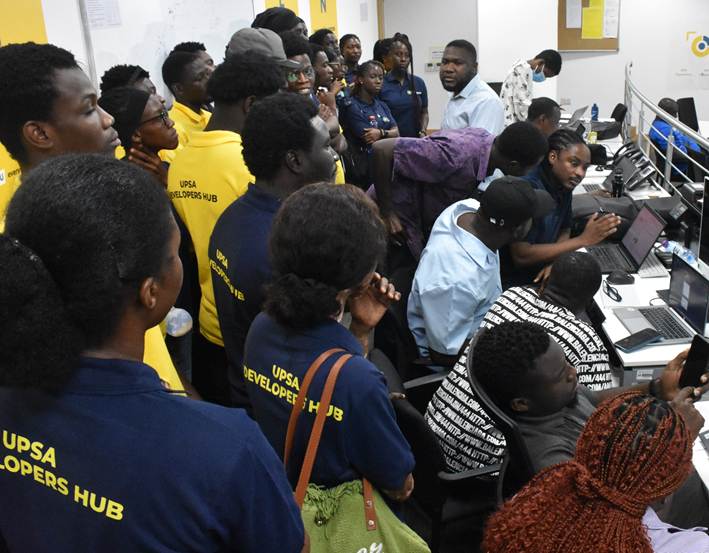 MTN Ghana technical staff interacting with students during a question-and-answer session.
At MTN Ghana, students encountered network functions, physical infrastructure and specialist responsibilities within a telecommunications operating environment. For networking education, such an environment provides an opportunity to explore how network architecture, monitoring, infrastructure and specialist roles relate within telecommunications operations. Networking curricula often separate complex topics for focused study. Before graduation, where should students encounter the operational interdependencies that bring those topics together?
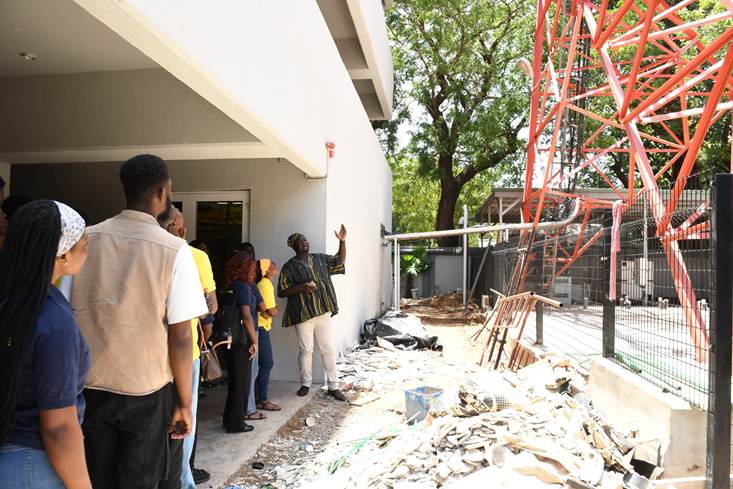 Students during a cell-site infrastructure session on Day 1.
Acknowledgements
I sincerely thank MTN Ghana for hosting the two groups of students at its headquarters on 15 and 16 April 2026. I also thank the MTN Ghana staff who contributed to the orientation, technical instruction and rotations, sharing their time, expertise and professional guidance. Finally, I thank the leadership and participating members of the UPSA Developers Hub for their professionalism and active participation throughout the engagement.
About the Author
Dr. Augustina Dede Agor, PhD (Computer Science), is a Senior Lecturer in the Department of Information Technology Studies at the University of Professional Studies, Accra (UPSA), Ghana. Her instructional experience spans computing programmes at multiple universities in Ghana, and she currently serves as an instructor at undergraduate and postgraduate levels with a United States-based university. Her instructional portfolio covers artificial intelligence, programming, programming languages, design and analysis of algorithms, data structures, operating systems, systems analysis and design, databases, networking development and management, information systems, information management, e-commerce and e-business, multimedia applications and standards, mobile computing, and online education strategies. Her research interests include artificial intelligence, optimisation and metaheuristics, computer networks and communications, biometrics and cybersecurity. Her professional background includes substantial service with Ghana’s National Identification Authority, where she held several roles, among them Automated Fingerprint Identification System (AFIS) Investigator. She has served as an Area Editor and as a reviewer for several international peer-reviewed journals. As Patron of the UPSA Developers Hub, she provides academic leadership and mentorship for an initiative that complements formal instruction through guided practice, collaborative software development and academic–industry engagement. Alongside her scholarly research, she contributes to national discourse through media writing on computing education, software engineering practice and the evolving role of computing in the AI era.


 Current successes make me wonder what we were doing in the past eight years — Ch...
 Community service targets misdemeanours, excludes serious crimes — Interior Mini...
 President Mahama dissolves boards of nine state institutions
 Call for Asiama’s removal from GoldBod Board must be based on facts — Kosi Dedey
 Roads Minister cautions contractors against ‘eye service’ after surprise site vi...
 SIGA Report: Don’t celebrate GETFund’s surplus as SOE profit — Adomako-Mensah
 Community Service Act will help reform offenders without prison contamination — ...
 How 300 mob from Gomoa stormed New Winneba, attacked residents and damaged prope...
 Ahmed Ibrahim says Mahama’s ministerial reshuffle was ‘divine intervention’
 NPP General Secretary race: Kodua supervised worse election defeat, must be vote...

