




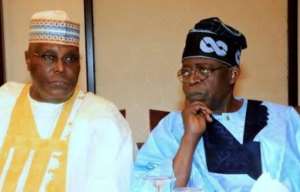
Nigeria's fuel subsidy debate has reopened with fresh urgency. On August 19–20, 2026, former Vice President Atiku Abubakar, now the African Democratic Congress (ADC) presidential candidate for 2027, pledged that if elected he would restore the petrol subsidy President Bola Tinubu scrapped on his first day in office in May 2023. The Presidency hit back within a day, with Special Adviser Bayo Onanuga calling the proposal "retrogressive" and demanding Atiku's "fiscal arithmetic". Between these two positions sits the ordinary Nigerian paying more for transport, food, and electricity than at almost any point in the country's history.
What the Subsidy Was, and Why It Was Removed
For over a decade, Nigeria's government paid the difference between the international price of imported petrol and the artificially low price sold at the pump. Declaring "fuel subsidy is gone" during his May 29, 2023 inauguration, Tinubu ended the scheme abruptly, arguing it had become an unsustainable drain on public finances that primarily benefited smugglers, middlemen, and the wealthy who consume more fuel, rather than the poor.
The Case for Removal
Government officials argue the reform has freed up substantial resources. Finance Minister Taiwo Oyedele has said the removal of the subsidy, together with the liberalisation of the naira, generated an estimated N15.8 trillion (approx. $11.7 billion) in savings for the federation between June 2023 and December 2025 N5.43 trillion (approx. $4 billion) to the federal government, N6.52 trillion (approx. $4.8 billion) to states, and N3.88 trillion (approx. $2.9 billion) to local governments, plus N3.12 trillion (approx. $2.3 billion) in other incremental revenue.
The finance ministry also disclosed that the federal government borrowed an additional N11.85 trillion (approx. $8.8 billion) during the same period, bringing its total incremental resources to N20.4 trillion (approx. $15.1 billion).
Government's finance scorecard also credits the reforms with strengthening foreign reserves and easing fiscal pressure. Supporters further argue subsidy removal has encouraged private investment in domestic refining, notably the Dangote Refinery and smaller modular refineries, since importers and refiners can now compete on a market-reflective price rather than being crowded out by a subsidized import regime.
The Case Against Removal Or For Its Return
The costs to ordinary citizens have been immediate and severe. The subsidy's removal triggered a sharp jump in petrol prices that rippled through transport fares, food prices, and the cost of virtually every good in the economy.
Pump prices in some regions rose from roughly N855–N897 per litre (approx. $0.63–$0.66) in September 2024 to over N1,000–N1,075 (approx. $0.74–$0.80) within weeks, deepening an inflation crisis that has "drowned the material well-being of Nigerians," in Atiku's words.
Even the government's own reform scorecard concedes that household welfare and poverty reduction remain "unfinished" areas.
Atiku's central argument is not that removal was wrong in principle he has said repeatedly that he did not initially oppose it but that the savings have not been transparently accounted for.
"Where is the money? Has it been used to improve healthcare, education or security?" he has asked, alleging that funds meant to cushion the transition have instead been diverted. He has also pointed to what he calls contradictory government spending, citing a reported N17.5 trillion (approx. $13 billion) in a single year on pipeline and energy security contracts nearly equal, he says, to the roughly N18 trillion (approx. $13.3 billion) spent on fuel subsidy over the entire twelve years before the programme was axed.
Not a Simple Return to the Old System
Notably, Atiku's proposal is not framed as restoring the old, widely criticised subsidy regime wholesale. Through his Atiku Economic Recovery Plan (AERP) 2027, he has proposed a "targeted, capped, transparently budgeted and independently audited production subsidy" tied to domestic refining output, arguing the real choice facing Nigeria is not simply subsidy-versus-no-subsidy, but between an opaque intervention prone to waste and a disciplined one with measurable benefits.
He has pledged that funds diverted from the subsidy scheme, if any, would be recovered and that beneficiaries would be tracked barrel-by-barrel.
The Presidency rejects this framing outright. Tinubu, speaking while receiving Osun State Governor Ademola Adeleke, described Atiku's plan as reflecting "a high level of ignorance in governance and economy," warning that a return to subsidy would undo reforms, create legal and fiscal complications, and discourage the very refining investment the removal was meant to encourage. Onanuga has demanded Atiku specify the annual cost of his plan, its funding source, whether it would require fresh borrowing, and whether it would need new petroleum-sector legislation.
Advantages and Disadvantages, Side by Side
Arguments for subsidy removal:
Frees billions in public funds previously spent maintaining artificially low pump prices, redirectable to infrastructure, health, and education
Reduces incentives for smuggling and round-tripping of subsidized fuel to neighbouring countries
Encourages private investment in domestic refining capacity
Ends a scheme government auditors have long flagged as opaque and easily exploited by a small number of well-connected importers
Arguments for retaining or restoring some form of subsidy:
Cushions the poorest Nigerians, who spend a disproportionate share of income on transport and food, both highly sensitive to fuel prices
Prevents the kind of rapid, compounding inflation that followed the 2023 removal
Addresses public distrust that savings from removal are being spent transparently or reaching ordinary citizens
A targeted, audited subsidy (as opposed to a universal one) could, in principle, avoid the corruption associated with the old system while still protecting vulnerable households
Who Is Right?
This is ultimately a question voters, not journalists, must settle in 2027 and it is genuinely contested among Nigerian economists. Removal advocates have the stronger case on public-finance sustainability and the documented corruption risks of the old scheme; restoration advocates have the stronger case on the immediate, measurable hardship the removal imposed on households and the government's own admission that welfare gains remain unrealized. What both camps largely agree on is that transparency and accountability for savings on one side, for financing on the other remain the unresolved core of the dispute.
For the ordinary Nigerian standing at a fuel station or a market stall, the debate is rarely about macroeconomic theory. It is about whether transport fares will rise again next month, whether a targeted subsidy will actually reach them rather than a politically connected importer, and whether either side's promises will translate into a tangible difference in daily life before the next election cycle arrives.
Mustapha Bature Sallama
Medical/Science communicator, Private Investigator, Criminal Investigation and Intelligence Analysis,United States Institute of Peace (USIP), [email protected] +233555275880
References
AllAfrica, "Nigeria: Atiku Vows to Restore Petrol Subsidy If Elected President in 2027," https://allafrica.com/stories/202608210069.html
Premium Times, "Atiku vows to restore petrol subsidy if elected president in 2027," https://www.premiumtimesng.com/business/business-news/904324-atiku-vows-to-restore-petrol-subsidy-if-elected-president-in-2027.html
THISDAY, "Atiku in Dramatic U-turn, Wants Fuel Subsidy Returned," https://www.thisdaylive.com/2026/08/21/atiku-in-dramatic-u-turn-wants-fuel-subsidy-returned/
AllAfrica, "Nigeria: Atiku in Dramatic U-Turn, Wants Fuel Subsidy Returned," https://allafrica.com/stories/202608210159.html
Daily Trust, "Atiku's fuel subsidy pledge sparks debate," https://dailytrust.com/atikus-fuel-subsidy-pledge-sparks-debate/
Leadership, "2027: I'll Restore Fuel Subsidy If Elected Atiku," https://leadership.ng/2027-ill-restore-fuel-subsidy-if-elected-atiku/
AllAfrica, "Nigeria: If Elected President I Will Restore Fuel Subsidy - Atiku," https://allafrica.com/stories/202608210105.html
Legit.ng, "Atiku promises to bring back fuel subsidy if elected President in 2027," https://www.legit.ng/politics/1726240-atiku-u-turn-promises-bring-fuel-subsidy-elected-president-2027/
Blueprint, "2027: Atiku vows to restore petrol subsidy if elected," https://blueprint.ng/2027-atiku-vows-to-restore-petrol-subsidy-if-elected/
Nigeria Info FM, "Presidency Hits Back at Atiku's Pledge to Bring Back Fuel Subsidies if Elected," https://www.nigeriainfo.fm/news/homepage/presidency-hits-back-at-atikus-pledge-to-bring-back-fuel-subsidies-if-elected/
Blueprint, "Why I will restore petrol subsidy if elected president in 2027 – Atiku," https://blueprint.ng/why-i-will-restore-petrol-subsidy-if-elected-president-in-2027-atiku/
AllAfrica, "Nigeria: 'Tinubu Robbing Peter to Pay Paul' - Atiku Blasts ₦17.5trn Pipeline Security Spending," https://allafrica.com/stories/202512010060.html
AllAfrica, "Nigeria: 'T-Pain', Atiku Hits Tinubu Over Fuel Price Hike," https://allafrica.com/stories/202410110084.html
Vanguard News, "Dollar to Naira exchange rate today, August 21, 2026," https://www.vanguardngr.com/2026/08/dollar-to-naira-exchange-rate-today-august-21-2026/

 'Contrary to law': US judge strikes down Trump's 75-country visa ban
 GoldBod’s gains must be weighed against full cost to Ghana – Prof. Bokpin
 ‘Afenyo-Markin’s smear campaign against me is about extortion’ – Sammy Gyamfi
 August 22: Cedi sells at GHS12.30 on forex market, GHS11.13 on BoG interbank
 There is a deliberate smear campaign against GoldBod from Minority – Sammy Gyamf...
 ‘If GoldBod wants credit, it must accept blame for losses’ – Dr Owusu Sarkodie
 Akosombo control system to be restored next month – Energy Minister
 ‘Temporary Akosombo system not very robust’ – Energy Minister on recent power ou...
 Mike Ocquaye Jr reacts to Adwoa Safo’s reported return to NPP Dome-Kwabenya race
 Foreign Affairs Ministry urges Tijjaniya pilgrims to Senegal to travel by air ov...

