




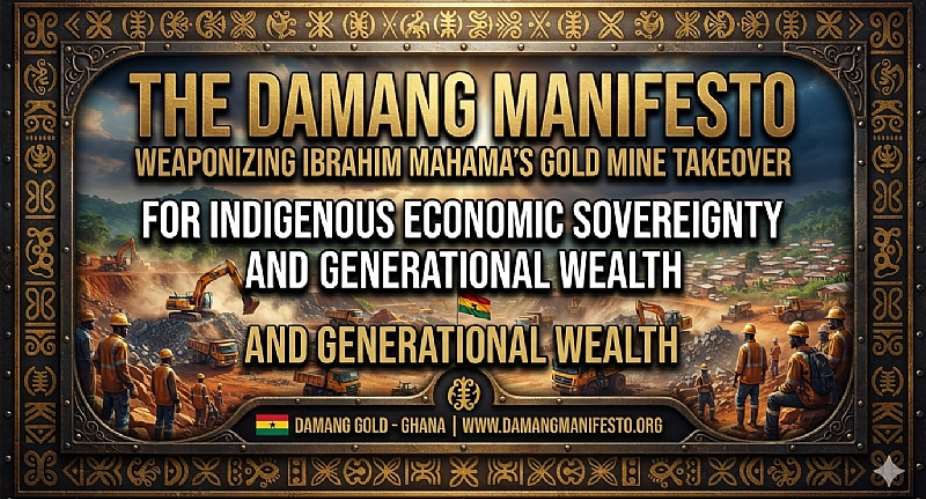
The acquisition of the Damang Gold Mine by Engineers and Planners (E&P) in April 2026 marks a watershed moment in the socio-economic history of Ghana’s extractive sector. For decades, African mining communities have suffered under the yoke of a classical "resource curse"—a paradox where vast mineral wealth coexists with acute structural underdevelopment. However, a new paradigm is unfolding in Damang. Within a short span of time, Ibrahim Mahama’s outfit has shattered the inertia of previous management, injecting immediate economic life into the enclave. With over 400 indigenes entering the recruitment pipeline, 180 already gainfully employed, the aggressive reconstruction of the Damang–Subri road, three astroturf complexes underway, and plans for a strategic airstrip, the physical and psychological landscape of Damang is undergoing a radical metamorphosis.
Yet, we must approach this renaissance with historical clear-sightedness and academic rigor. History proves that direct corporate employment alone cannot structurally transform a mining community. True emancipation occurs when indigenes stop viewing a mining multinational as an ultimate provider and instead weaponize its presence as a catalyst for local capitalism. The genuine wealth of Damang is no longer merely the gold beneath its soil; it is the immense liquidity, infrastructural velocity, and commercial traffic passing through the district. To prevent the stagnation typical of post-boom mining towns, the chiefs, youth, and citizens of Damang must dismantle the dependency mindset. They must aggressively exploit this corporate intervention to construct a self-sustaining, independent economic empire.
Industrial Subcontracting & Aggressive Supply Chain Capture
The operational footprint of a heavy-industry contractor creates a continuous, high-volume demand for secondary goods and services. Local intellectuals and entrepreneurs must organize to capture this corporate spend before it flees to external urban centers.
- Corporate Support Syndicates: Establish localized, highly structured consortiums capable of bidding for lucrative mine contracts in personal protective equipment (PPE) supply, industrial cleaning, laundry services, and office automation.
- Agrarian Commercialization & Food Sovereignty: The influx of mine workers creates an immediate food security market. Local subsistence farmers must merge into agricultural cooperatives to standardize quality and lock down exclusive supply agreements with the mine's catering services.
- Light Industrial & Engineering Workshops: Technical youth must establish advanced welding, machine fabrication, and industrial brick-making hubs to service the continuous infrastructural and structural maintenance demands of the mine.
Monetizing the New Infrastructural Architecture
Infrastructural capital is only as valuable as the economic velocity it facilitates. The new roads, airstrip, and sports complexes are open invitations for radical commercial innovation.
- The Damang–Subri Transit Corridor: Improved road networks mean increased transit. Indigenes must invest in commercial transport networks, heavy-duty haulage, localized delivery logistics, and strategic retail hubs along high-traffic zones.
- The Huni Airstrip Ancillary Ecosystem: The upcoming airstrip will bring a high-net-worth influx of executives, auditors, and technical experts. This creates an immediate, highly profitable market for boutique guest houses, premium car rentals, private security, and executive hospitality.
- Commercialization of Civic Space: The three new astroturf projects must transcend mere recreation. Local sports councils must transform these assets into revenue-generating engines by hosting regional tournaments, founding paid sports academies, and leasing the venues for large-scale social events.
Service Democratization & Local Wealth Retention
For structural transformation to occur, the capital distributed via mine salaries must circulate within the local economy multiple times before escaping to external banks.
- Technician Guilds and Cooperatives: Instead of operating as fragmented, vulnerable freelancers, local electricians, plumbers, and heavy-machinery operators must form registered corporate guilds to bid for institutional maintenance contracts.
- Micro-Capitalism & Sovereign Credit Unions: The community must establish local savings and loans associations (Susus and Credit Unions) to pool capital, enabling indigenous traders to bypass hostile banking interest rates and access micro-credit for expansion.
- Radical Real Estate Development: The rapid influx of human capital will trigger an acute housing deficit. Landlords must pivot from traditional construction to modern, multi-unit residential and commercial real estate to secure long-term rental yields from incoming workers.
The ESG Mandate: Holding the Mine to Account
A truly revolutionary paradigm demands that the community does not merely beg for crumbs, but holds the mine to rigorous Environmental, Social, and Governance (ESG) benchmarks. Indigenous management must mean superior ethical standards, not corporate leniency.
┌─────────────────────────────────────────┐ │ THE DAMANG THREE-PILLAR ESG │ └────────────────────┬────────────────────┘ │ ┌─────────────────────────────┼─────────────────────────────┐ ▼ ▼ ▼ ┌─────────────────┐ ┌─────────────────┐ ┌─────────────────┐ │ ENVIRONMENTAL │ │ SOCIAL │ │ GOVERNANCE │ │ RECLAMATION │ │ ACCOUNTABILITY │ │ DEMOCRATIZATION │ ├─────────────────┤ ├─────────────────┤ ├─────────────────┤ │ • Cyanide-free │ │ • Legally │ │ • Local Content │ │ water tables │ │ binding CDA │ │ Committee │ │ • Agro-forestry │ │ • Local labor │ │ • Democratic │ │ replanting │ │ minimums │ │ monitoring │ └─────────────────┘ └─────────────────┘ └─────────────────┘
- Radical Environmental Reclamation: The community must enforce strict oversight on tailings management and water table protection. E&P must be pressured to implement an aggressive, progressive reclamation strategy—converting exhausted pits into community agro-forestry zones or commercial aquaculture hubs rather than leaving toxic wasteland.
- Social Accountability Agreements: The current goodwill must be formalized into a legally binding Community Development Agreement (CDA). This framework must specify exact percentages of mine revenue allocated to healthcare, potable water infrastructure, and long-term youth educational scholarships.
- Governance Democratization: The traditional leadership and youth organizations must demand absolute transparency regarding local hiring ratios and procurement data. A tripartite committee (Mine, Community, and Local Government) must be instituted to audit compliance with local content laws.
📌 Policy Recommendations and Strategic Suggestions
To transition these theoretical possibilities into an unstoppable economic reality, immediate, coordinated action is required from all local and national stakeholders:
- For the Traditional Authority & Chiefs: Institute a permanent Damang Local Content Council to strictly vet all incoming sub-contractors, ensuring that non-local entities do not hijack simple supply lines that can be managed by indigenes.
- For the Youth and Aspiring Innovators: Dismantle individualistic, solo-trader business models. Merge capabilities, form partnerships, and register formal limited liability companies to boost your creditworthiness and capacity to handle large-scale corporate procurement.
- For Engineers and Planners (DGML): Establish a mandatory, institutionalized Supplier Development Programme designed to train local micro-enterprises on how to meet the rigorous safety, quality, and regulatory compliance standards of the global mining industry.
- For Local Government (Prestea Huni-Valley Municipal Assembly): Allocate a percentage of the mineral royalties returned to the assembly to build an Entrepreneurial Incubation Hub in Damang, offering free financial literacy, legal aid for business registration, and technical skills training.
The Blueprint for a Self-Reliant Future
A brilliant dawn has broken over Damang, but a liberated future cannot be built on the shifting sands of corporate dependency. The infrastructural and economic foundation laid down by Ibrahim Mahama and DGML is a monumental starting point, but the local populace must build the superstructure. True empowerment is not achieved when a community is handed 180 jobs; it is achieved when the community uses those 180 paychecks to create 500 more independent enterprises.
By aggressively colonizing the mine's supply chain, converting physical infrastructure into commercial nodes, enforcing strict ESG compliance, and institutionalizing local capital, the indigenes of Damang can design a radical blueprint for mining communities across the Global South. The doors of economic opportunity have been violently swung open by domestic resource nationalism—it is now up to the citizens of Damang to walk through them, not as passive laborers, but as the sovereign architects of their own economic destiny.
✍️ Submitted by:
Retired Senior Citizen
For and on behalf of all Senior Citizens of the Republic of Ghana 🇬🇭
Teshie-Nungua
[email protected]


 Afenyo-Markin’s GoldBod criticisms are just smear campaign to fold and oil their...
 No financial information was hidden from Auditor-General – Sammy Gyamfi replies ...
 Agbodza tells Tema Roundabout–Tetteh Quarshie Interchange contractor to work day...
 Chairman Wontumi's bail application adjourned to October 15
 Agbodza begins nationwide inspection of key road projects
 Afenyo-Markin's claims on DGPP lacked facts and common sense — Sammy Gyamfi
 August 19: Cedi sells at GHS12.25 on forex market, GHS11.05 on BoG interbank
 NIA clarifies Ghana Card fees, says Prestige Centre is optional
 Former NPP officials must explain why they took monies for contracts they did no...
 Nigeria election campaign begins as voters grapple with inflation crisis

