




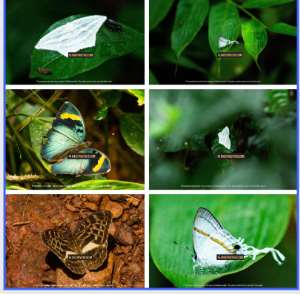
Deep in Ghana’s Eastern Region lies a forest reserve that holds one of the country’s most remarkable biodiversity secrets — the Atewa Forest Range Reserve, home to an extraordinary concentration of butterfly species and other rare forms of life.
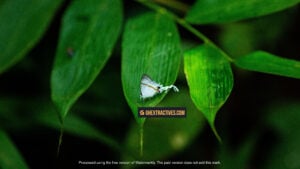
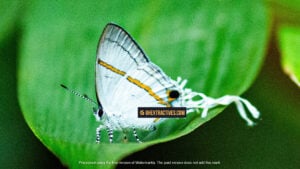
With reports indicating that about 70–77 percent of Ghana’s known butterfly species can be found in Atewa Forest, the reserve has emerged as one of the country’s most important habitats for butterfly conservation and a symbol of Ghana’s rich natural heritage.
Beyond their beauty, butterflies play a critical role in maintaining healthy ecosystems. Scientists regard them as indicators of environmental health because they respond quickly to changes in habitat conditions, climate variations, and human disturbance. A forest with a high diversity of butterflies often reflects a complex and well-preserved ecosystem capable of supporting a wide range of plants and animals.
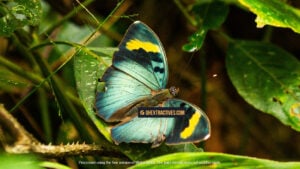
Atewa’s extraordinary butterfly diversity
National Director of A Rocha Ghana, Dr. Seth Appiah Kubi, said Atewa’s biodiversity value goes beyond its role as a water source, highlighting the forest’s exceptional level of endemism — the presence of species that are found nowhere else.
"On biodiversity, Atewa Forest is not only about water. I don’t know how the Creator did it, but this forest has been blessed with a very high level of endemism. This means that many species that cannot be found anywhere else are concentrated in this small area," he said.
According to Dr. Appiah Kubi, Atewa’s butterfly population demonstrates the uniqueness of the forest.
"If you look at butterflies in Ghana, they should naturally be distributed across different ecosystems. However, in Atewa Forest alone, about 77 percent of Ghana’s butterfly species can be found. This means only about 23 percent are found elsewhere in the country," he added.
The concentration of butterfly species makes Atewa a Key Biodiversity Area (KBA) — a globally recognized site that contributes significantly to the conservation of biodiversity.
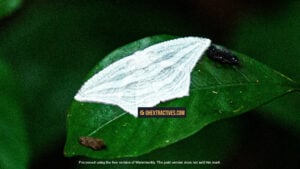
A forest of rare species
Atewa Forest is recognized as one of Ghana’s most biologically significant landscapes, containing unique plant and animal species found nowhere else in the country. Its upland evergreen forest ecosystem, streams, and varied habitats create suitable conditions for a wide range of butterfly species.
The forest’s butterfly diversity is closely linked to its status as one of Ghana’s remaining areas of relatively intact upland evergreen forest. The presence of rare and endemic species makes Atewa an important location for scientific research and conservation.
For researchers, butterflies provide valuable information about ecosystem changes. Monitoring butterfly populations can help reveal the impacts of deforestation, mining, climate change, and other pressures affecting forest ecosystems.
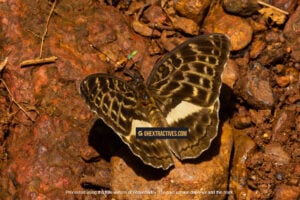
More than just butterflies
The importance of Atewa extends far beyond butterflies. The forest serves as a critical watershed that feeds major river systems, including tributaries of the Birim, Densu, and Ayensu rivers, which support communities and ecosystems across parts of southern Ghana.
Dr. Appiah Kubi emphasized that Atewa’s uniqueness is linked to its place within the wider Upper Guinean Forest ecosystem, which once stretched from Senegal through to Côte d’Ivoire.
"Atewa is one of its kind. It is an upland forest and forms part of the Upper Guinean Forest, which once stretched from Senegal through to Côte d’Ivoire. Much of this forest ecosystem has been lost, and only about 5 percent remains in our region today. Atewa represents one of the largest remaining portions of this important forest system," he said.
The forest also provides habitat for threatened wildlife, including rare plants, birds, amphibians, and mammals. Conservationists argue that protecting Atewa means safeguarding an entire network of interconnected species and ecological services.
Butterflies and the case for conservation
The loss of forest habitat can have devastating consequences for butterfly populations. Many butterfly species depend on specific plants and environmental conditions for survival, meaning habitat destruction can quickly lead to population declines or extinction.
Conservation groups have therefore highlighted Atewa’s butterfly richness as one of the strongest arguments for protecting the forest from activities that could degrade its ecosystem.
Atewa’s status as a biodiversity hotspot means that its destruction would not only affect butterflies but could result in the loss of numerous species and ecological functions that cannot easily be restored.
"Atewa is a Key Biodiversity Area because of this unique richness. It makes you wonder why this place was created in such a special way, if not to protect the very foundation on which our lives depend. If we destroy it, we do so at our own peril," Dr. Appiah Kubi stated.
Atewa’s potential for eco-tourism
Beyond conservation, Atewa’s butterfly diversity presents opportunities for sustainable economic activities such as ecotourism, scientific research, and environmental education.
Butterfly watching has become a growing tourism activity worldwide, attracting visitors interested in nature, photography, and biodiversity. A well-managed Atewa landscape could create livelihood opportunities for surrounding communities while encouraging long-term protection of the forest.
Protecting Ghana’s natural heritage
As Ghana faces increasing pressure from land-use changes, illegal mining, and other development demands, the importance of biodiversity-rich ecosystems like Atewa continues to grow.
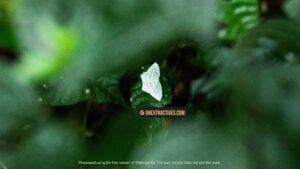
The fact that one forest reserve contains such a significant share of Ghana’s butterfly species demonstrates the extraordinary ecological value of the Atewa landscape.
Protecting Atewa is therefore not only about saving butterflies — it is about preserving a living ecosystem that supports wildlife, protects water resources, contributes to scientific knowledge, and represents a vital part of Ghana’s natural heritage.
"Why Atewa? Because there is so much to lose if we allow such an important biodiversity area to disappear," Dr. Appiah Kubi said.
# Make a Atewa a National Park
# Make a Atewa a National Park
# Make a Atewa a National Park

 Wontumi’s lawyers want Exim Bank case treated as civil, not criminal
 Mahama to cut sod for Accra Convention Centre project – Kwakye Ofosu
 Mahama administration committed to stamping out cybercrime – Sam George
 Ghana joins International Big Cat Alliance to strengthen wildlife conservation
 Africa must strengthen strategic positioning amid global power shifts – ECOWAS
 PAC grills GHS over transport officer who allegedly sold seven state vehicles wi...
 Pentecost Church elder was arrested over GH¢200,000 fraud case, not kidnapped – ...
 Banning preaching in vehicles will not succeed, we will even preach at the back ...
 Banks threaten to suspend new loans to public sector workers over Controller rep...


