




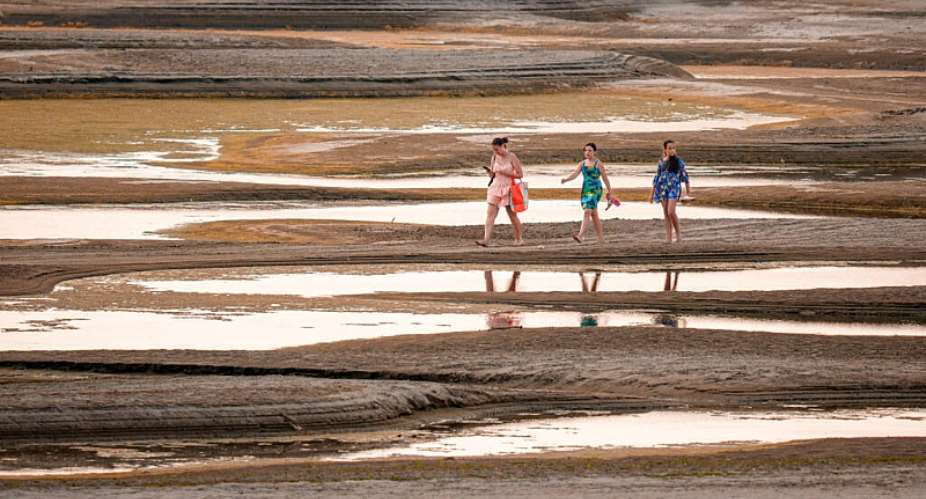
Nuclearelectrica last month shut down one of two reactors at the Cernavoda power plant, which generates a fifth of the country's electricity supply.
The second reactor is now also being closed down "due to the significant and ongoing drop in the water level of the River Danube", it said in a statement.
"Nuclearelectrica SA announces that, on the morning of 13 August 2026, it began the procedures for the controlled shutdown of Unit 2 at the Cernavoda Nuclear Power Plant," it said.
Romania has been trying for days to avert a complete shutdown of the plant's two 700MW reactors.
Measures attempted included blowing up a rock and sinking four barges filled with the fragments into the river to try to divert its flow, at a cost of more than €2 million.
The last time the plant was closed was during a 2003 drought, when it was shut down for several weeks.
Alternative energy sources, including from wind power generation as well as imports, are expected to cover the country's electricity supply, the energy ministry said on Wednesday.
It also repeated an appeal for "responsible consumption".
Climate change 'exacerbating' drought across Europe, scientists say
'Problem to worsen'
Unprecedented heatwaves and rain shortages across Europe this year have caused the level of the River Danube to plummet.
Nearly two-thirds of the river have recorded flow rates that are the lowest on record for a month of July in 34 years, according to analysis published on Monday by the European climate change observatory Copernicus.
Other European countries have been similarly affected. The current drought has been exacerbated by human-induced climate change, according to a report by the World Weather Attribution group of scientists, who warn that the problem is set to worsen.
In the Netherlands and Germany, cargo ships that travel on the River Rhine and its offshoots have been forced to carry significantly less freight or risk running aground in shallow navigation channels.
French farmers bracing for smallest corn harvest in 40 years
Farmers facing restrictions on irrigating their crops are warning of smaller fruit harvests and rising prices this season.
The low-lying parts of the western Netherlands that are composed of reclaimed land are suffering increasingly from salinity in droughts, posing problems for farmers who grow fruit and vegetables in the fertile soil.
Water authorities trying to maintain adequate supplies of fresh water have banned farmers in some parts of the country from pumping water out of canals to irrigate their crops.
(with newswires)


 President Mahama sets 2028 deadline for completion of Upper East Regional Airpor...
 Upper East Airport to open region to investors, boost economic activity — Mahama
 NDC will not take lessons from NPP on economy — Joyce Bawah
 Man seen assaulting suspect at police station not a member of Hajj Board — Pilgr...
 Police gun down two suspects, arrest one over Labone GCB robbery attempt
 Ofankor crash: Stop publishing graphic images, videos — Oppong Nkrumah urges med...
 South Africa excludes Ghana, seeks $18million repatriation costs from other Afri...
 Ghana won’t reimburse South Africa for evacuation of Ghanaians – Foreign Affairs...
 TDC, Tema Assembly clash over demolition of development project at Community 1
 Interior Ministry condemns assault of suspect Apostle Daniel in police custody, ...

