




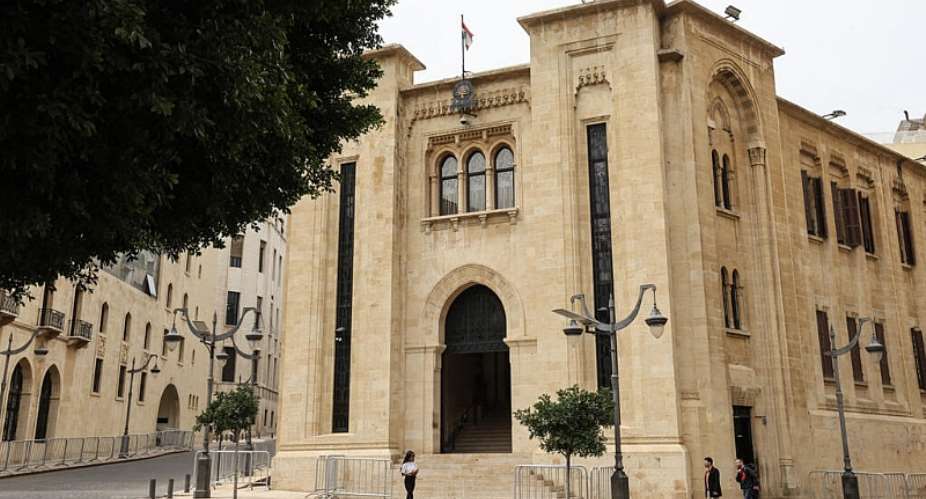
Lebanon's parliament on Wednesday passed a sweeping and long-awaited amnesty law that should benefit thousands of prisoners and wanted people, in the first legislation of its kind since 1991.
The law, which had been a demand of various political factions and a topic of debate for years, aims to reduce prison overcrowding with many inmates awaiting trial for years.
The office of the country's parliament speaker announced the "approval of a draft law aimed at granting a general amnesty and exceptionally reducing the terms of certain sentences".
Authorities did not immediately announce the number of people that would benefit from the law.
According to Imad al-Hout, one of the lawmakers in favour of the bill, the law reduced the sentences of those facing death and life imprisonment to 17 prison years.
That is equivalent to 12 years and nine months of actual imprisonment in Lebanon, where a prison year is calculated as nine months.
The new law was passed a day after the Lebanese parliament abolished the death penalty, making the country the first in the Middle East to formally end the practice.
Read more Lebanon becomes first Middle Eastern country to abolish the death penalty
The amnesty law passed Wednesday also calls for the release of inmates detained for more than 12 prison years without charges as their trial continues.
In its 2025 report, the country's National Human Rights Commission said that prisons had an overcrowding rate of 300 percent, with prison authorities reporting at least 6,268 inmates by the end of March.
But general amnesty was brought back into the limelight after the 2024 fall of longtime Syrian president Bashar al-Assad, as many Islamist prisoners in Lebanon were jailed over events linked to the Syrian civil war.
Most of them hail from northern Lebanon's Sunni-majority city Tripoli and are accused of crimes that include attacking the Lebanese army, participating in clashes and planning bombings.
Other political forces, including Iran-backed Shia movement Hezbollah, have been demanding amnesty for their communities.
Thousands of families from the eastern Baalbek and Hermel regions, bastions of Hezbollah and its ally Amal where illicit cannabis cultivation is widespread, have been demanding amnesty for drug-related offences and car theft for years.
Christian parties meanwhile have pushed for the law to include the families of those who joined an Israeli-backed proxy and fled to Israel after its withdrawal from southern Lebanon in 2000, fearing reprisals, particularly from Hezbollah and its supporters.
Lebanon previously passed a general amnesty law in the wake of its 1975-90 civil war, allowing former warlords to transition into politics without facing trial for crimes committed during the conflict.
(FRANCE 24 with AFP)


 New road rules: Police explain tyre age, tint, parking rules ahead of October 1 ...
 Circle phone dealer murder: Suspect allegedly sold victim’s iPhone 12 for GH¢100...
 Police arrest three suspects over kidnapping, murder of Circle phone dealer
 Adipa residents tell gov’t to halt Agbogbloshie waste transfer
 Mahama says listing 10 state-owned enterprises will curb political interference
 Ghana Jollof saga: Baffour Awuah sues Blakk Rasta, Akwatia MP over alleged false...
 6,079 promoted teachers processed and paid — Controller clarifies
 “We need payment, not meetings” – Striking teacher unions tells Education Minist...
 NPP challenges GH¢2,650 cocoa producer price for 2026/27 season
 Mahama explains why 'humiliating' US, Ghana health deal was thrown out with spee...


