




The Skills and Innovation Lead at Youth Opportunity and Transformation in Africa (YOTA), Eric Saforo, has urged parents to reconsider the long-standing perception that Technical and Vocational Education and Training (TVET) is a last resort for young people who cannot pursue traditional academic education.
According to him, TVET has become increasingly important in an economy driven by technology and offers young people opportunities to acquire practical skills, secure decent employment and become self-employed.
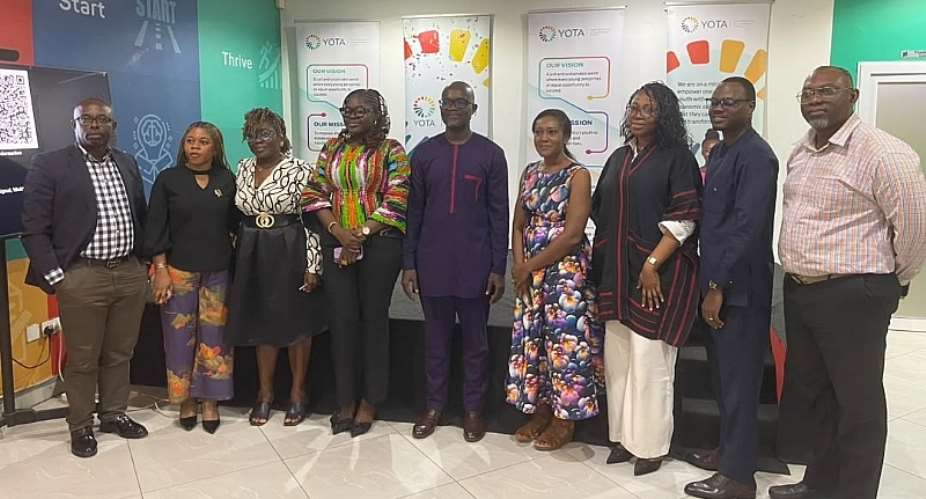
Speaking at a Knowledge Café organised by the Youth Employment and Skills Chapter of the Pan-African Coalition for Transformation (YES-PACT), Mr. Saforo said young people with technical skills can create their own employment and generate sustainable incomes.
“The Civil Service is choked, and so the good way now to make money and for young people to escape poverty is to turn to TVET,” he said.
He urged parents to see technical and vocational education as an investment in their children’s future.
“Parents who want to escape poverty should let their children do TVET so that they can get employment and then take them out of poverty,” he stressed.
Mr. Saforo strongly challenged the perception that TVET is meant for academically weaker students, recalling that the sector was traditionally regarded as the final option for young people who could not pursue conventional academic education.
“In the past, we looked down on TVET because we thought it was not even a second-choice option; it was the last option that if you didn’t go to school, then you get to TVET,” he said.
“But in these days of technology where things have advanced, everything around us is technology and everything around us is TVET,” he added.
Mr. Saforo underscored the importance of workplace experience in helping TVET students acquire practical skills and successfully transition from school into employment.
He said YES-PACT works with government to identify policy gaps affecting young people and support efforts to address them.
“Our advocacy is not antagonistic but a partnership. We partner with government institutions and support the delivery and implementation of projects or policies,” he said.
According to him, workplace experience learning is particularly important for TVET students because it allows them to gain practical industry experience and acquire the skills required to become either self-employed or wage-employed.
He also noted that YES-PACT is exploring opportunities such as job fairs to connect young people with employers and improve their chances of securing employment.
“Getting employment means you get money in your pocket, and getting money in your pocket is a sure way of escaping poverty,” he said.
YES-PACT, managed by the Africa Centre for Economic Transformation (ACET), brings together policymakers, regulators, implementers, private-sector representatives and civil society organisations to strengthen youth employment and skills development.
Mr. Saforo also called for stronger measures to ensure that persons with disabilities have equal access to TVET education.
He explained that students with disabilities have special educational needs and therefore require learning environments tailored to support their participation.
“They have special education needs because the educational environment must be tailored to support them,” he explained.
He noted that the Ghana TVET Service has a unit responsible for inclusion and disability-related issues, including gender considerations.
Mr. Saforo said YES-PACT would continue to support the Ghana TVET Service and the Ministry of Education through advocacy to promote inclusive education and ensure that persons with disabilities are fully integrated into the TVET system.
Also speaking at the event, Acting Deputy Director and Head of Corporate Affairs at the TVET Service, Hephzibah Armah, dismissed the perception that TVET is meant for school dropouts or academically weak students.
She said TVET is a first-choice pathway for intelligent and innovative learners and remains critical to Ghana’s national development.
“TVET is not a second option. It is the first option,” she stressed.
Ms. Armah said the TVET sector is embracing emerging technologies, including Artificial Intelligence, robotics and digitalisation, while expanding skills development opportunities within the informal sector.
She noted that TVET institutions are also being equipped to accommodate persons with disabilities and promote inclusive education.
According to her, the National TVET Week is intended to showcase the opportunities and innovations within the sector while encouraging young people and the general public to develop a greater appreciation for technical and vocational education.
The Knowledge Café therefore provided a platform for stakeholders to discuss youth employment, workplace experience, inclusive education, policy implementation, technology and the future of TVET in Ghana.

 We have cut cost of capital by more than half since Mahama took office – Ato For...
 Dr Bertha Ayi on how parents hurt children by raising them only on English
 Customs intercepts three firearms, 610 rounds of ammunition at Tema Port
 NDC to open nominations for 2026 regional executive elections on October 6
 Africa will be mostly self-sufficient in fuel by 2030: Dangote to AFP
 PRETAG threatens to intensify strike over unpaid teacher entitlements
 Lands Minister exits GoldBod Board as Minister's Chief Director takes over
 Court refuses bail for six accused in 3.9-tonne cocaine shipment case
 Philippines to open first-ever embassy in Ghana
 1992 Constitution review: Prof. Atsu Ayee and Dr Osae-Kwapong explain why Consti...


