




Networking education develops students' understanding of network architecture, transmission, routing, switching, wireless communication, network security and network management through lectures, laboratories and simulations. Academic-industry engagement complements these foundations by enabling students to examine how the concepts apply within operating conditions shaped by scale, availability, resilience and service continuity.
Following a request from the UPSA Developers Hub, Telecel Ghana hosted an academic–industry engagement on 10 April 2026. All participating students were members of the UPSA Developers Hub, with almost all enrolled in the Networking Development and Management course. Building on their earlier engagement with UPSA's institutional network infrastructure, students progressed from studying a network serving one organisation to examining a large-scale telecommunications network supporting communication services across Ghana.
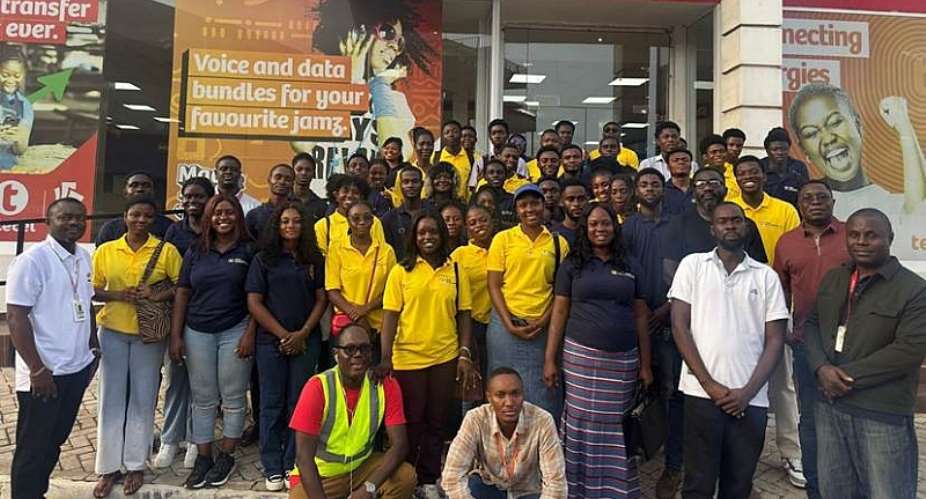
 A representative group of participating students during the network monitoring session.
From Individual Concepts to Integrated Systems
Institutional networks and large-scale telecommunications networks draw on related principles but operate under different conditions. An institutional network may serve one organisation, a defined community of users and a bounded physical environment. A telecommunications network must coordinate distributed infrastructure, variable traffic and mobile users while managing equipment failures and sustaining service across many locations. The underlying principles remain familiar, but their interdependence becomes more consequential as network scale and service obligations increase.
The operational differences are evident in network architecture. A large-scale telecommunications network architecture distributes functions across radio access, transmission and core network domains, enabling coverage, mobility, switching and service delivery to be coordinated. Transmission links carry traffic between geographically separated elements, while fibre, microwave and other media may be combined according to capacity, reach, availability and resilience requirements.
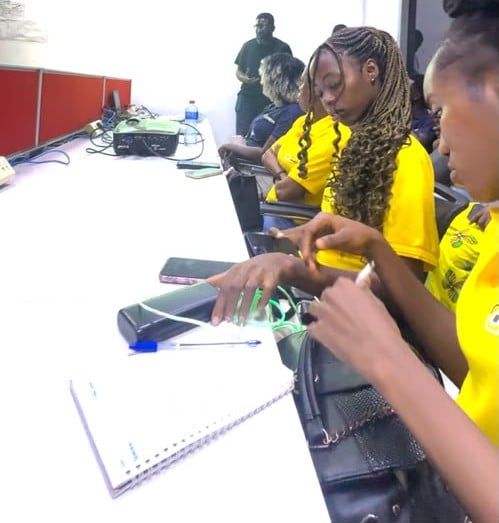 A representative group of participating students during a Telecel Ghana technical session on telecommunications architecture and network operations.
.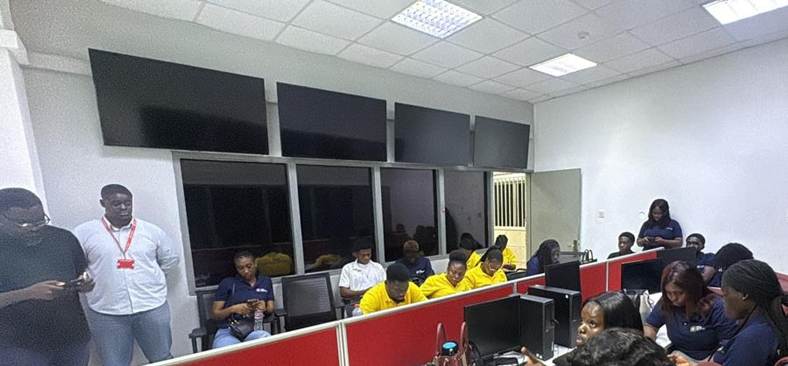 Telecel Ghana facilitators with a representative group of participating students during a technical session on telecommunications architecture and network operations.
The Educational Design of the Telecel Ghana Engagement
Participating students were divided into three groups and rotated through sessions on telecommunications systems, transmission operations and the Network Operations Centre. The transmission rotation incorporated the field activity on radio-site infrastructure.
The telecommunications systems sessions established the broader technical context for the engagement. Students examined a range of topics, including the evolution of communication systems, transmission media, wireless communication, radio propagation and mobile telecommunications architecture. Guided explanations, demonstrations involving telecommunications equipment and infrastructure, observation of operational systems and interaction with Telecel Ghana professionals connected conceptual instruction with direct observation.
The transmission rotation focused on the infrastructure that carries traffic between distributed network locations. Students examined the importance of backbone capacity, link availability, alternative transmission paths and coordinated maintenance to service continuity. The field activity within the transmission rotation connected these ideas to radio sites and telecommunications masts. The reliable operation of a radio site depends on power, backhaul, effective site engineering, maintenance and integration with the wider network.
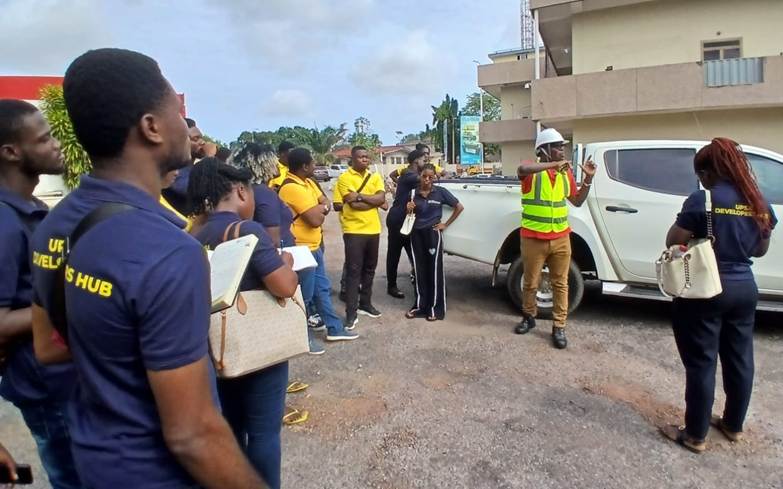 A representative group of participating students during the field session on radio-site infrastructure and transmission systems.
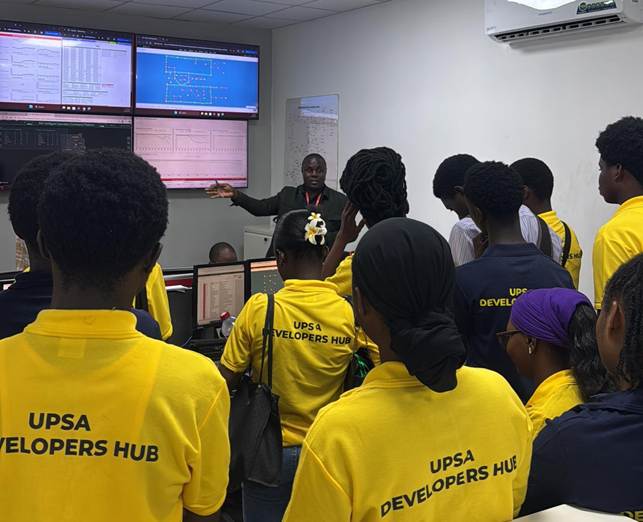
The NOC rotation enabled students to observe how network conditions were monitored across Ghana and how alarms and changes in network status were identified and addressed. The session demonstrated the continuing operational responsibilities involved in monitoring network performance and coordinating responses to identified problems.
Through their interaction with Telecel Ghana professionals, students encountered roles associated with telecommunications systems, transmission, radio-site infrastructure and network operations. They could relate the course content to the technical responsibilities and collaborative practices associated with telecommunications operations.
For the UPSA Developers Hub, the experience also connected software development with the network infrastructure and operational processes that sustain deployed digital systems.
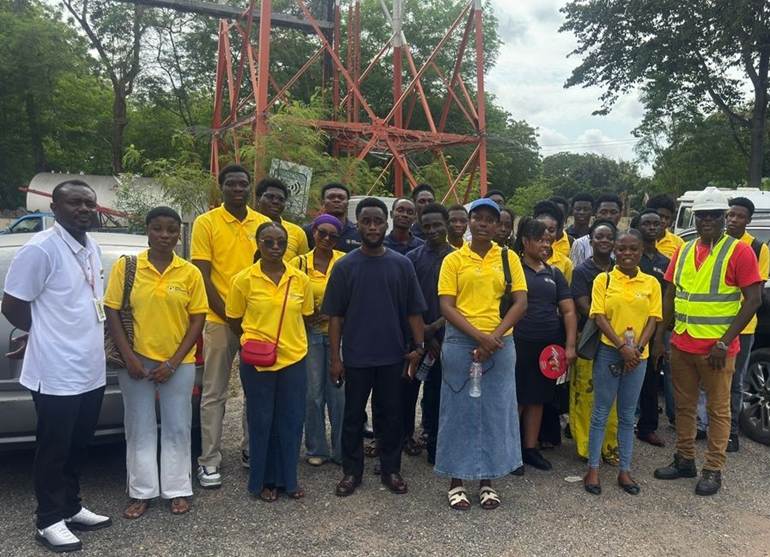 Telecel Ghana facilitators with a representative group of participating students following the field session on radio-site infrastructure and transmission systems.
Conclusion
The Telecel Ghana engagement enabled participating UPSA Developers Hub members to examine how networking concepts operate within a large-scale telecommunications network supporting communication services across Ghana. It demonstrated the educational value of connecting established networking knowledge with the infrastructure, operational processes and professional expertise required to sustain those services.
Acknowledgements
I sincerely thank the management of Telecel Ghana for making this educational engagement possible. I also appreciate the managers, technical professionals and support staff whose expertise and willingness to share their knowledge made it a valuable learning experience for the participating students. Finally, I thank the members of the UPSA Developers Hub whose active participation and enthusiasm contributed to the success of the engagement.

 Gold shipments resume as Ghana rebuilds foreign exchange reserves — BoG governor
 ECG unions to stage nationwide protest over proposed private sector participatio...
 ‘That penalty is a joke’ — Queiroz rejects referee decision in Ghana’s loss to C...
 GBA criticises EOCO over attempted arrest of lawyer Baffour Awuah at court premi...
 'Sceptics, naysayers, alarmists should be aware US ready to work with Ghana on r...
 Ibrahim Mahama took me abroad for surgery after Lordina’s intervention – Dzokoto
 President Mahama to Walk the Runway on November 7
 Heavy fighting, internet disruption as Ethiopia conflict rages
 Saudi reports fresh Houthi attacks as France pledges to defend key oil port
 Israel must win 'because we’ve got no other choice’, PM Netanyahu tells UN


