




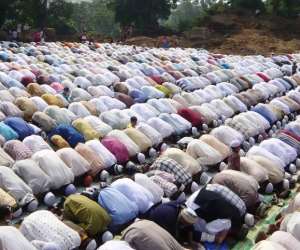
Religion serves as a vital source of identity, spiritual guidance, and social cohesion for many communities across the world. Within Islam, religious institutions and leadership structures play significant roles in maintaining communal harmony and facilitating the spiritual development of adherents. However, disputes over religious authority occasionally emerge, creating tensions that threaten the unity and stability of Muslim communities. One manifestation of such tensions is imamship conflict, which refers to disputes surrounding the leadership of a mosque or the broader Muslim community.
Imamship conflict extends beyond a mere contest for religious authority. According to Raji (2025), it reflects broader questions of legitimacy, governance, communal expectations, and the interpretation of religious principles. These disputes often mirror wider socio-political dynamics, including debates about ethnic identity, religious pluralism, and community representation. Consequently, imamship conflicts provide a useful lens through which to examine the complex relationship among religion, leadership, and society.
This article explores the historical origins of imamship conflict by tracing its roots to the succession crisis that followed the death of Prophet Muhammad. It further examines how competing conceptions of leadership, political influences, and doctrinal differences have shaped intra-Muslim conflicts throughout history and continue to influence contemporary Muslim communities.
Succession Crisis within Islam
The origins of intra-Muslim conflict can be traced to the death of Prophet Muhammad in 632 CE. The question of who should succeed the Prophet as leader of the Muslim community became one of the most consequential issues in Islamic history and laid the foundation for subsequent divisions within Islam.
Drawing on Hadith literature, Sunni and Shi'a sources, and secular historical accounts, Khalid (2018) observes that the Sunni and Shi'a traditions differ fundamentally regarding the issue of succession. While Shi'a Muslims maintain that Ali ibn Abi Talib was divinely designated to succeed the Prophet, Sunni Muslims uphold the legitimacy of Abu Bakr's selection as the first caliph. These competing interpretations of succession ultimately contributed to the emergence of the two major branches of Islam: Shi’a and Sunni.
Madelung (1997) provides a detailed historical analysis of the leadership struggle that emerged following the Prophet's death. He traces the conflict from the reigns of the four Rightly Guided Caliphs to its culmination in the first Muslim civil war. According to Madelung, the conflict centred on competing claims to legitimacy between the Prophet's family, particularly Ali and the Banu Hashim, and influential members of the Quraysh tribe. The outcome of these struggles contributed to the establishment of the Umayyad dynasty and the enduring division between Sunni and Shi'a Islam.
Similarly, Takim (2007) argues that claims to succession became central to the construction of religious authority within the Muslim community. Through an examination of Sunni and Shi'a literature, he demonstrates how competing groups employed narratives of inheritance and succession to justify their authority and secure the loyalty of followers. These competing claims often resulted in the marginalisation of opposing perspectives and contributed to the development of distinct religious identities.
Afsaruddin (2002) characterises the debate over succession as a contest between kinship and companionship. Both the Shi'a and their opponents recognised proximity to the Prophet as an important criterion for leadership, but they differed regarding the nature of that proximity. The Shi'a emphasised consanguinity and familial ties to the Prophet as the principal basis for legitimate leadership. In contrast, the Uthmaniyya and later Sunni traditions prioritised spiritual closeness, demonstrated competence, and faithful emulation of the Prophet's example. Thus, while the Shi'a associated leadership legitimacy with membership in the Prophet's lineage, Sunni perspectives generally emphasised individual merit and religious qualifications.
Competing Conceptions of Islamic Leadership
The debate over legitimate leadership did not end with the early caliphate. Throughout Islamic history, differing interpretations of political and religious authority have continued to shape Muslim societies.
Modern Islamist thinkers often advocate the establishment of an Islamic state governed according to Sharia and led by religious authorities. According to Koch (2019), some proponents regard such a system as the ultimate political ambition of Islam and consider political struggle a legitimate means of achieving it. However, this interpretation remains contested within Islamic scholarship.
Wayel (2016) argues that contemporary Islamist conceptions of the caliphate represent a modern political construction rather than a faithful reflection of classical Islamic governance. He contends that historical Islamic political systems exhibited significant diversity and cannot be reduced to a single model of religious rule. This debate underscores the plurality of perspectives within Islam concerning authority, governance, and leadership.
The Influence of Arab Political Culture
Political developments in the Arab world have also influenced perceptions of leadership and succession within Muslim communities. Billingsley (2009) argues that political systems in many Arab states are characterised by strong family loyalties, hereditary succession, and authoritarian governance structures. In both monarchies and republics, leadership often remains concentrated within ruling families, with political institutions frequently serving to reinforce familial control.
According to Billingsley (2009), family and tribal affiliations continue to shape political, economic, and social relations across much of the Arab world. While these arrangements have often been criticised for limiting political reform, many citizens perceive them as sources of stability in politically volatile environments.
Ayuba (2011) suggests that similar dynamics have influenced leadership disputes within Muslim communities in northern Ghana. In Tamale, for example, certain families and ethnic groups have historically asserted hereditary claims to religious leadership. Such claims sometimes conflict with Islamic principles that emphasise piety, scholarship, and competence rather than lineage as the basis for leadership.
The Absence of a Centralised Islamic Authority
Unlike some religious traditions that possess centralised hierarchical structures, Islam lacks a universally recognised global authority responsible for regulating the affairs of Muslims worldwide. As noted by Ameli (2002, as cited in Ameen, 2022), Muslim scholars operate in various capacities as imams, muftis, ayatollahs, caliphs, and other religious leaders within their respective contexts.
The absence of a central governing authority has contributed to the diversity of Islamic interpretations and practices. Ameen (2022) notes that this situation allows multiple scholars to claim authority in interpreting Islamic teachings. Similarly, Asad (1986, as cited in Ameen, 2022) argues that while Muslims generally aspire to conform to a common Islamic model, the interpretation and application of that model have always varied across historical and cultural settings.
Although this diversity enriches Islamic intellectual traditions, it may also contribute to disagreements over religious authority and leadership, particularly in contexts where mechanisms for succession are not clearly defined.
Imamship Conflict and Intra-Muslim Relations in Africa
Intra-Muslim conflict remains a significant challenge in several African countries. The phenomenon is particularly evident in Zongo communities, which originated as settlements for Muslim migrants and traders moving from the northern savannah and Sahel regions into the southern and coastal parts of West Africa. Derived from the Hausa word “zango”, meaning "strangers' quarters or settlement," Zongo communities are characterised by ethnic diversity and a shared Islamic identity (Ayuba, 2011). While Zongos are widely associated with Muslims, they are not exclusively Islamic enclaves, as they accommodate residents from diverse religious affiliations.
Ameen (2022) notes that while Islam provides a unifying framework within Zongo communities, differences in ethnicity, religious affiliation, and leadership preferences often create tensions. These tensions occasionally manifest in disputes over imamship and religious authority.
Shehu and Sani (2019) observe that intra-Muslim conflicts have become increasingly destructive in parts of northern Nigeria, resulting in loss of life, property destruction, and social fragmentation. Their findings suggest that disagreements over doctrine, leadership, and religious authority continue to fuel divisions within Muslim communities.
Historical examples from Ghana further illustrate the prevalence of imamship-related conflicts. Wilks (1989) records that in 1951, a dispute erupted in Wa following the appointment of Salih b. Al-Hassan, an Ahmadiyya leader, as Imam by Wa Naa Mumuni Koray. The decision was strongly opposed by the predominantly Orthodox Muslim population, leading to violent disturbances.
Similarly, Tsikata and Seini (2004) document clashes between the Tijaniyya and Al-Sunna groups in Tamale in December 1997. The conflict, which stemmed partly from leadership disputes, resulted in injuries and loss of life. Another imamship-related dispute occurred in Chereponi in April 2000 following the death of an incumbent Imam, requiring police intervention to prevent further violence.
According to Ayuba (2011), doctrinal differences, ethnic rivalries, and competing interpretations of religious authority remain among the principal drivers of intra-Muslim conflicts in northern Ghana. In contrast, violent conflicts between Muslims and Christians have been comparatively rare (Kpormasi, 2013).
Conclusion
The history of imamship conflict demonstrates that disputes over religious leadership are deeply rooted in the historical development of Islam. Beginning with the succession crisis that followed the death of the Prophet Muhammad, competing interpretations of legitimacy, authority, and leadership have shaped Muslim political and religious life for centuries.
While doctrinal differences have contributed to these disputes, imamship conflicts are often influenced by broader socio-political factors, including ethnicity, family lineage, political culture, and competing claims to authority. The absence of a centralised Islamic leadership structure further creates space for diverse interpretations and contestation over religious leadership.
Understanding the historical foundations of imamship conflict is therefore essential for addressing contemporary disputes within Muslim communities. Such understanding can contribute to the development of more inclusive and transparent mechanisms for leadership succession, thereby promoting social cohesion, religious harmony, and sustainable peace within Muslim societies.
REFERENCES
- Afsaruddin, A. (2002). The Excellence of Propinquity to the Prophet: Kinship vs. Companionship. Islamic History and Civilisation, 36, 146-196.
- Ameen, M. K. (2022). The National Chief Imam of Ghana. In Sounaye, A and Chappatte, A. (Eds.) (2022). Islam and Muslim Life in West Africa. De Gruyter.
- Ayuba, I. A. (2011). Intra-religious conflicts among Muslim Ummah (community) in Tamale from the 1960s to 2011. (Master’s thesis, Kwame Nkrumah University of Science and Technology).
- Billingsley, A. (2009). Political Succession in the Arab world: Constitutions, family loyalties and Islam (1st Ed). Routledge.
- Khalid, S. (2018). The successor of the prophet: A historical analysis of the early political differences between the Sunni and Shi’a Ilsmic school of thoughts. Uppsala Universitet.
- Koch, B. (2019). Unmasking 'religious' conflicts and religious radicalisation in the Middle East. E-International Relations. 1-10. https://www.e-ir.info/2019/05/17/ unmasking-religious-conflicts-and-religious-radicalisation-in-the-middle-east/
- Kpormasi, J. A. (2013). Peace building and conflict management: A case study of Alavanyo and Nkonya conflict. (Master’s thesis, University of Cape Coast).
- Madelung, W. (1997). The succession to Muhammed: A study of the early caliphate. Cambridge University Press.
- Raji, M. (2025). Faith and Fracture: Exploring the Imamship Scuffle in Ojo Town, Lagos State, Nigeria. Maqolat: Journal of Islamic Studies, 3(1), 17-30
- Shehu, M., & Sani, A. (2019). Intra-religious conflict within the Hausa Hausa-folk. EAS Journal of Humanities and Cultural Studies, 1 (3), 145-150.
- Takim, N. L. (2007). The heirs of the prophet: Charisma and religious authority in Shi’ite Islam. State University of New York Press.
- Tsikata, D., & Seini, W. (2004). Identities, inequalities and conflicts in Ghana. CRISE Working paper 5. Centre for Research on Inequality, Human Security and Ethnicity (CRISE), 1-52. Oxford University.
- Wayel, A. (2016). Misconceptions about the caliphate in Islam. DOMES: Digest of Middle East Studies 25 (2), 227–26.

 NPP demands answers on funding for Mahama's GH¢2 diesel price relief
 Fire guts five shops in Prestea; GNFS saves eight others
 More Ghanaians refuse to pay bribes, but more officials demand money — GSS repor...
 Kpando Court jails woman three years for abducting eight-month-old baby
 Oliver Barker-Vormawor raises concerns over attempted deportation of Belgian nat...
 Ghana’s gold purchase programme recorded $1.7billion loss in 2025 – IERPP calls ...
 Government evacuates additional 150 Ghanaians from South Africa amid xenophobic ...
 NPP Vice Chairman rejects wife-snatching claims after marrying Fancy Gadam’s ex-...
 NDC pioneered one-member-one-vote system before Supreme Court ruling — Asiedu Nk...
 'Democracy will continue to attack you until you apologise to Ghanaians for your...


Comments
This is a good read.