




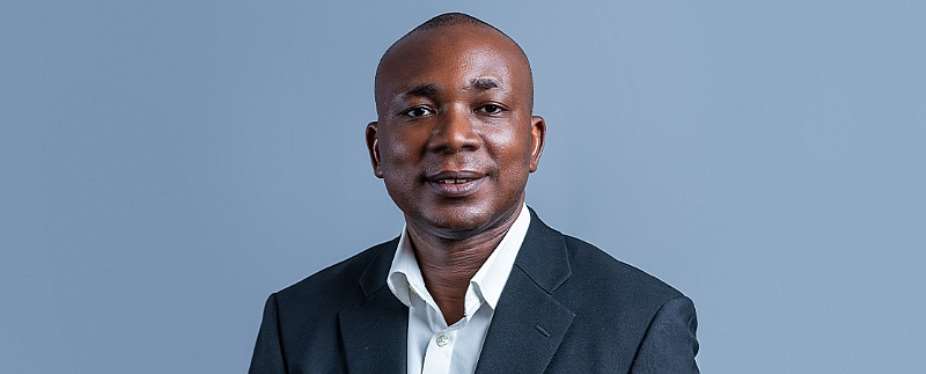
Professor Godfred Alufar Bokpin, Economist, says Ghana's International Monetary Fund (IMF)-backed reforms have failed to deliver the expected structural improvement in domestic revenue collection.
He has, therefore, recommended that the authorities improve tax administration, close loopholes in existing revenue handles, and expand the country's tax net to the informal sector, while reducing reliance on volatile commodity revenues.
Prof Bokpin said this in an interview with the Ghana News Agency on Ghana's revenue performance under the IMF programme, on the sidelines of a public financial management and fiscal decentralisation training for selected journalists on Monday.
Ghana in 2023 established the National Revenue Policy (GNRP), guided by the Medium-Term Revenue Strategy (MTRS) to close its tax-to-GDP ratio, which the Ministry of Finance noted has remained at around 12-14 per cent since 2015.
While the just-ended US$3 billion IMF-loan-supported programme was to help bridge the gap, the professor of Finance at the University of Ghana Business School (UGBS) noted that the country tax-to-GDP has averaged 14 per cent during the implementation period.
Again, revenue measures were expected to help generate about GHS268.1bn by the end of the year, the first-quarter results released by the Ministry of Finance showed that GHS57.53bn had been mobilised, which was slightly below the target.
Prof Bokpin explained that the domestic revenue performing below the expectations, implied that reforms had not meaningfully strengthened the revenue base despite years of IMF-guided policy changes.
He said the development meant that with all the IMF-inspired reforms, Ghana's revenue envelope had not improved significantly, adding that, “we have gold-backed foreign exchange sitting with a central bank, therefore, we are not exposed to foreign exchange fluctuations, but Ghana needs money.”
Prof Bokpin raised concerns about regime changes that affected not only businesses but the country's tax revenue, noting that any time government changed, some businesses were classified as inactive until their party came to power.
“Businesses rise and fall with politics, but we must move away from that. A stable, growing indigenous business base from micro to small to medium to large is the only way to sustainably widen the tax net. If businesses are constantly collapsing due to politics, the tax base can't grow,” the Economist explained.
Meanwhile, Dr Cassiel Ato Baah Forson, the Minister of Finance, during the mid-year budget review presentation, last month, said domestic revenue reached 7.7 per cent of GDP by June 2026, compared to the target of 7.8 per cent of GDP.
He acknowledged that better policy, stronger compliance and smarter administration would always deliver more sustainable revenue than higher taxes.
He cited the introduction of AI-powered customs reforms that have resulted in Customs revenue increasing by approximately 15 per cent.
GNA
 Minority calls for NSA boss Ampofo Ankrah, others to be dismissed over alleged 2...
 ‘You gave us GH¢60,000 to run 66 offices nationwide and expect us to function?’ ...
 NPP demands release of Techiman nurse Salomey Bafoh arrested over alleged links ...
 Security agencies will not chase citizens over insults under my presidency – Baw...
 Bawumia calls for release of Techiman nurse remanded for wanted ‘Ghana Jollof’
 Russia seizes assets of Swiss food giant Nestle and three French firms
 Russia votes in parliamentary election as war in Ukraine drags on
 Early voting begins in US midterms that could see Republicans lose control of Co...
 US approves $24.3 billion sale of 48 F-35 warplanes to Saudi Arabia
 Nestlé to face retrial over illegal dumping near French bottled water plants


