




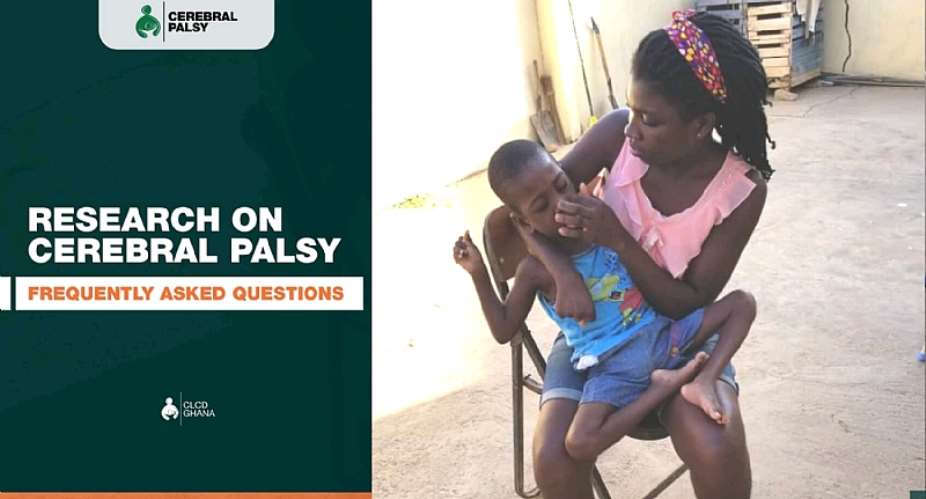
Cerebral Palsy (CP) is the most common chronic physical disability affecting children worldwide. It is a lifelong, non-progressive disorder of movement and posture caused by damage to the developing brain before, during, or shortly after birth. Although the brain injury does not worsen over time, its effects can significantly impact mobility, communication, learning, and independence throughout life.
In Ghana, Cerebral Palsy remains one of the country's least understood childhood disabilities. Limited national data, shortages of rehabilitation professionals, inadequate support services, and persistent social stigma continue to place enormous burdens on affected children and their families. Yet emerging research and community-based interventions provide hope that the situation can improve with the right investments and policies.
Ghana currently has no official national prevalence statistics for Cerebral Palsy. However, estimates by Cerebral Palsy Africa suggest that approximately one in every 300 children born in Ghana lives with the condition. This indicates that thousands of Ghanaian families are affected. Recognizing the need for reliable data, Ghana established its first institution-based Ghana Cerebral Palsy Register (GCPR) in 2018. Between October 2018 and February 2020, the register enrolled 455 children and revealed several important findings.
The average age of diagnosis was 22.2 months, considerably later than recommended, reducing opportunities for early intervention. More than half (52%) of the children were born prematurely, while 21.1% had low birth weight—both well-established risk factors for Cerebral Palsy. The register also showed that 60.5% of children had severe motor impairments requiring substantial assistance, while over 70% experienced additional disabilities such as epilepsy, cognitive impairment, speech difficulties, or visual problems. These findings demonstrate that Cerebral Palsy in Ghana is often diagnosed late and frequently presents with complex health challenges requiring multidisciplinary care.
For many Ghanaian families, caring for a child with Cerebral Palsy is physically demanding, emotionally exhausting, and financially overwhelming. Rehabilitation services remain critically inadequate. Ghana has only a small number of physiotherapists relative to its population, while occupational therapy is still a developing profession. Many district health facilities and Community-based Health Planning and Services (CHPS) compounds do not provide rehabilitation services. As a result, approximately one in five children registered in the Ghana Cerebral Palsy Register had never received any form of rehabilitation therapy. Without early physiotherapy, occupational therapy, speech therapy, and nutritional support, many children lose valuable opportunities to maximize their functional abilities.
Children with Cerebral Palsy are particularly vulnerable to illness and malnutrition. Research indicates that nearly 67% experienced serious illnesses within a one-year period, while approximately two-thirds were underweight. Feeding difficulties, recurrent infections, and limited access to specialized healthcare contribute significantly to these poor health outcomes. Improving nutrition and preventive healthcare must therefore become central components of Cerebral Palsy management in Ghana.
The economic burden on families is immense. Studies involving caregivers reveal that 88% urgently need financial assistance, 81% require assistive devices such as wheelchairs and supportive seating, 76% desire recreational opportunities for their children, and 73% need counselling and psychological support. Alarmingly, 97% report receiving no social welfare assistance, while more than half of the affected households survive on less than GH₵1,000 per month. These figures illustrate how disability often compounds poverty, trapping families in cycles of financial hardship.
Beyond the medical and financial challenges, many families also face discrimination and social exclusion. Some communities continue to associate disability with superstition or spiritual causes. Mothers, who constitute approximately 82% of primary caregivers, frequently experience emotional distress, social isolation, and physical exhaustion. Many rely on their faith and religious communities as important sources of strength and resilience. Unfortunately, stigma also discourages healthcare professionals from specializing in disability care, further limiting access to qualified services.
Education remains another major challenge. Nearly 70% of school-aged children captured in the Ghana Cerebral Palsy Register were not enrolled in school. Many educational institutions lack accessible infrastructure, trained teachers, assistive technologies, and inclusive learning environments that enable children with disabilities to thrive. Ensuring that every child has access to quality education must remain a national priority.
Despite these challenges, encouraging progress is being made through community-based interventions. The "Getting to Know Cerebral Palsy" (GTKCP) programme, implemented by the International Centre for Evidence in Disability (ICED), has demonstrated the value of equipping parents with practical caregiving skills. Over an eleven-month period, caregivers received training in feeding, positioning, communication, and home-based care. Participants reported significant improvements in their confidence, quality of life, and ability to care for their children. The programme clearly demonstrates that empowering families can substantially improve outcomes, even where specialist rehabilitation services remain limited.
Experts continue to advocate for earlier diagnosis and intervention, expansion of the Ghana Cerebral Palsy Register, increased investment in rehabilitation professionals, wider access to assistive devices, stronger community-based rehabilitation services, inclusive education, improved caregiver support, and sustained public education to eliminate stigma. These measures are essential if Ghana is to build a more inclusive health and social care system.
Cerebral Palsy is not a rare condition in Ghana, yet it remains significantly under-recognized and under-resourced. Thousands of families shoulder enormous responsibilities with limited support, while many children are denied opportunities to reach their full potential. The evidence is clear that with early intervention, caregiver education, stronger rehabilitation services, inclusive schools, and supportive national policies, children living with Cerebral Palsy can lead healthier, more productive, and more fulfilling lives. Building a Ghana that truly leaves no one behind requires recognizing that every child, regardless of ability, deserves access to quality healthcare, education, dignity, opportunity, and hope.


 Dennis Miracles Aboagye's Family Land Defence: Stewardship or Personal Enrichmen...
 FIFA vows to proceed with private investor plan consultation as opposition sprea...
 Almost 50,000 migrants crossed Morocco-Ceuta border over past 24 hours
 What we know about the Hamas disarmament deal announced by Trump
 AI safety scare: Anthropic says Claude models accessed outside systems during te...
 Pakistan says US-Iran talks still alive despite fresh wave of US strikes
 Bekwai residents give Chinese quarry company one week ultimatum to address envir...
 Sedina Tamakloe’s acquittal sets a dangerous precedent in Ghana — Former Deputy ...
 Blows in CLOGSAG over disqualification of Oti regional chairmanship aspirant
 Attorney-General seeks stay of Court of Appeal ruling acquitting Sedina Tamakloe

