




The Commission on Human Rights and Administrative Justice (CHRAJ) is urging Ghanaians to challenge human rights violations in court, saying a single successful case can shift mindsets and compel institutions to uphold the law.
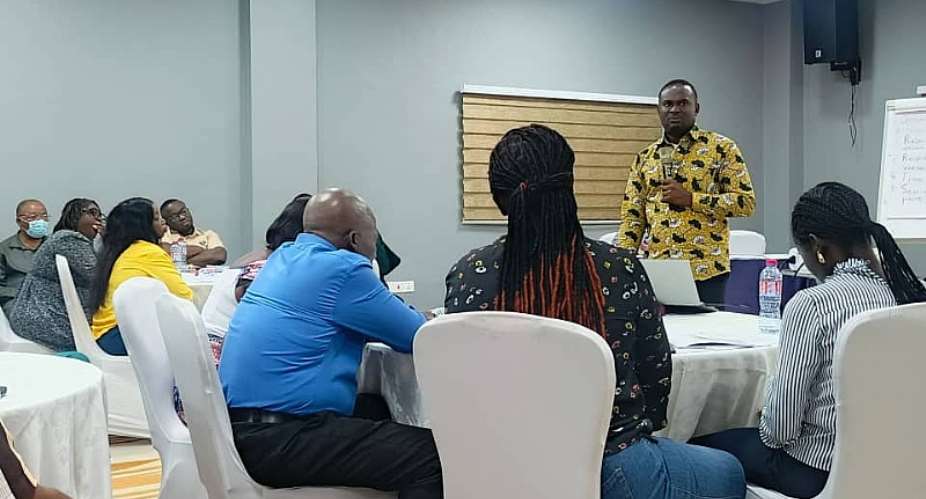
The call was made during a sensitisation workshop on Gender and Children's Rights in the Digital Space, held by the German Development Cooperation (GIZ Ghana), in partnership with CHRAJ and the National Commission for Civic Education (NCCE).
It was on the “Support to Human Rights, Gender Equality and Civil Society Project – (SHE),” aimed at sharing information on gender-transformative approaches to addressing discrimination, maltreatment and injustice faced by men, women, children and other vulnerable groups.
The workshop which sought to strengthen collaboration and coordination among key partners in the Ho community and its environs in advocacy efforts to end abuse and discrimination, drew participants from representatives of Persons with Disability (PWDs), civil society organisations, organised groups, religious leaders and officials from key state institutions.
Mr Ambrose Cori, the Legal Officer at CHRAJ who facilitated a session on “Human Rights and Gender,” encouraged participants to report abuses to appropriate state institutions, as that was the way to ensure the state's promotion and protection of their rights and freedoms.
After hearing painful testimonies of human rights violations and in particular, a job discrimination against a participant who is a PWD, he urged Ghanaians to stop tolerating abuses and seek legal redress. 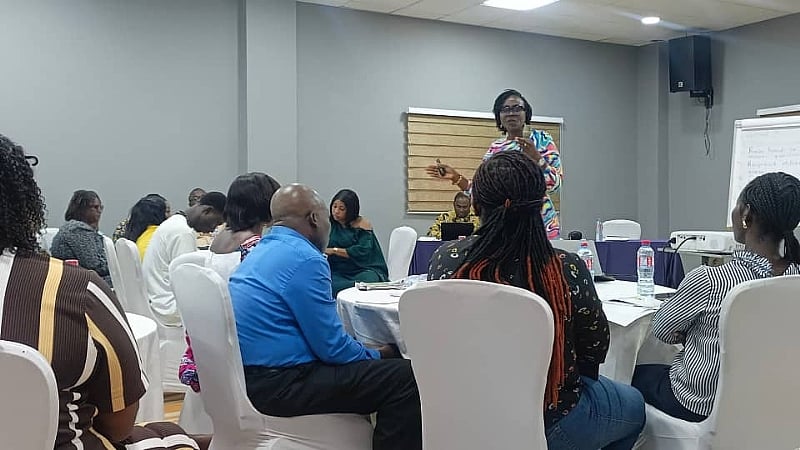
The participant recounted how, after excelling in an interview for an account officer position years ago, he was called back only to be told he could not be hired because he used a wheelchair.
“The officer bemoaned his inability to hire me even though I did extremely well. He said his organisation, a private-owned company, did not permit it.”
Mr Cori said the participant should have reported that violation to any state institution like CHRAJ, describing the incident as a clear violation of the 1992 Constitution, which guaranteed the right to work, fair wages, and safe working environments for all persons, regardless of disability.
“We need to change the narrative. We need to access our rights. Typical Ghanaians don't take human rights issues to court. It takes just one case to change narratives,” he said.
He said “denying jobs to PWDs is unconstitutional” and, ironically, “many employers are unaware that government provides tax incentives for organisations that employ PWDs,” a policy intended to promote inclusive hiring.
Mrs Joy Anima Debrah, the Deputy Director, Public Education, CHRAJ, facilitating on Gender Equality and Transformative Approaches, called for adoption of a more comprehensive approach to social justice, development and support, taking into account intersecting factors that could shape a person's experiences of discrimination, vulnerability or privilege.
On Sexual and Gender-based Violence (SGBV), Mr Abdul-Fatawu Mahama, the Tamale Metropolitan Director, NCCE urged stakeholders to tackle negative social and gender norms and harmful practices for a gender equal society and to also adopt a survivor-centred approach and apply the law “when there is abuse.”
Some participants who spoke to Ghana News Agency said they felt empowered to speak up, document abuses, and use existing legal and institutional channels to seek redress.
GNA

 Bekwai residents give Chinese quarry company one week ultimatum to address envir...
 Sedina Tamakloe’s acquittal sets a dangerous precedent in Ghana — Former Deputy ...
 Blows in CLOGSAG over disqualification of Oti regional chairmanship aspirant
 Government approves taxation of President’s salary and allowances but rejects ta...
 Parliament approves 20-year concession for nationwide electronic road tolling
 Attorney-General seeks stay of Court of Appeal ruling acquitting Sedina Tamakloe
 Mahama hosts state dinner in honour of President Nguema
 Sedina Tamakloe's acquittal 'travesty of justice and evidence of politicised jus...

