




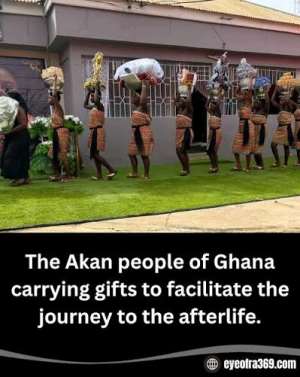
Across many Akan communities in southern Ghana, funerals have long been more than ceremonies marking the end of life. They are sacred occasions that honour the deceased, comfort the bereaved, strengthen family bonds, and reaffirm the cultural values that define society. Today, however, many people are asking whether these traditions are gradually losing their original purpose.
What was once a solemn rite of passage has, in many instances, evolved into a public spectacle characterised by extravagant displays, intense competition, and, at times, bitter disputes. Choreographed pallbearers, elaborate custom-designed coffins, street processions carrying caskets, paid mourners, and increasingly commercial funeral services have transformed many funerals into elaborate productions. While these innovations may reflect changing tastes, they also raise an important question: are we preserving our traditions, or replacing them with performances?
The growing commercialisation of funerals presents an even greater concern. Bereaved families are increasingly confronted with disputes over who has the authority to control funeral arrangements and the custody of the deceased. Conflicts among relatives sometimes delay burials, while negotiations over funeral rights can become financially and emotionally draining. In some cases, allegations of extortion and financial demands emerge before a body can be released or buried.
Such practices stand in sharp contrast to the traditional Akan approach to mourning. Historically, funerals were community-centred events guided by elders and governed by well-established customs. The emphasis was on honouring the departed, supporting grieving families, and preserving harmony within the community. Dignity, respect, and collective responsibility were the guiding principles.
Recent public funerals involving prominent personalities, including the late Daasebre Gyamenah and highlife legend Daddy Lumba, have brought these issues into sharper focus. The public disagreements and media attention surrounding aspects of their funeral arrangements exposed weaknesses in the current system and highlighted the need for clearer cultural guidance. When the funerals of respected national figures become subjects of public controversy, it is a signal that existing practices deserve thoughtful review.
This does not suggest that Akan culture should be abandoned or diminished. On the contrary, Akan traditions remain among Ghana's richest cultural treasures. Our proverbs, dirges, libation rituals, communal solidarity, and reverence for ancestors continue to provide moral and spiritual meaning to the funeral process. The objective should not be to eliminate tradition but to preserve its dignity and ensure that it serves its original purpose.
The responsibility for leading such a conversation naturally rests with the custodians of Akan culture. Paramount Chiefs, Queen Mothers, and traditional councils possess both the authority and legitimacy to guide their communities on matters affecting cultural heritage. Leaders such as His Majesty Otumfuo Osei Tutu II, the Asantehene, Osagyefuo Amoatia Ofori Panin, the Okyehene, and other respected traditional rulers have consistently demonstrated their ability to provide leadership on issues of governance, land administration, chieftaincy, and social order. Funeral practices deserve similar attention.
A comprehensive review led by the National and Regional Houses of Chiefs, in collaboration with families, religious bodies, legal experts, and funeral service providers, could help restore balance between tradition and modern practice. Such a review could establish appropriate standards of decorum regarding public conduct, music, and ceremonial displays; clarify authority over funeral arrangements to reduce family disputes; introduce ethical standards for commercial funeral services to prevent exploitation of grieving families; and promote public education on the Akan principle of nbra pa—good character—even in times of mourning.
The purpose would not be to suppress individual expression or cultural evolution. Rather, it would be to ensure that funerals remain occasions of reverence rather than competition, and of healing rather than conflict.
Death remains life's greatest equaliser. Regardless of wealth, influence, or social status, every individual eventually returns to the ancestors. If funerals become contests of extravagance or struggles for control over the deceased, society risks losing the very values these ceremonies were intended to uphold.
The time has come for Ghana's traditional leaders to initiate a thoughtful national conversation on the future of Akan funeral practices. Such leadership would not seek to erase culture but to protect it; not to regulate grief but to preserve its dignity.
For the way a society buries its dead reflects the values by which its people choose to live.


 'Ghana Airways will be back in the air before I leave office' — Ghana's Presiden...
 'You can’t make money in journalism' — Speaker Bagbin
 GES sets November 16 date for payment of 2025 promotion arrears
 Wontumi’s lawyers seek recall of prosecution witness in illegal mining case
 Minority urges independent audit of GHS49.7m South Africa evacuation
 Some prison inmates attempted to poison Wontumi – Palgrave
 NACOC Boss reveals how 'smart' suspected drug traffickers are diverting proceeds...
 Minerals Commission defends termination of Northern Ashanti Mines lease over US$...
 Northern Ashanti Mines says moves to reassign disputed concession began before l...
 Ablakwa will be prosecuted in 2029 under Bawumia – Kwadwo Poku warns


