




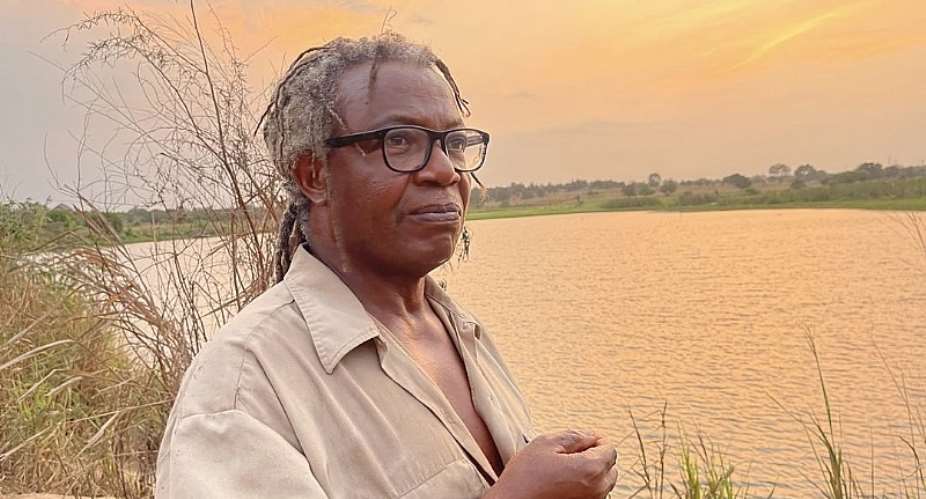
Today, we will leave geopolitics and Pan-Africanism aside and pick up the thread of the series: The Heroes That Molded Me.
The world has witnessed intellectual giants who shaped history; other men challenge tyranny. And then there were rare firebrands who combined both.
They were armed not with guns but with the blazing power of ideas generated by their superior intellect.
Without a doubt, Thomas Paine was such a man.
He was not just a writer or thinker but a revolutionary spirit who, with his eloquent and well-articulated words, set empires trembling.
Paine’s words thundered; they scorched as they ripped apart the veils of oppression and hypocrisy that kings, priests, and powerful elites draped over the eyes of the people.
Thomas Paine refused to be a passive observer of history. He chose instead to become its Agitator-In-Chief, a man who, through sheer intellectual force, helped reshape the world and freed the minds of millions from the tyranny of both the Cross and the Crown.
My discovery of Paine was like being struck by intellectual lightning; it illuminated my life.
I never look back. Paine’s words did not merely inform; they provoked and demanded that I think.
In a world suffocating under the weight of intellectual and moral cowardice, where most thinkers tiptoe around hard truths, Paine was a towering reminder that the pen is mightier than a sword and must be wielded without fear.
I learned from him.
The tragedy of our beautiful continent is not merely the poverty of the purse, but the far more insidious poverty of the mind.
Our African minds are crippled by fear. We are afraid of our mis-rulers as we are afraid of phantoms and goblins of the sky.
Fela sang about how Africans have become paralyzed by fear in his “Sorrow, Tears, and Blood.”
A class of shameless comprador elite governs us, men and women whose loyalty is not to the soil beneath their feet but to the foreign capitals that lubricate and guarantee their avarice.
Africa’s plantation managers speak of sovereignty with a straight face while their children are educated in the very capitals that dictate our neocolonial economic policy.
The reprobates misruling us are the local managers of our collective misery, and their power rests on a single, fragile foundation: the tyranny of the unquestioned mind.
These hopeless money-miss-roads, the architects of our intellectual castration, understand a fundamental truth: a populace armed with critical, data-driven, scientific thought will not tolerate their grotesque display of ill-gotten wealth.
Their deliberate policy is to keep the people in a state of perpetual ignorance, a condition that allows them to rule without fear of accountability.
That's why they fund the churches and the mosques, not the laboratories and the libraries.
That explains why they promote prosperity-gospel preachers rather than professors of physics.
They are not stupid; they know that a mind shackled by unquestioned belief is a mind that will never question the source of their suffering.
It is into this darkness that the intellectual lightning of Thomas Paine struck my soul, illuminating the path to true liberation from which I would never look back.
My discovery of Paine was not a gentle introduction to political philosophy; it was a violent, necessary awakening.
His words did not merely inform; they provoked and demanded that I think.
Paine’s genius was his refusal to separate political tyranny from intellectual tyranny. He understood that the two are symbiotic, feeding off the same well of human credulity.
His work, Common Sense, exposed the absurdity of hereditary monarchy, a system propped up by superstition and brute force.
He shattered the centuries-old illusion that kings were divinely ordained to rule, declaring with a bluntness that still rings true: “For monarchy in every instance is the popery of government.”
If monarchy is the popery of government, then our modern, post-colonial governments, ruled by a self-perpetuating, unaccountable elite, are nothing less than a new form of political papacy.
Our comprador class is a body of men and women accountable only to the foreign capital that installed them and the avarice that drives them.
Nobody of sound mind trusts them, yet they rule because they have perfected the art of intellectual subjugation.
Paine’s words are a direct challenge to their legitimacy: “A body of men holding themselves accountable to nobody ought not to be trusted by anybody.”
But the true, revolutionary fire that forged my intellectual independence came from Paine’s most famous and controversial work, The Age of Reason.
This was not a book of political theory; it was a manifesto for intellectual sovereignty, a declaration of war against the tyranny and oppression of the mind.
Paine turned his fire against religious dogma, against the institutions that claimed to speak for the divine while feeding off the people’s ignorance.
He saw through the grand deception and the charade: the churches, the priests, the holy men, all manipulating faith to serve their own ends.
His famous declaration, “My own mind is my own church,” is not a statement of mere atheism or deism; it is the ultimate assertion of self-ownership.
It is the demand that the individual’s capacity for reason be the final arbiter of truth, not ancient texts, not self-appointed intermediaries, and certainly not the dictates of a corrupt elite.
This single sentence, “My own mind is my own church,” is the foundation of all true freedom.
Paine taught me that the shackles are often more mental than physical and that freedom is not just political but mental.
One is not free until one has freed oneself from the shackles of unquestioned belief.
The comprador elite’s power is predicated on the masses submitting to whatever is dictated to them.
Paine understood this fundamental truth, which is the very thesis of our current struggle: “Reason obeys itself, and ignorance submits to whatever is dictated to it.”
Everywhere we look, African people are still being dictated to by charlatans in designer suits and prophets in gilded pulpits.
They are told to pray away poverty instead of demanding accountability for stolen resources. They are told to accept their lot as part of divine will rather than apply scientific, data-driven thinking to address the structural problems of underdevelopment.
This deliberate cultivation of ignorance is the necessary precondition for the continuation of the comprador’s rule.
Paine’s commitment to reason was a commitment to humanity.
He saw that the moment we surrender our reason, we surrender our humanity. He saw that the moment we accept a lie for comfort, we become complicit in our own enslavement.
This is why he was so uncompromising, why the very revolution he helped to birth abandoned him. He was too honest, too radical, and too unwilling to compromise truth for comfort.
He knew that the most dangerous form of bondage is the one we do not recognize: “None are more hopelessly enslaved than those who falsely believe they are free.”
This quote is a mirror held up to our society. We celebrate a shambolic, nominal political independence while remaining intellectually, culturally and economically colonized.
We remain enslaved by the myths of our oppressors and the superstitions promoted by our local collaborators.
Africa’s comprador elite are the spiritual successors to the hypocrites Paine condemned, those who preached liberty while enslaving others.
The undying legacy of Thomas Paine is a relentless demand for justice and a call to reason.
Paine taught me that patriotism is not about unquestioning loyalty but about a relentless demand for justice.
Reason, not tradition, must be our guiding light. Like all revolutionaries, he knew freedom is never given; it is taken.
Paine did not give answers; he gave me questions that demand courage to ask and even greater courage to answer.
Through him, I have learned that to think is to rebel, to question is to fight, and to speak is to defy.
As we preach on this blog: Africans must wake up and stand forth against the political tyrant who steals our resources and the intellectual tyrant who steals our minds. We must demand that our nations be governed by reason, science, and accountability, not by the dictates of foreign masters or the superstitions of local charlatans.
We, like Paine, will never be silent.
“O ye that love mankind! Ye that dare oppose, not only the tyranny, but the tyrant, stand forth!”
Knowledge grows when it is shared. If this article made you think, don’t keep it to yourself. Forward it to a friend or use your referral link to help build a community committed to Africa’s intellectual renaissance. Every new subscriber is another voice resisting historical amnesia and reclaiming Africa’s place in the world.
©️ Ọdọ́fin Fẹ̀mi Akọ̀mọ̀làfẹ̀ (1st Dan, Ọdọ́fin I of Kasoa)
(Farmer, Writer, Published Author, Essayist, Satirist, Social Commentator, Geopolitical Analyst.)

 Gov't to hold state funeral for former Foreign Affairs Minister James Victor Gbe...
 Judiciary to roll out electronic court processes from October – Chief Justice ...
 Supreme Court explains why OSP can prosecute but A-G can discontinue any prosecu...
 Ghanaian jailed in US for role in $100 million romance scam
 'A very good day for accountability' — Prof Azar on Supreme Court ruling upholdi...
 Supreme Court upholds OSP’s prosecutorial powers, affirms AG’s authority to disc...
 Supreme Court abolishes delegate system for presidential and parliamentary prima...
 2026 budget is Ghana's worst performing since 2016 — Abu Jinapor
 July 29: Cedi sells at GHS12.30 on forex market, GHS11.67 on BoG interbank
 Government underfunding healthcare, putting lives at risk — Minority

