




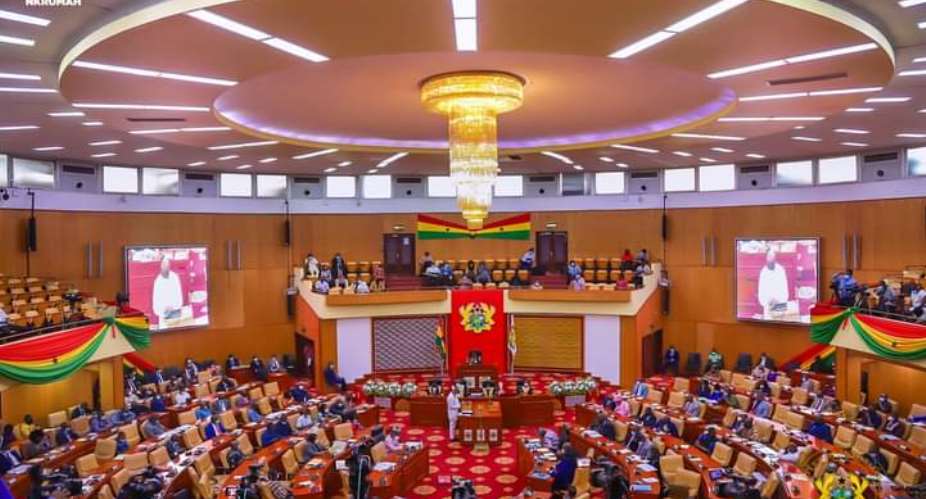
Parliament of Ghana has passed the Income Tax (Amendment) Bill, 2026, paving the way for the National Daily Minimum Wage to be exempt from income tax while simplifying tax compliance for micro and small businesses.
The legislation amends the Income Tax Act, 2015 (Act 896) by revising personal income tax rates, exempting the National Daily Minimum Wage from income tax and aligning the turnover threshold for the presumptive tax regime with the Value Added Tax (VAT) registration threshold.
The Bill was introduced in Parliament on July 23, 2026, on behalf of the Minister for Finance by the Minister for Roads and Highways, Kwame Governs Agbodza, before being referred to the Finance Committee for consideration.
According to the committee’s report, exempting the National Daily Minimum Wage from income tax is intended to support low-income workers by increasing their disposable income as part of the government’s social protection agenda.
“The Committee observed that exempting the National Daily Minimum Wage from income tax would provide meaningful tax relief to low-income earners and enhance the progressivity of Ghana’s personal income tax system,” the report said.
It added that the measure would ensure Ghana’s personal income tax system better reflects prevailing economic conditions by preventing workers from moving into higher tax brackets solely because of wage adjustments and inflation, without corresponding gains in their purchasing power.
The amendment also revises the turnover threshold for the presumptive tax regime from GH¢200,000 to GH¢750,000, bringing it into line with the VAT registration threshold following recent changes to the VAT Act.
The Finance Committee said the previous mismatch between the two thresholds had created inconsistencies in tax administration and compliance for small businesses.
It noted that harmonising the thresholds would simplify tax compliance for micro and small enterprises and improve the efficiency of tax administration.
“The Committee observed that aligning the presumptive tax turnover threshold with the Value Added Tax registration threshold would eliminate inconsistencies within the tax system, simplify compliance requirements for micro and small enterprises and improve the efficiency of tax administration,” the report stated.
Under the presumptive tax regime, qualifying resident individuals, particularly those operating small businesses in the informal sector, are assessed using a simplified method based on turnover rather than detailed profit calculations.
The committee said increasing the maximum turnover threshold would enable more small businesses to remain under the simplified tax system instead of transitioning to the standard profit-based income tax regime, reducing compliance costs and encouraging tax registration.
After examining the Bill, the Finance Committee concluded that its provisions were sufficient to achieve the intended objectives and recommended its passage without any amendments.
The committee said the legislation would strengthen Ghana’s income tax framework by providing tax relief to low-income earners, simplifying compliance for micro and small businesses and promoting fairness and efficiency in the country’s tax system.

 Gov't to hold state funeral for former Foreign Affairs Minister James Victor Gbe...
 Judiciary to roll out electronic court processes from October – Chief Justice ...
 Supreme Court explains why OSP can prosecute but A-G can discontinue any prosecu...
 Ghanaian jailed in US for role in $100 million romance scam
 'A very good day for accountability' — Prof Azar on Supreme Court ruling upholdi...
 Supreme Court upholds OSP’s prosecutorial powers, affirms AG’s authority to disc...
 Supreme Court abolishes delegate system for presidential and parliamentary prima...
 2026 budget is Ghana's worst performing since 2016 — Abu Jinapor
 July 29: Cedi sells at GHS12.30 on forex market, GHS11.67 on BoG interbank
 Government underfunding healthcare, putting lives at risk — Minority

