




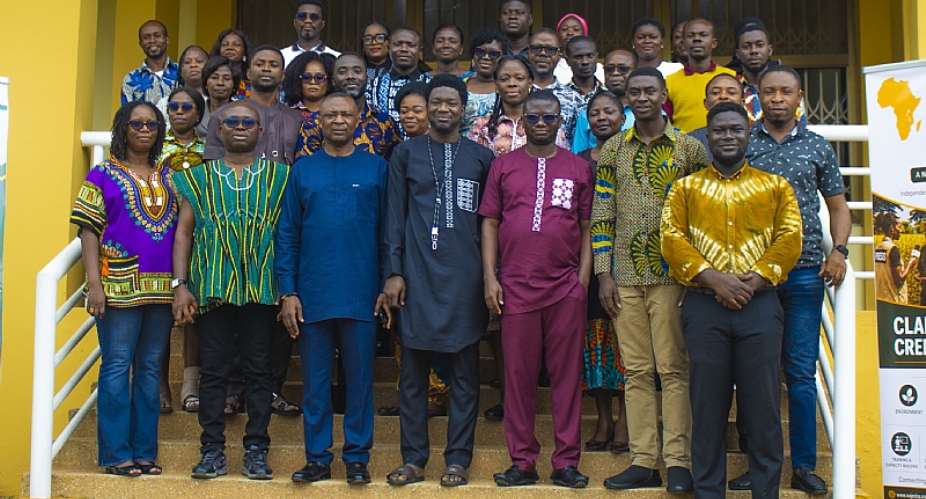
Researchers at the University of Skills Training and Entrepreneurial Development (USTED) in Kumasi have undergone a training programme aimed at helping them communicate their academic work to the ordinary people it is meant to benefit, rather than leaving it locked away in journals few can access.
The training, organised by USTED in partnership with the West African Journalists for Environment, Science, Health and Agriculture (WAJESHA), brought together researchers, lecturers and university administrators to learn how to turn academic findings into stories for newspapers, radio, television and digital media—using language ordinary people can follow.
Opening the workshop, USTED’s Pro Vice‑Chancellor, Professor Isaac Boateng, said research should be judged not only by publications and citations but by the difference it makes in society. “Research that is not communicated effectively is knowledge in prison,” he said, urging researchers to build communication into the research process itself rather than treating it as an afterthought.
“Do not measure success only by publication. Measure success by transformation. Do not ask merely, ‘Was my paper published?’ Ask, ‘Whose life changed because of my research?’” he told participants.
Dr Christopher Owusu‑Ansah, Chairman of USTED’s Publication Board, said the workshop was a response to a challenge facing universities across Africa and the wider Global South, where much important research ends up published in international journals that many citizens cannot reach. “The research that is done is buried behind paywalls,” he said, adding that since much university research is funded by taxpayers, it should be communicated in ways that support better policies, national development and public understanding.
To close that gap, USTED partnered with WAJESHA, a regional network of journalists working to strengthen reporting on environment, science, health and agriculture across West Africa. Drawing on newsroom experience, the WAJESHA team showed researchers how to turn their findings into accurate and accessible stories without losing scientific rigour.
The training was built around three practical masterclasses. WAJESHA’s New Media Editor, Daniel Abugri, introduced participants to the principles of news and how to spot the public value in academic research. “A study becomes news when people can see how it affects their lives,” he said.
WAJESHA’s Director, Engr. Mahmud Mohammed‑Nurudeen, led the second session, guiding participants on writing research in a style journalists can understand and publish. “Researchers often write excellent studies but fail to explain why their findings matter to ordinary people,” he said.
The final session focused on adapting research for television, radio and digital platforms, and was facilitated by Mohammed‑Nurudeen, Abugri and independent film producer Afrifa Smith Charles, who noted that research has to be reshaped to fit different platforms. “A three‑minute video story demands a different approach from a 30‑page journal article,” he said.
Together, the sessions walked participants through the full process of research communication—from identifying the news value in a study, to writing it in plain language, to presenting it through broadcast and digital storytelling.
Participants said the training reshaped how they think about sharing their work. Dr Daniel Nimo, of USTED’s Department of Interdisciplinary Studies, said the workshop had shown him how to present research findings as stories anyone could read and understand. Engr. Anna Amankwah Minkah, a lecturer in USTED’s Civil Engineering Department, said it had underlined the need for researchers to communicate in ways society can easily grasp.
The workshop closed with a WAJESHA Capstone Newsroom Simulation, giving participants a chance to put their new skills into practice.
The training is part of WAJESHA’s broader push to strengthen science and research communication across Africa, helping universities and research institutions share evidence in ways that inform the public, improve journalism and support better policymaking. As African universities continue investing in research, WAJESHA says the next challenge is ensuring that knowledge actually reaches the people it is meant to serve.
WAJESHA is a non‑profit journalism project of the Centre for Climate Change and Food Security (CCCFS), working with journalists, researchers, universities and development partners to improve reporting on environment, climate change, science, health, agriculture and sustainable development across West Africa.

 ‘We will invoke our unforgiving gods to deal with you’ – Atronie chiefs warn gal...
 272 Ghanaians lured into Russia-Ukraine war, 55 killed – Foreign Minister announ...
 Importers demand action against shipping lines for defying GH¢720 container fee ...
 'Wontumi went overboard, forgive and grant him clemency' — Spokesperson begs Mah...
 Transport unions, Transport Ministry to meet over proposed 30% fare hike
 Ghana probes reported recruitment of nationals into Russia-Ukraine war
 'IMF exit a result of collective efforts, not single event' — Egyapa Mercer
 Minerals Commission orders Earl Group, Small-Scale Miner to halt operations in G...
 GMet forecasts fog, cloudy weather, morning mist and afternoon thunderstorms acr...
 IMF approves final review of $3bn bailout as Ghana completes programme

