




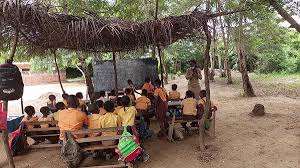
Ghana’s education sector currently presents a striking paradox. On one hand, hundreds of graduate, professionally trained teachers walk the streets without employment. On the other hand, numerous private schools across the country rely on untrained personnel, often high school dropouts or uncertified instructors, while several rural public schools suffer from acute staffing deficits.
At a time when global economies are being reshaped by technology and innovation, this disconnect raises urgent questions about policy alignment, labor planning, and the future direction of the Ministry of Education.
Closing the Gap: A Public-Private Partnership for Teacher Deployment
The current disconnect between teacher surplus and classroom vacancies calls for innovative policy intervention rather than passive observation. A key proposal worth exploring is a strategic public-private deployment framework.
Under a structured arrangement, the government could post trained teachers to private educational institutions that lack qualified staff. In return, participating private schools could contribute a subsidized payroll fee or a targeted educational tax to offset state expenditure.
Global Best Practices in Public-Private Staffing
- The French Model (Contrat d'Association): In France, the state funds and deploys certified teachers to private schools under strict contractual agreements, ensuring national educational standards are maintained uniformly across public and private sectors while reclaiming administrative oversight.
- Japan’s Private School Subsidies: Japan leverages public funds and subsidized personnel support to private institutions in exchange for compliance with national quality benchmarks and structured educational levies.
Leaving the foundation of basic education in the hands of unequipped instructors risks compounding falling academic standards. Bridging this public-private divide offers a pragmatic, win-win path forward.
Redefining the Curriculum: Preparing Teachers for the 21st Century
While fixing deployment is essential, addressing the content of teacher training is equally critical. Why continue training educators using frameworks designed for a bygone era when the global job market demands technical adaptability?
To remain competitive, Colleges of Education must transition toward a curriculum heavily integrated with Practical STEM, Technical and Vocational Education and Training (TVET), and emerging technologies. Imagine a generation of Ghanaian teachers equipped with practical knowledge in:
- Artificial Intelligence and Digital Literacy: Preparing students for an automated economy.
- Renewable Energy Systems: Installation, maintenance, and instruction in solar panel technology.
- Applied Engineering and Agriculture: Simple dam construction, drone technology for precision farming, and aquaponics/aquarium construction.
Global Best Practices in Technical Curriculum Reform
- Germany’s Dual Education System: Germany embeds practical, industrial, and technical skill sets directly into teacher training and vocational tracks, producing educators who double as technical innovators.
- Singapore’s "SkillsFuture" Framework: Singapore continuously updates its teacher training modules to align with 5-to-10-year macroeconomic forecasts, ensuring educators master digital tools and technical skills before stepping into classrooms.
By embedding these practical skills into the teacher-training pipeline, Ghana can transform its educators from traditional instructors into drivers of local innovation and economic development.
Turning Surplus into Capital: Exporting Ghana’s Professional Skillset
A nation should not view a surplus of trained professionals as a national failure, but as a strategic exportable asset. If Ghanaian teachers are trained in 21st-century technologies alongside core pedagogy, neighboring countries and international partners will actively seek out Ghanaian expertise. Converting surplus human capital into a structured labor export program would generate foreign exchange, bolster remittances, and enhance Ghana's soft power across the continent.
Lessons from Global Leaders in Professional Export
- Cuba’s Medical Internationalism: Cuba transformed its surplus of healthcare personnel into a cornerstone of foreign policy and economic revenue. Through bilateral agreements, thousands of Cuban doctors, nurses, and technicians have been posted to developing nations --- including Ghana --- providing essential health services while generating critical foreign currency for Havana.
- India’s Skill and Healthcare Workforce Export: India has systematically trained and exported doctors, nurses, and IT professionals to nations worldwide (including teachers and healthcare personnel who served in Ghana). By aligning national training programs with global standards, India turned its human capital into a major driver of international remittances and foreign direct investment.
- Egypt’s Technical Cooperation (EAPD): Through the Egyptian Agency of Partnership for Development (EAPD), Egypt regularly sends specialized doctors, university professors, and educators to other African nations ---including Ghana, to bolster local health and educational infrastructure. This structured deployment projects Egyptian diplomatic influence while expanding opportunities for its professional workforce.
If Cuba, India, and Egypt can successfully export health and educational professionals to fill international deficits, Ghana can establish a formal framework to export tech-enabled teachers, nurses, and midwives across Africa and beyond.
Decolonizing Language and Cultural Identity in Education
A forward-looking educational policy must also critically examine language priorities. While global connectivity is vital, the strategic relevance of foreign language instruction deserves careful evaluation.
For decades, French has been taught in secondary schools, yet functional fluency and economic integration with neighboring Francophone nations remain minimal for the average graduate. Introducing additional foreign languages like Chinese into basic school curricula raises a fundamental question: Does this serve immediate national development goals, or does it reflect a persistent reliance on external frameworks?
Pan-African educational reform requires prioritizing indigenous African languages and local contexts. Developing robust African linguistic frameworks fosters true regional integration, economic cohesion, and national identity far more effectively than adopting external languages without clear, targeted economic outcomes.
My Thoughts: The Imperative for Proactive Policy
The Ministry of Education and its agencies must move from reactive management to bold, long-term foresight. Training teachers and nurses without a clear strategy for deployment, modernization, or labor export is an underutilization of precious national resources.
By deploying trained teachers to private schools through creative fiscal arrangements, modernizing teacher training to reflect 21st-century technical skills, and learning from models like Cuba, India, and Egypt to export surplus labor, Ghana can lead an educational renaissance across Africa. The future belongs to nations that anticipate change --- it is time our educational system reflects that reality.
FUSEINI ABDULAI BRAIMAH
+233208282575 / +233550558008
[email protected]


 ‘We will invoke our unforgiving gods to deal with you’ – Atronie chiefs warn gal...
 272 Ghanaians lured into Russia-Ukraine war, 55 killed – Foreign Minister announ...
 Importers demand action against shipping lines for defying GH¢720 container fee ...
 'Wontumi went overboard, forgive and grant him clemency' — Spokesperson begs Mah...
 Transport unions, Transport Ministry to meet over proposed 30% fare hike
 Ghana probes reported recruitment of nationals into Russia-Ukraine war
 'IMF exit a result of collective efforts, not single event' — Egyapa Mercer
 Minerals Commission orders Earl Group, Small-Scale Miner to halt operations in G...
 GMet forecasts fog, cloudy weather, morning mist and afternoon thunderstorms acr...
 IMF approves final review of $3bn bailout as Ghana completes programme

