




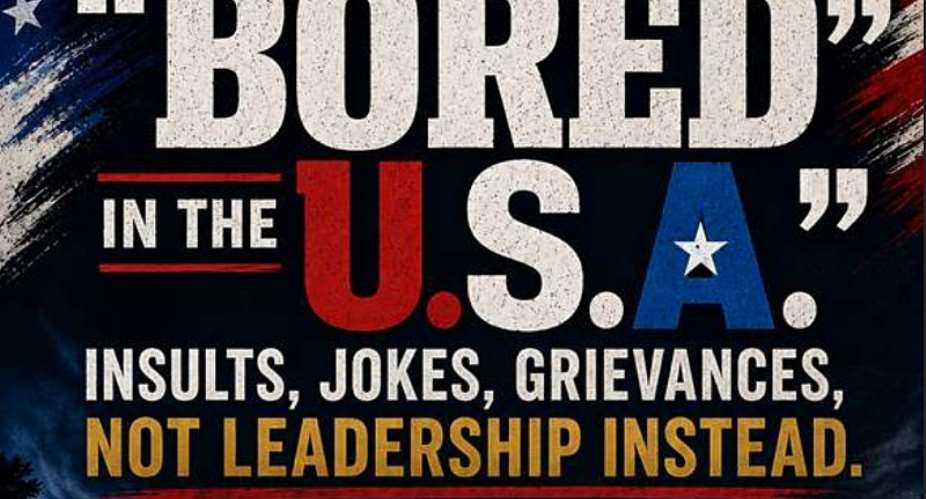
Three months after an attempted assassination shook the nation, President Donald Trump's first appearance at the White House Correspondents' Dinner presented a rare opportunity to reset the national conversation. Americans had witnessed one of the darkest moments in modern political history, and many hoped the President would use the evening to lower the political temperature, reaffirm respect for the free press, reject political violence, and remind the country that our democracy is stronger than our divisions. Instead, in my opinion, the evening became another campaign-style performance centered largely on familiar grievances, personal rivalries, and political score-settling. While the opening ten minutes showed flashes of confidence and timing, the remaining hour struggled to strike the balance between humor and leadership. The White House Correspondents' Dinner has historically challenged presidents to laugh at themselves as much as they laugh at others, yet that spirit seemed largely absent. As Proverbs 15:1 reminds us, "A gentle answer turns away wrath, but a harsh word stirs up anger." On a night when unity could have been the headline, confrontation dominated much of the stage.
Throughout the evening, President Trump repeatedly returned to many of the same figures who have long occupied his political orbit. Journalists, entertainers, political opponents, and media personalities—including Don Lemon, Bruce Springsteen, Bette Midler, Stephen Colbert, Jimmy Fallon, former Vice President Kamala Harris, Representative Alexandria Ocasio-Cortez, Senator Chuck Schumer, Governor Gavin Newsom, and others—became recurring subjects of his jokes and criticism. He again referenced what he calls "Trump Derangement Syndrome," a phrase that has become a recurring part of his political rhetoric. There is nothing inherently unusual about presidents teasing opponents during this annual event; presidents from both parties have done so. The difference is execution. Successful political comedy depends on timing, surprise, self-awareness, and memorable punchlines. Much of the humor, in my view, resembled extended political commentary more than comedy. One of the evening's more memorable moments involved a joke about Robert F. Kennedy Jr., but outside of that exchange and his renewed condemnation of political violence, many of the jokes felt repetitive and directed primarily toward audiences already inclined to agree with him. Even his mention of congressional term limits—a subject that periodically generates bipartisan discussion—received little attention before the speech returned to familiar political grievances.
Perhaps the greatest disappointment was not what President Trump said, but what he chose not to say. With the general election approaching, many Americans were looking for a broader vision of where the country is headed. Instead of hearing sustained discussion about the economy, international conflicts, government priorities, or America's role abroad, the evening frequently circled back to old political battles. The conflict involving Iran received comparatively limited attention despite its significance, and little time was devoted to outlining solutions or presenting a forward-looking national agenda. Several statements made during the evening also drew renewed scrutiny from journalists and independent fact-checkers, including recurring claims about the 2020 election, crime in Washington, D.C., immigration, and the economy. Readers should review the independent analyses published by CNN, the Associated Press, Reuters, PolitiFact, and FactCheck.org and draw their own conclusions. One observation that stood out was the characterization of Washington as nearly crime-free despite continued reports of violent crime, including recent homicides. Moments like these illustrate why independent fact-checking remains an essential part of democratic accountability.
The symbolism surrounding the evening also invited discussion. President Trump appeared wearing campaign-style "Trump 2028" merchandise, renewing public conversation about future political ambitions and constitutional questions surrounding presidential term limits. Whether intended as humor, branding, or political messaging, it became one of the night's most talked-about visuals. Ironically, one of the recurring jokes targeted former President Joe Biden's age and moments when Biden has appeared tired or closed his eyes in public. Yet there were also moments during President Trump's own remarks when television viewers could observe his eyes closing briefly while speaking. Politics often invites satire, but it also reminds us that leaders should be careful when making personal characteristics the centerpiece of comedy. Humor built around traits or moments that can just as easily be turned back on the speaker often loses its effectiveness and shifts attention away from substantive issues. Equally noteworthy were the moments after the speech when President Trump greeted and shook hands with members of the very press corps he had criticized from the podium. That contrast underscored the unusual relationship between presidents and journalists: adversaries in public discourse, yet participants in the same democratic process. Journalists have a responsibility to ask difficult questions, elected officials have the responsibility to answer them, and citizens have the responsibility to evaluate both. As Ephesians 4:29 teaches, "Let no corrupt communication proceed out of your mouth, but that which is good for edification, that it may minister grace unto the hearers." Political humor can challenge, provoke, and entertain—but it should also elevate.
Every president deserves both credit and criticism when warranted. President Trump has long demonstrated an ability to command attention, energize supporters, and dominate the national conversation. Yet this particular White House Correspondents' Dinner, in my opinion, represented a missed presidential moment. Three months removed from an act of political violence that shocked the nation, Americans deserved an evening that reflected confidence, humility, and a broader vision for the country's future. Instead, many witnessed another chapter in the nation's ongoing political polarization. History will ultimately decide whether this dinner served as a bridge toward renewed civic dialogue or simply reinforced the divisions that continue to define modern American politics. From where I sat, it felt less like a celebration of the First Amendment and more like another stop on the campaign trail—one that left too many Americans, regardless of party, simply bored in the U.S.A.
Pull Quotes
"The White House Correspondents' Dinner should challenge presidents to laugh at themselves as much as they laugh at others."
"Three months after political violence shocked the nation, America needed a statesman. Instead, it received another campaign rally."
"When personal grievances overshadow public vision, the opportunity to unite the country quietly slips away."
Suggested Sources
- CNN — White House Correspondents' Dinner live coverage
- Associated Press — Coverage and reaction to the White House Correspondents' Dinner
- Reuters — Analysis of President Trump's remarks
- PolitiFact — Fact-checks related to claims made during the speech
- FactCheck.org — Independent review of factual assertions
About the Author
Edmond W. Davis is a social historian, media strategist, professor, and documentary host. He is the founder of the National HBCU Black Wall Street Career Fest. A native of Philadelphia, Pennsylvania, Davis, his wife, Monica, and their son reside in the Little Rock, Arkansas, area. Through his journalism, scholarship, and public engagement, Davis is committed to advancing cultural empowerment, historical literacy, educational equity, and civic dialogue. In 2026, he served as a Grand Marshal of the 38th Annual African American History Month Celebration Parade, recognized as the largest African American History Month parade in the United States.

 'If we were wrong, we must first apologise to NPP' – Mustapha Gbande on National...
 Han SHS to get boarding status as Mahama inspects GETFund projects in Upper West
 Late herbal doctor’s wife granted GH¢100,000 bail amid poisoning, arson claims
 NDC has failed to deliver on Agenda 1-3-3 for 24-hour economy – Sam Pyne
 Wa-Bolgatanga trunk road to be asphalted – Mahama
 Gbewaa College of Education lecturer dies after alleged military assault in Pusi...
 Ghana won’t back down on mining value addition – Ambassador Kojo Bonsu
 How Dr Jesse Amuah, wife was murdered over GH¢1,500 payment dispute
 Mahama announces 20% salary incentive for health workers in deprived areas
 Ghana must move from plastic policies to implementation – EPA CEO


