




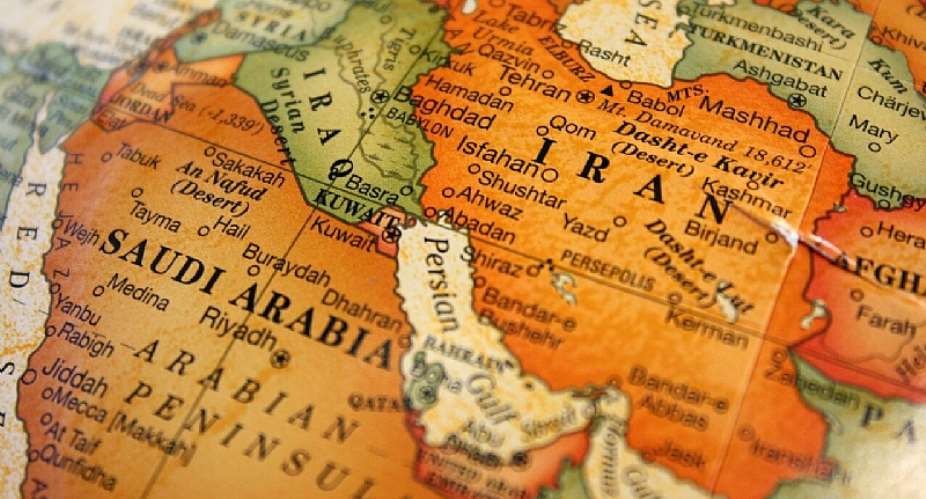
As the Middle East war enters another dangerous phase, satellite imagery and open-source assessments have reignited debate over the effectiveness of Iran's retaliatory strikes on American military facilities. Reports suggest that several targets were struck with notable precision, raising questions about Iran's evolving missile and drone capabilities and the sophistication of its targeting systems. One lesson appears increasingly clear: wars may be started by political choice, but they rarely end by political will alone.
To understand where this conflict is heading, one must dissect the calculations of the region's principal players.
The first and perhaps most influential actor is Saudi Crown Prince Mohammed bin Salman (MBS). Since assuming power in 2015, relations between Riyadh and Washington have transformed from a traditional security partnership into a strategic alliance built on mutual interests. As the conflict intensifies, Saudi Arabia seeks not only security guarantees but also long-term strategic autonomy.
Reports of a possible US-backed Saudi civilian nuclear program, including discussions surrounding uranium enrichment, have raised significant geopolitical questions. If such a framework materializes, it would mark a departure from previous American policy. In 2009, the United Arab Emirates accepted a civilian nuclear agreement without domestic uranium enrichment. Why would Saudi Arabia receive greater flexibility today? One explanation may lie in the changing regional landscape. Riyadh's gradual engagement with Israel through the Abraham Accords framework and its shared concern over Iran have altered strategic calculations in Washington and Tel Aviv.
Yet Saudi Arabia also faces an immediate vulnerability. Nearly four million barrels of oil move daily through routes that could be severely disrupted if the Houthis successfully threaten the Bab el-Mandeb Strait. From Riyadh's perspective, neutralizing the Houthis has become as much an economic necessity as a military objective.
The second major player is Iran. Militarily and diplomatically, Tehran has demonstrated resilience despite sustained pressure. Its strategy appears based on calibrated escalation: responding proportionately to attacks while maintaining leverage through its regional partners. The Houthis have emerged as one of Iran's most effective pressure points, creating uncertainty over global energy routes and increasing costs for both Saudi Arabia and the United States.
Iran's objectives remain consistent: preserve national sovereignty, secure sanctions relief through negotiations, maintain its regional influence, and protect what it considers its legitimate nuclear rights. However, Tehran also faces serious domestic challenges. Economic hardship, public dissatisfaction, and diplomatic isolation have reduced its room for manoeuvre. While Iran projects confidence abroad, internal pressures suggest that it too seeks a negotiated settlement—provided it does not appear to compromise its strategic interests. Ultimately, this has become a contest of endurance: who blinks first?
The third player is Pakistan, whose position has shifted dramatically from mediator to increasingly involved stakeholder. Islamabad initially attempted to facilitate dialogue, hosting diplomatic engagements while maintaining relations with all sides. However, developments at sea complicated that balancing act.
Following Houthi attacks on vessels linked to Saudi energy supplies, Prime Minister Shehbaz Sharif strongly condemned the attacks, describing them as a threat to Pakistan's own energy security and reaffirming support for Saudi Arabia. Critics note that although many countries depend on the same maritime routes, Pakistan's statement appeared particularly explicit, reflecting the depth of its strategic partnership with Riyadh.
Pakistan's room for independent diplomacy remains limited by economic realities, longstanding defence cooperation with Saudi Arabia, and dependence on international financial assistance. Simultaneously managing tense relations with India, instability along the Afghan border, and regional polarization makes strategic neutrality increasingly difficult. Any miscalculation could draw Pakistan closer to a conflict it has consistently sought to avoid.
Finally comes the United States, the architect of much of the region's current strategic architecture. Washington continues to balance multiple objectives: strengthening Saudi Arabia as a regional pillar, maintaining strategic partnerships with Pakistan, protecting Israel's security, and preventing Iran from fundamentally altering the regional balance of power. Incentives, security guarantees, economic assistance, and diplomatic engagement all remain central instruments of American policy.
Yet one fundamental question persists. From a moral and strategic perspective, why is a potential Iranian nuclear capability widely regarded as an existential threat, while discussions surrounding Saudi nuclear ambitions generate comparatively less international concern? Whether justified or not, this perceived inconsistency continues to shape regional narratives and deepen mistrust.
The Middle East today resembles a vast chessboard where every move carries consequences far beyond the battlefield. Oil routes, proxy networks, nuclear ambitions, and great-power rivalry are increasingly intertwined. The greatest danger is not simply another exchange of missiles, but a cycle of escalation from which none of the principal actors can easily withdraw. The question is no longer who can start the next round of fighting. The real question is who possesses the vision—and the courage—to end it before the entire region pays the price.
By Engr. Saqlain Abid
Political Commentator and NFPA-Certified Electrical Engineer

 'Systemic failure due to NACOC removal from port inspections' – Inusah Fuseini o...
 Akyem Oda commercial drivers raise fares arbitrarily amid commuter concerns
 Two arrested over alleged GH¢22,000 SHS placement scam
 Police uncover alleged network behind Ghana Jollof videos
 NACOC says cocaine suspects were under surveillance for up to two years
 Suhuyini assures Accra-Kumasi Expressway won’t miss December 2028 deadline
 Foreign Affairs Ministry releases 200-page RTI response on GH¢49.7m South Africa...
 Chartered flights account for GH¢27.18m of South Africa evacuation cost
 Foreign Affairs Ministry requests special audit of emergency evacuations since 2...
 France calls on Moscow to reverse takeover of European assets


